
Tokyo Motor Show Highlights Japan's Cautious EV Shift as China's BYD Launches Offensive
The Tokyo Motor Show, traditionally a showcase for Japanese automotive prowess, has become a pivotal battleground for the future of electric mobility. While Japan’s legacy automakers are finally presenting a unified front with a wave of electric vehicle concepts, their cautious, blueprint-stage approach stands in stark contrast to the immediate and aggressive market offensive being mounted by Chinese competitor BYD.
For the first time, industry giants including Toyota Motor, Honda Motor, and Nissan Motor unveiled a broad portfolio of electrified concept vehicles, signaling a collective, strategic pivot away from their historical reluctance toward pure EVs. However, these presentations were notably light on concrete performance specifications, pricing, or firm launch timelines, underscoring a tentative exploration rather than a full-scale assault.
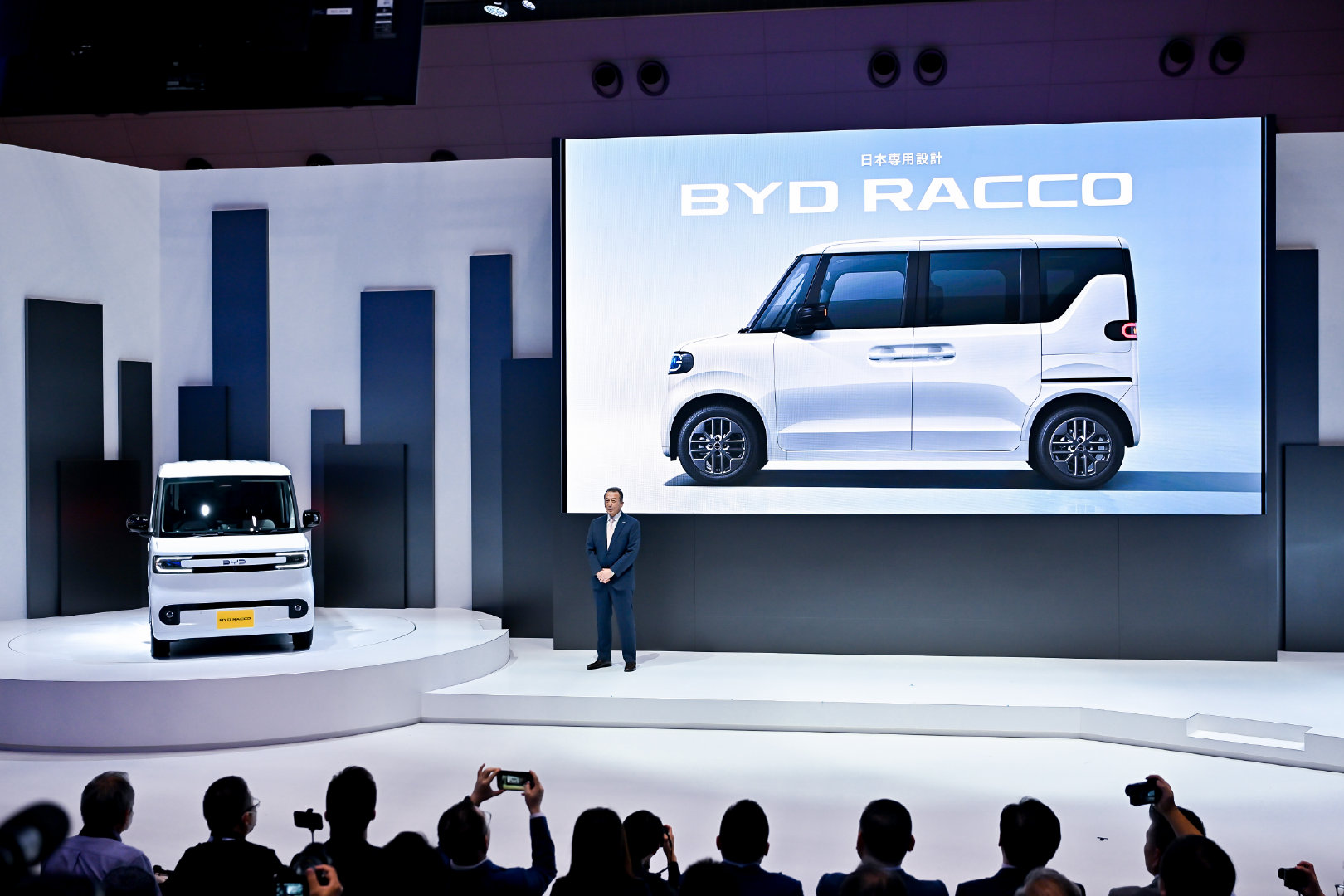
In a direct challenge, BYD used the event to launch a multi-pronged strategy for the Japanese market. The Chinese EV leader not only showcased its globally popular models but also unveiled a Japan-exclusive electric K-car and its first plug-in hybrid model for the country. This concrete product rollout highlights a clear and immediate strategy to capture market share.
The divergent strategies unfold as Japanese carmakers navigate significant financial headwinds. Recent earnings reports show giants like Toyota and Honda grappling with declining profitability, while Nissan continues its struggle with losses. This context adds urgency to their need to compete in an EV landscape where Chinese firms have already established a formidable technological and market lead.
Japan's Electrification Strategy Takes Shape
Faced with mounting pressure from the global EV transition and weakening financial performance, Japan's automotive industry is collectively shifting its focus. Toyota, which saw its operating and net profits fall 11% and 37% respectively in the first quarter of fiscal 2025 despite revenue growth, is now signaling a clearer electric path. Similarly, Honda’s revenue and profit both declined in its first quarter of fiscal 2026, with net profit dropping 50.2% year-on-year. Nissan remains in a deep operational restructuring after four consecutive quarters of losses.
This reality check has spurred a wave of new concepts at the Tokyo show:
- Toyota presented an electrified Corolla concept, a Lexus pure-electric concept coupe, and a futuristic six-wheeled EV MPV concept, signaling intentions to bolster its competitiveness in mid-to-high-end segments.
- Honda debuted its highly anticipated Super-ONE K-car concept and the Honda 0 α, an entry-level model for its new "0 Series" EVs, though it noted these models will primarily target the Japanese and Indian markets.
- Nissan launched a refreshed Ariya EV, which will integrate Google services, and the new Serena minivan featuring its third-generation e-POWER hybrid system. It also aims to revive the Leaf, once a global EV pioneer.
While specific capabilities remain undisclosed, the breadth of concepts—from compact K-cars to large MPVs—reveals a pragmatic strategy to electrify across all vehicle segments. Japanese automakers are laying the groundwork for a future comeback, but for now, it remains a vision pending execution.
A Gap in Performance Metrics
As Japanese automakers prepare their future products, an analysis of the few disclosed specifications suggests they may face a significant performance gap against current market offerings, particularly from China.
The powertrain for Honda's 0 Series prototypes was previously reported by media in 2024 to feature motors with peak power of 241 horsepower (hp) for rear-wheel drive and an additional 67 hp motor for all-wheel-drive variants. In contrast, mainstream electric SUVs in the Chinese market already offer single motors exceeding 300 hp, such as the Xiaomi YU7 (320 hp) and the Li Auto i6 (around 340 hp). Even the rear-wheel-drive Tesla Model Y produces 299 hp.
Meanwhile, Mazda’s Vision X-Coupe hybrid concept, with a powerful 510 hp output from its dual-rotor turbocharged engine and electric motor combination, appears more competitive. However, its 160km of pure-electric range and 800km total range (likely WLTC) lag behind comparable plug-in hybrids in China. For example, vehicles like the BYD Han and Lynk & Co 10 offer similar or better electric range at a competitive price point, while the Buick LaCrosse L7 boasts a 302km pure-electric range (CLTC) and nearly 500 hp.
Critically, most Japanese automakers at the show omitted details on intelligent features. Aside from Nissan mentioning its latest ProPILOT 2.0 system, there was little discussion of advanced driver-assistance systems (ADAS) or smart cockpit innovations—areas where Chinese brands have built a significant competitive advantage.
China's "Reverse" Offensive
While Japanese firms displayed concepts, Chinese players made concrete moves, demonstrating two distinct strategies for penetrating the Japanese market.
The first is BYD’s direct offensive. Recognizing the dominance of kei cars (K-cars) in Japan, which accounted for 1.557 million units sold in 2024, BYD is launching its first market-specific model, the K-EV BYD RACCO. This is complemented by a "pure electric + hybrid" dual-line strategy, with the introduction of its first hybrid model for Japan, the Seal U DM-i. This comprehensive approach aims to infiltrate multiple segments of the market simultaneously.
The second, and perhaps more disruptive, move came from Nissan itself. The automaker showcased the Nissan N7, a model designed and developed entirely by its Chinese joint venture, Dongfeng Nissan. This move represents a symbolic reversal of the traditional technology transfer from Japan to China. It signals an admission by a Japanese titan that China now leads in EV product definition, technology, and supply chain capabilities, to the point of shaping future products for the Japanese market itself. For China’s EV industry, this marks a milestone victory, validating its strategy of leveraging localized expertise to compete on the global stage.