
Unitree Races to Commercialize After Record-Speed IPO Approval
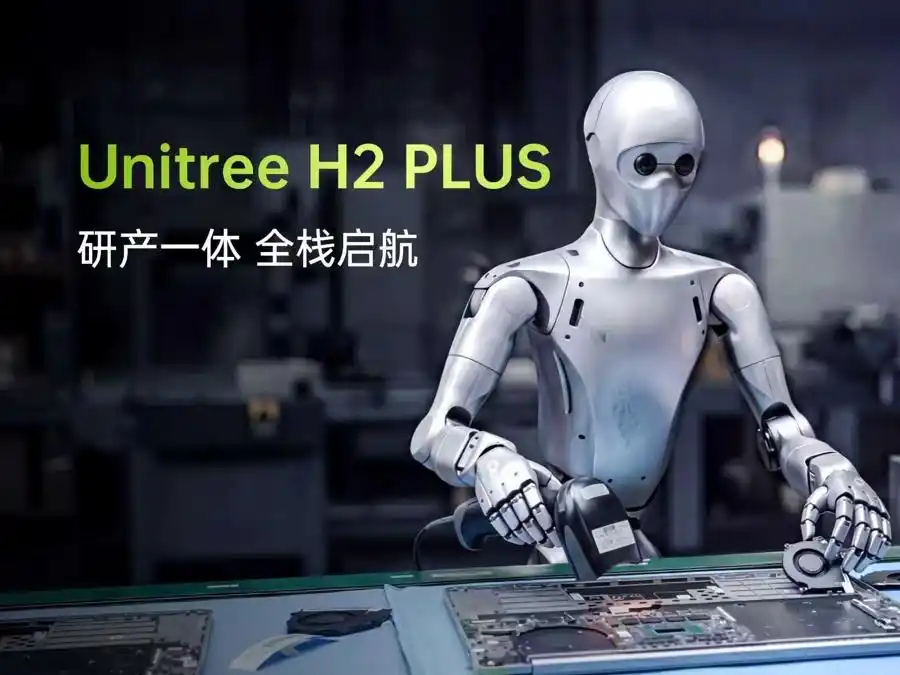
Unitree Robotics secured STAR Market listing approval in just 73 days — the fastest passage in nearly two years — while simultaneously opening retail experience stores in Beijing and Shanghai. The dual offensive highlights both the explosive momentum and the fragile commercial foundations of China's humanoid robot industry.
The Shanghai Stock Exchange's listing committee approved Unitree's IPO on June 1, 2026, less than three months after the application was accepted on March 20. Based on a 10% new-share issuance targeting proceeds of RMB 4.202 billion (US$583 million), the implied market capitalization stands at approximately RMB 42 billion (US$5.83 billion) — establishing the sector's first clear valuation benchmark on A-shares. The approval arrived as first-quarter 2026 revenue growth decelerated sharply and profit nearly halved year-on-year, injecting urgency into the company's push to diversify beyond its current revenue base before public market scrutiny intensifies.
Offline Expansion Signals a Market-Education Imperative
Within the same 73-day window, Unitree opened its first directly operated retail store at Beijing's Wangfujing in April, followed by Asia's first embodied-intelligence experience center at Shanghai's Jing'an Jiuguang mall in late May. Chief Marketing Officer Wang Qixin has publicly committed to further flagship openings in additional tier-one cities.
The strategic logic mirrors Tesla's China entry playbook. When Tesla opened its first Beijing experience center at Parkview Green in late 2013 — a period when battery electric vehicles were a fringe category globally — the physical touchpoint converted curiosity into purchase intent and seeded a decade of brand equity. By Q1 2026, Tesla still commands a 12.9% global pure-EV market share. Unitree is betting the same consumer-education mechanism applies to humanoid robots, a category that, despite viral video exposure, remains inaccessible to most consumers outside stage performances and theme-park demos.
The gap is real. One Hangzhou-based robot-rental operator told Tech Planet that prior to the store openings, the only way to access a humanoid unit was through Unitree's official rental platform or by placing a purchase order and waiting — a friction point that suppresses both commercial adoption and consumer familiarity.
Production Hitting 10,000 Units Strains Demand Absorption
The retail push is not a marketing exercise in isolation; it is a demand-side response to a supply-side inflection point. The embodied-intelligence sector formally entered a 10,000-unit mass-production era in 2026:
- Unitree's H1 bipedal humanoid surpassed 11,000 cumulative units, becoming the world's first single-model general-purpose humanoid to cross that threshold.
- Zhiyuan Robotics accelerated from 5,000 to 10,000 general-purpose units in just over three months — a four-fold increase in production cadence.
- Zhishen Technology reached 10,000 units within 10 months.
- UBTECH Robotics and Songyan Dynamics have each designated 10,000 deliveries as their 2026 core operational target.
Unitree founder Wang Xingxing stated in February 2026 that annual shipment targets for the year range between 10,000 and 20,000 units. Counterpoint Research projects global embodied-intelligence installed base will exceed 100,000 units by 2027, suggesting near-term supply could outpace validated demand.
The demand-side picture is stark. Unitree's prospectus reveals that from 2023 through the first three quarters of 2025, humanoid robot revenue was overwhelmingly concentrated in institutional buyers: research and education accounted for 73.6% of humanoid revenue in that period, commercial consumption 17.4%, and industrial and smart-manufacturing applications a combined 9%. Within that industrial slice, revenue attributable to genuine production-line deployment — smart manufacturing, intelligent inspection — totaled only approximately RMB 15.7 million (US$2.2 million) in the first nine months of 2025.
A channel sales representative in the embodied-intelligence sector told Tech Planet that university and research clients typically purchase one to two units per order, rarely exceeding five. "That demand ceiling is visible from here," the person said.
Quadruped Robots Remain the Hidden Cash Engine
Unitree's valuation narrative centers on humanoid robots, but the profit architecture tells a different story. The company posted its first full-year profit in 2024 — adjusted net income of RMB 77.5 million (US$10.8 million) — with quadruped robots contributing RMB 230 million (US$31.9 million) in revenue, compared with RMB 110 million (US$15.3 million) from humanoid robots.
By 2025, humanoid robot revenue crossed 51.78% of total sales for the first time, nominally surpassing the quadruped segment. Yet on a unit-shipment basis, quadrupeds remain the volume backbone: Unitree shipped 23,037 quadruped units in 2025, against 5,215 humanoid units. The disparity underscores a sector-wide pattern. DEEP Robotics, another embodied-intelligence firm, generated RMB 337 million (US$46.8 million) in revenue and turned profitable, posting net income of RMB 28.68 million (US$3.98 million) — almost entirely on quadruped deployments in security inspection, industrial logistics, and consumer entertainment.
Quadruped robots carry lower technical barriers and more mature use cases, functioning as the sector's current cash cow while humanoid applications remain in early-stage validation.
Profit Compression and Encirclement by Industrial Giants Threaten Valuation Stability
The financial trajectory entering the IPO is not uniformly favorable. In Q1 2026, Unitree reported revenue of RMB 423 million (US$58.8 million), with year-on-year growth decelerating to 68.49%. Adjusted net income fell to RMB 40.25 million (US$5.6 million), nearly halving from a year earlier, while net margin contracted sharply.
Competitive pressure is escalating beyond the roster of native robotics players Unitree lists as peers in its prospectus. In 2026, the competitive landscape has expanded materially:
- Tesla and Zhiyuan Robotics are accelerating humanoid mass production.
- BYD formally entered the humanoid robot segment this year.
- Supply-chain conglomerates Luxshare Precision and Huaqin Technology are leveraging manufacturing cost advantages to enter the sector.
- Major internet platforms are deploying capital through both direct investment and proprietary R&D programs.
The broader financing environment reflects the intensity: data from Tianyancha and Qichacha show more than 200 disclosed funding events in the embodied-intelligence and robotics sector, with aggregate disclosed proceeds exceeding RMB 30 billion (US$4.17 billion).
For Unitree, the convergence of decelerating profitability, a C-end market that a distributor described as "nearly impossible" to penetrate at current price points of tens of thousands of renminbi per unit, and encirclement by well-capitalized industrial entrants creates a narrow window. The company must convert its first-mover advantage and STAR Market listing proceeds into durable commercial use cases — particularly in industrial automation — before the capital cycle tightens and the valuation anchor it has set for the entire sector faces its first serious stress test.
Related Coverage:
Unitree’s STAR Market IPO Filing Puts China’s Humanoid Robot Economics Under a Spotlight