
US-China Tech War Escalates: Nvidia Smuggling Ring Busted, Huawei Bypasses ASML
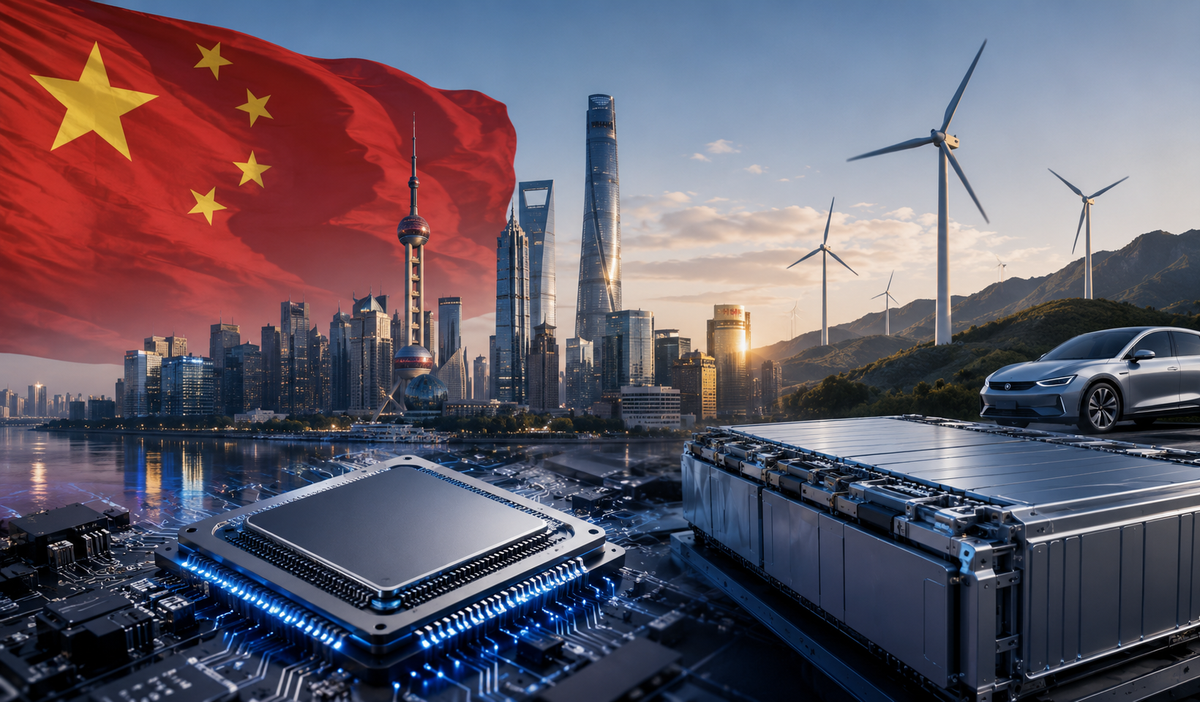
The technology conflict between Washington and Beijing entered a volatile new phase this week as Taiwan authorities exposed a sophisticated Nvidia chip smuggling operation while Huawei Technologies unveiled an alternative semiconductor development pathway designed to circumvent Western equipment restrictions—twin developments that underscore the escalating nature of the semiconductor battleground.
Taiwan's Keelung District Prosecutors Office detained three individuals last week for allegedly smuggling Nvidia Corporation AI chips to China through a previously undetected route via Japan, marking the island democracy's first public enforcement action against chip diversion. Simultaneously, Huawei announced its "Tau Law" framework claiming to achieve equivalent 1.4-nanometer chip performance by 2031 without accessing ASML Holding NV's extreme ultraviolet lithography equipment—the cornerstone technology Beijing has been denied since 2019.
The parallel developments signal that US export controls, implemented between 2019 and 2022 to maintain a decade-long technology lead, are driving both underground smuggling networks and accelerated indigenous innovation in China. UK Government Communications Headquarters Director Anne Keast-Butler is expected to warn on May 27 that Western nations' technology advantage is "rapidly narrowing," urging immediate strategic recalibration.
Smuggling Networks Exploit Allied Coordination Gaps
Prosecutors confirmed that at least one shipment of Super Micro Computer Inc. servers containing advanced Nvidia chips successfully cleared Taiwan customs before transiting through Japan to Hong Kong—a known transshipment hub for mainland-bound hardware. Authorities seized approximately 50 additional servers with fraudulent export documentation, but investigators acknowledged the earlier shipment had already reached its final destination.
The Japan route discovery exposes critical vulnerabilities in the multilateral export control architecture Washington has constructed since October 2022, when the Commerce Department imposed sweeping restrictions on AI chip sales to China. Despite subsequent tightening in October 2023 and ongoing pressure on allies including Japan, the Netherlands, and South Korea to align licensing standards, smuggling operations continue adapting faster than enforcement mechanisms.
Industry analysts note that while Taiwan's prosecution demonstrates increased alignment with US policy objectives, the case highlights fundamental detection challenges. Taiwan produces over 60% of global semiconductors and nearly 90% of advanced chips, yet lacks comprehensive monitoring infrastructure for finished goods exports. The three detained individuals allegedly falsified customs documents to disguise the servers' true specifications and destination—a relatively low-tech deception that circumvented border controls.
"This won't be the last smuggling ring," said a semiconductor trade compliance attorney who requested anonymity. "Gray market premiums for restricted Nvidia GPUs can reach 3-5x list price in China. With that economic incentive, networks will keep probing for soft spots in allied enforcement coordination."
Huawei's EUV-Free Chipmaking Challenge
While smuggling operations target immediate supply gaps, Huawei's Tau Law announcement represents a longer-term strategic response to Western technology denial. The framework abandons traditional transistor miniaturization pursued under Moore's Law, instead optimizing for time constant (τ) performance through advanced packaging, 3D chip stacking, and architectural innovation.
Huawei claims its approach will deliver Kirin chip density of 238 million transistors per square millimeter this year—matching Taiwan Semiconductor Manufacturing Company's 3-nanometer process performance—without requiring ASML's EUV systems that cost approximately $380 million per unit and remain under Dutch export licenses blocking Chinese sales.
Investment bank Bernstein Research characterized the unveiling as "another DeepSeek moment for China Semis," referencing the AI model that demonstrated Chinese capability to match advanced US technology with constrained resources. The comparison signals market recognition that Huawei's claims, if validated, could fundamentally alter strategic calculations underlying export control effectiveness.
"Everyone assumed denying EUV access would lock China out of leading-edge chipmaking for a decade," noted a semiconductor industry analyst. "If Huawei demonstrates viable alternative pathways—even with performance trade-offs—it forces policymakers to reassess whether equipment restrictions alone can maintain the technological gap."
Technical experts caution that Huawei's projections require independent verification, noting that advanced packaging and 3D integration introduce significant heat dissipation and manufacturing yield challenges. However, the company's continued progress developing 7-nanometer class chips despite equipment restrictions suggests alternative approaches may prove more viable than initially assessed.
Beijing Institutionalizes AI Chip Market Barriers
China's Information Security Evaluation Center and National Confidential Technology Evaluation Center recently published their second 2026 catalog incorporating AI chips into national security certification frameworks—a move analysts interpret as establishing de facto market entry barriers for foreign hardware.
The certification regime mirrors Beijing's longstanding "xinchuang" indigenous innovation initiative, which has systematically replaced foreign technology with domestic alternatives across government and critical infrastructure sectors since 2020. Extending similar requirements to AI accelerators signals authorities intend to accelerate foreign chip displacement beyond sectors already subject to substitution pressure.
Market observers note the timing coincides with improving competitiveness of domestically produced AI accelerators from Huawei's Ascend series, Alibaba Group's proprietary chips, and other Chinese vendors. While these products lag Nvidia's H100 and H200 GPUs in raw performance benchmarks, regulatory advantages combined with localized software optimization could enable market share gains in price-sensitive applications and government procurement.
China's chip imports totaled approximately RMB 3.2 trillion (US$444 billion) in 2025, with advanced AI accelerators comprising a growing share despite export restrictions. The certification framework provides authorities with granular control over which foreign products can access the world's largest semiconductor market—leverage increasingly deployed as technology competition intensifies.
Western Technology Lead Under Pressure
UK intelligence chief Keast-Butler's forthcoming warning that Western nations have limited time to preserve their technology advantage reflects growing official concern that current policy approaches may prove insufficient. Her expected call for closer intelligence-industry cooperation suggests recognition that government export controls alone cannot counter China's coordinated state-industry innovation push.
The assessment aligns with recent US intelligence community analyses indicating China has made faster-than-anticipated progress in advanced manufacturing, AI development, and quantum computing despite facing the most comprehensive technology restrictions ever imposed on a major economy. Beijing's dual strategy of circumventing controls through smuggling while pursuing indigenous alternatives appears to be compressing the timeline for technological parity.
For Washington, the parallel challenges of enforcement gaps and alternative development pathways complicate strategic calculations. Tightening export controls risks fragmenting commercial semiconductor markets and alienating allies whose cooperation is essential for effective implementation. Yet maintaining current policies may prove inadequate if China successfully develops domestically produced alternatives approaching restricted product performance.
"We're watching the export control strategy encounter its fundamental limitations," noted a former Commerce Department official now in private sector consulting. "You can slow technology transfer, but determined states with resources will find workarounds. The question becomes whether restrictions buy enough time for the US to maintain innovation leadership—and right now, that timeline looks increasingly compressed."
Technology Competition Extends Beyond Chips
The semiconductor battleground, while critical, represents only one dimension of broader US-China technology competition encompassing AI algorithms, quantum computing, biotechnology, and other emerging domains where technical leadership translates directly into economic competitiveness and military capability.
Beijing views chip self-sufficiency as existential for both economic development and national security, driving an estimated $150 billion in semiconductor industry subsidies since 2014. The investments are producing measurable results: Chinese companies now control approximately 23% of global chip equipment market share, up from negligible levels five years ago, though advanced lithography remains dominated by ASML, Applied Materials, and Tokyo Electron.
For Western policymakers, the challenge extends beyond preserving current advantages to sustaining innovation leadership as China's research and development spending approaches US levels. The semiconductor sector alone employs over 500,000 workers in China compared to approximately 277,000 in the United States, creating asymmetric capacity for iterative improvement even without accessing cutting-edge equipment.
As enforcement actions multiply and Chinese companies pursue technical workarounds, the technology competition appears poised to intensify through the remainder of 2026. The smuggling prosecution and Huawei's alternative chipmaking announcement represent early indicators of how both sides will adapt tactics in what increasingly resembles a protracted technological cold war with implications extending far beyond semiconductors.
The coming months will test whether export controls can achieve their stated objective of maintaining US military-technical superiority while avoiding broader economic fragmentation—or whether, as UK intelligence assessments suggest, the Western advantage is eroding faster than policy responses can address.
Related Coverage:
What Is the Tau (τ) Scaling Law? Understanding Huawei's Alternative to Moore's Law