
Velotric Secures $27.8M as Aging US Cyclists Drive E-Bike Profitability
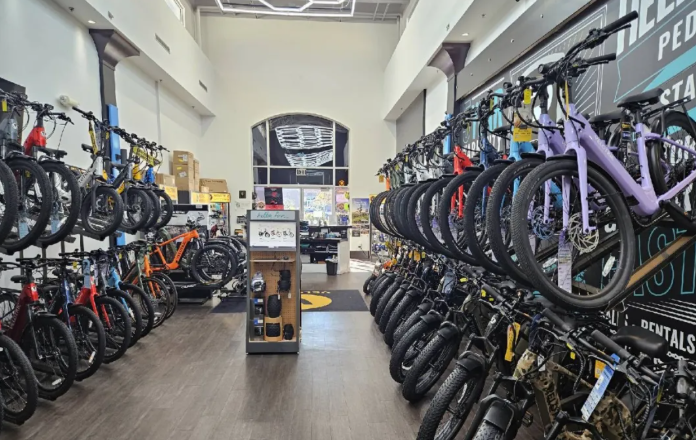
Chinese e-bike manufacturer Velotric has secured a RMB 200 million (US$27.78 million) Series C funding round led by China Life Equity Investment, signaling a structural shift in cross-border hardware strategies from aggressive price wars to demographic-targeted premiumization.
The capital injection arrives as Velotric captures the top spot in North American e-bike sales for the first three quarters of 2026, capitalizing on the market vacuum left by the late-2025 bankruptcy of local giant Rad Power Bikes. Supported by follow-on investments from Amber Capital and existing backers, Velotric’s trajectory highlights how Chinese supply chains are increasingly bypassing saturated European markets to exploit high-margin, niche demographics in the United States.
Market analysts view the round as a validation of Velotric’s pivot toward the "silver economy." By abandoning the industry-standard race to the bottom, the company achieved profitability in 2024 and shipped over 100,000 units in 2025, maintaining a robust average selling price (ASP) of $1,800—significantly above the US market average.
Targeting Aging Demographics Secures Premium Margins
Founded in 2021 by former Lime co-founder Zhang Xi, Velotric initially faced investor skepticism for prioritizing the nascent US market—where e-bike penetration hovered below 4%—over the mature European sector. The company’s defining pivot occurred in 2023 following proprietary quantitative research, which revealed that 50% of its buyers had not ridden a bicycle in three years.
Rather than competing with legacy brands like Trek and Specialized for the 15% of Americans who cycle actively, Velotric re-engineered its product line for the remaining 85%. Today, over 75% of its user base consists of individuals over 40 seeking "light exercise." This demographic focus drove hardware innovations such as the proprietary ComfortMax ergonomic framework and integrated turn signals on brake levers, catering directly to older riders experiencing declining physical mobility.
Expanding Beyond E-Bikes Tests Supply Chain Agility
Leveraging its network of 1,600 North American dealers, Velotric is now expanding its hardware ecosystem to capture a larger share of the estimated 1,000 hours its target demographic spends on leisure annually. The company is actively developing consumer-grade exoskeletons aimed at light outdoor hiking, deliberately avoiding the "mecha" aesthetics that induce consumer stigma among aging users.
More disruptively, Velotric is entering the low-speed four-wheeler market. As multiple US states legalize golf carts for community road use, Velotric aims to bridge the gap between $20,000 legacy internal combustion models from E-Z-GO, Club Car, and Yamaha, and sub-$10,000 basic imports. By deploying China’s mature new energy vehicle (NEV) supply chain architecture, Velotric plans to introduce premium, electrified neighborhood vehicles in the $10,000 to $20,000 bracket.
Delaying AI Integration Prioritizes Hardware Reliability
Amid a broader venture capital frenzy for artificial intelligence, Velotric is adopting a contrarian, delayed-integration approach. The company’s first "AI-native" e-bike is slated for release in late 2028, requiring an additional 24 months of supply chain modification to ensure mechanical reliability.
Velotric’s engineering blueprint restricts AI execution to local hardware while offloading machine learning to the cloud. This architecture prioritizes immediate safety and terrain adaptation over experimental tech features, underscoring a disciplined hardware strategy: technological integration must serve the biological limitations of the consumer, not the speculative narratives of the market.