
Volkswagen Races Against Clock to Make China EV Transition Profitable
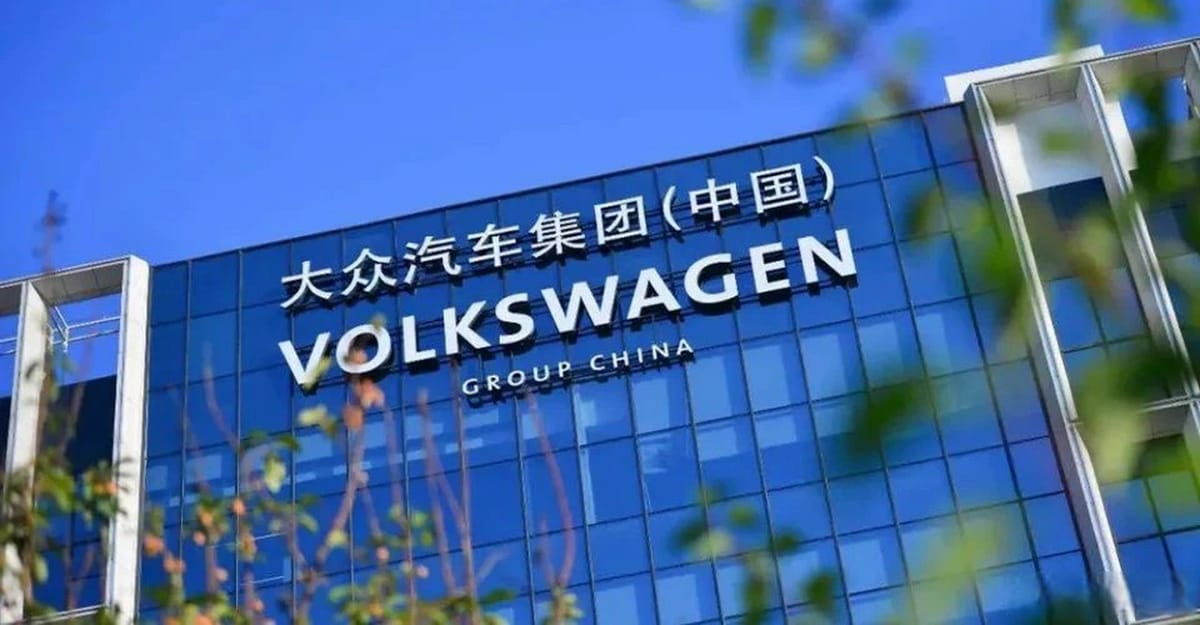
Volkswagen Group is intensifying its financial scrutiny in China as it prepares to enter full-scale electric vehicle deliveries in 2025, with management holding weekly cost optimization meetings to determine whether its 50 billion yuan transformation investment can deliver expected returns amid a brutal market environment.
The German automaker has nearly completed its financial modeling for the EV transition after more than three years of investment planning, according to people familiar with the matter. Patrick Heinecke, Chief Financial Officer of Volkswagen Group China, who assumed the role in August 2024, told Economic Observer that the company maintains a solid financial foundation while actively transforming for the future through local innovation and efficient operations.
Volkswagen's China profit contribution from joint ventures plummeted from 2.6 billion euros in 2023 to 1.7 billion euros in 2024, with further decline to 5-10 billion euros projected for 2025. The automaker expects this figure to rebound to 2 billion euros by 2027 and reach 3 billion euros by 2030, including contributions from its Volkswagen Anhui joint venture. The company has set its global third-quarter results as "unable to assess" for 2026, when over 20 EV models will launch in China.
The profitability challenge centers on the industry-wide dynamic plaguing European automakers: the more EVs sold, the lower the profit margins. This reality has placed unprecedented pressure on cost structures and operational efficiency across Volkswagen's China operations.
Financial Modeling Nears Completion
Volkswagen China's management has established specific targets through its financial projections. EV sales penetration is expected to rise from the current 5% to double digits by 2026 as more than 20 new energy models enter the market. The company anticipates achieving profit parity between combustion engine and electric vehicles in the latter part of its planning cycle, likely by 2030, though the 2025-2026 transition period will see continued profitability gaps.
Cost reduction has emerged as a critical metric, with the locally developed CMP platform and CEA electronic architecture already achieving 40% cost savings compared to previous global platforms. The company is targeting 50% cost reduction, supported by partnerships with Gotion High-Tech for lithium iron phosphate batteries and Horizon Robotics for advanced driver assistance systems.
Internal sources indicate Volkswagen China executives now participate in an unprecedented number of product review sessions, analyzing cost details and price projections on a weekly basis. The management board examines every aspect of the sales funnel, from media spending to discounts and dealer-specific strategies for each vehicle model and market segment.
Transition Pain Deepens
The company's third-quarter earnings revealed the depth of its transformation challenges. Group-wide results showed mixed performance: while one in four electric vehicles sold in Europe came from Volkswagen Group, financial performance weakened significantly compared to the prior year. Chief Financial Officer and Chief Operating Officer Arno Antlitz attributed this to lower profit margins on ramping EV production, plus 7.5 billion euros in charges primarily from increased tariffs, Porsche product strategy adjustments, and goodwill impairment.
In China specifically, the A-segment car market faces more intense competition compared to higher-margin B and C segments, compressing profitability further. Volkswagen acknowledges that despite rapid EV sales growth, the volume base remains smaller than combustion vehicles, preventing economies of scale while the company absorbs substantial R&D expenses and investment-related costs.
The company must simultaneously protect its profit base in combustion vehicles. Since Heinecke's arrival, optimizing non-core assets and supplier structures to preserve combustion vehicle profitability has become a priority. Volkswagen's China market share in combustion vehicles has increased to 22% even as the overall market shrinks.
Efficiency Push and Technology Investments
Volkswagen China has adopted what insiders describe as an "investor mindset," with the organization now accustomed to prudent investment analysis, structural streamlining, and active asset disposal. The China unit achieved its internal operational efficiency improvement target—20% higher efficiency versus 2023 levels by 2026—one year ahead of schedule.
Despite cost pressures, Volkswagen continues strategic technology investments. On November 15, the company announced two new initiatives: expanding its partnership with Horizon Robotics to co-design and develop system-on-chip technology with investment of approximately $200 million, and opening Porsche's largest R&D center outside Germany in Shanghai.
Volkswagen China emphasized that software remains core technology requiring firm control, with continued investment planned in key technology areas. The company aims to build a comprehensive local value chain encompassing critical technologies under its "in China, for China" strategy.
The development cycle has shortened to approximately 24-30 months through localization efforts. Gotion's lithium iron phosphate batteries are confirmed for Volkswagen Anhui's next electric vehicle to enhance cost competitiveness. The company projects that over 100 brands will compete in China's market, with price levels continuing to decline before stabilizing in the medium term, necessitating rapid cost optimization and market share gains to ensure profitability.