
Xiaomi Auto Business Achieves First Quarterly Profit as Q3 Earnings Surge
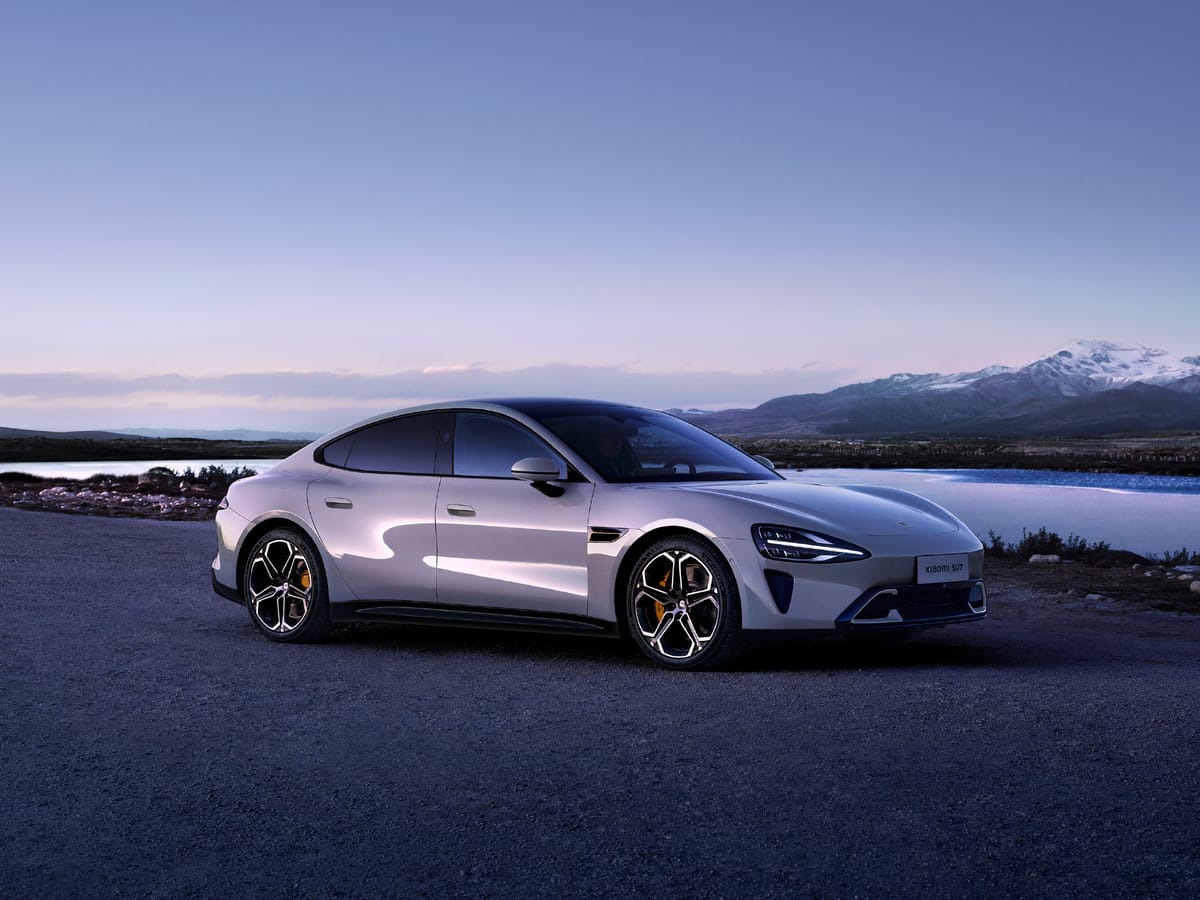
Xiaomi reported its first quarterly operating profit from its electric vehicle and AI business in the third quarter, marking a pivotal milestone as the Chinese smartphone maker deepens its push into automotive manufacturing. The company's adjusted net income surged 80.9% year-on-year to RMB 11.3 billion ($1.56 billion) in the quarter ended September, exceeding analyst expectations and setting a new record.
The automotive division, which has been burning cash since launching vehicle deliveries in early 2024, generated an operating profit of RMB 700 million in the third quarter. The unit delivered 108,800 vehicles during the period, up 33.8% from the previous quarter and achieving a gross margin of 25.5%. Total revenue from the smart electric vehicle and AI innovation segment reached RMB 29.01 billion, surpassing market estimates of RMB 28.02 billion.
Company President Lu Weibing said during an earnings call that Xiaomi expects to complete its full-year delivery target of 350,000 vehicles this week, ahead of schedule. However, he cautioned that 2026 could bring greater challenges as China reduces purchase tax subsidies by half, potentially pressuring gross margins despite improved economies of scale.
The strong performance in automotive comes as Xiaomi navigates mounting cost pressures in its core smartphone business from surging memory chip prices. Lu warned that the industry faces a prolonged cycle of rising memory costs driven by AI-related HBM demand, which will weigh on handset margins despite planned product price adjustments and premiumization efforts.
Auto Business Turns Corner
Xiaomi's electric vehicle revenue jumped 197.9% year-on-year to RMB 28.3 billion in the third quarter, representing the company's fastest-growing segment. The operating profit of RMB 700 million marked the first time the division has moved out of the red since beginning deliveries 18 months ago.
Management attributed the margin improvement to declining costs for core components, lower per-unit manufacturing expenses from scale effects, and a higher proportion of Xiaomi YU7 series deliveries, which command premium pricing. The average selling price rose from RMB 253,700 to RMB 260,100 during the quarter, confirming a shift toward higher-end models.
Chief Financial Officer Lin Shiwei emphasized that while delivery volume remains the primary near-term goal given the company's relatively small scale in China's 22-million-unit annual market, Xiaomi aims to maintain healthy margins. The company plans to release an enhanced version of its end-to-end autonomous driving system, HAG, on November 21.
Despite the optimistic near-term outlook, Lu acknowledged that reduced government subsidies and intensifying competition will likely compress margins in 2026. The purchase tax incentive reduction will affect both pricing and profitability, though management remains committed to volume growth alongside sustainable margins.
Memory Cost Pressures Mount
Xiaomi faces significant headwinds in its smartphone business from escalating memory chip costs, which Lu characterized as a long-cycle trend distinct from traditional industry fluctuations. The surge in high-bandwidth memory demand from AI applications has created supply constraints that are expected to persist through 2027, when new production capacity comes online.
Lu said memory cost increases will have a "significant impact" on gross margins for devices with high storage content, including smartphones, tablets and laptops. While the company has secured full-year 2026 supply agreements with partners, price increases alone cannot fully offset the cost surge. Xiaomi may implement selective product price increases and accelerate its premiumization strategy to partially mitigate margin compression.
The smartphone division generated RMB 46 billion in revenue during the third quarter, with global shipments of 43.3 million units rising 0.5% year-on-year. The company maintained its No. 2 ranking in mainland China with 16.7% market share for the sixth consecutive quarter, while capturing 13.6% of the global market.
Lu said Xiaomi's share of China's premium segment priced above RMB 3,000 rose 4.1 percentage points to 24.1%, while its share in the RMB 4,000-6,000 range increased 5.6 percentage points to 18.9%. The Xiaomi 17 series posted 30% higher first-month sales than the previous generation, with Pro models accounting for over 80% of the mix. The company targets maintaining its annual shipment volume around 170 million units while prioritizing product mix optimization over pure volume growth.
R&D Investment Accelerates
Research and development spending reached RMB 9.1 billion in the third quarter, up 52.1% year-on-year, bringing the nine-month total to RMB 23.5 billion. The company's R&D workforce expanded to a record 24,871 employees. Capital expenditure surged to RMB 5.38 billion, more than doubling analyst estimates of RMB 2 billion.
The elevated investment reflects Xiaomi's commitment to building capabilities in AI and autonomous driving. The company has completed a full suite of foundation models spanning language, vision and voice with its Xiaomi-MiMo-Audio system. The Xiaomi Miloco solution represents an early exploration of large language model-driven whole-home intelligence.
Management emphasized these investments position the company for long-term technological competitiveness in smart electric vehicles and AI, even as near-term profitability faces pressure from cost inflation and intensifying competition.
IoT Ecosystem Crosses Billion-Device Threshold
Xiaomi's AIoT platform surpassed 1 billion connected devices for the first time, reaching 1.036 billion units in the third quarter, up 20.2% year-on-year. The milestone underpins the company's "human-car-home" ecosystem strategy. Users with five or more connected devices increased 26.1% to 21.6 million, indicating strengthening customer engagement.
Internet services revenue hit a record RMB 9.4 billion, up 10.8% year-on-year, with advertising contributing RMB 7.2 billion, up 17.4%. Monthly active users reached 741.7 million globally, up 8.2%, while mainland China users increased 11.6% to 187.3 million. International internet services revenue rose 19.1% to a record RMB 3.3 billion, representing 34.9% of total internet revenue.
IoT and lifestyle products revenue totaled RMB 27.6 billion, declining 28.8% sequentially due primarily to seasonal factors and the phase-out of government subsidies for large home appliances. Air conditioner and related category revenue fell 64.8% quarter-on-quarter as national subsidy programs wound down and competition intensified.
Lu said the newly operational smart home appliance factory in Wuhan, with over RMB 2.5 billion in phase-one investment, closes the loop on design, R&D, manufacturing and verification for major appliances. The facility's peak annual capacity is designed for 7 million air conditioning units and features highly automated production lines and AI-powered quality inspection systems that surpass traditional manufacturing standards.