
Xiaomi Unveils SkyNomad EREV SUVs at RMB 259,900, Forcing a New Price Floor
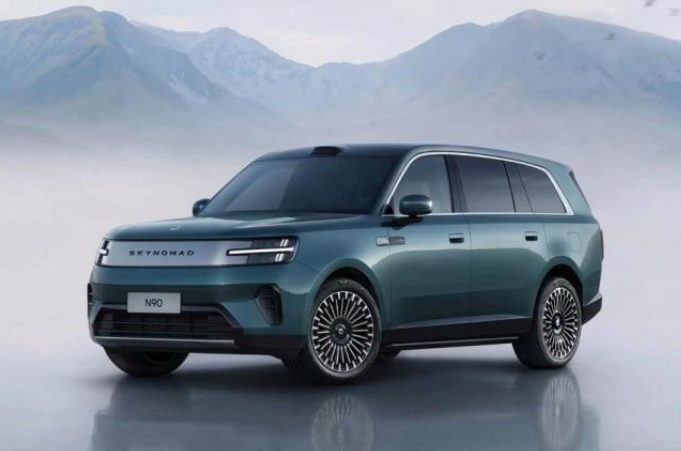
Xiaomi Corp. has escalated China’s SUV price war by pricing two extended-range SkyNomad family models below Wall Street expectations, shifting investor focus from product competitiveness to whether the company can achieve its 550,000-vehicle delivery target for 2026 without sacrificing gross margin.
At its second Auto Tech Day in Beijing on July 30, 2026, Xiaomi unveiled the Kunlun vehicle architecture and opened pre-sales for the SkyNomad EREV SUV lineup, led by the seven-seat N90 Max at RMB 299,900 (US$41,653) and the five-seat N70 Max at RMB 259,900 (US$36,097).
While Xiaomi has yet to disclose margin or volume guidance for the new models, the pricing alone prompted major investment banks to revise their assumptions, according to research notes summarized by Chasing Wind Trading Desk.
Analysts at Morgan Stanley and Deutsche Bank described the launch as a near-term order catalyst ahead of deliveries expected around September. Citigroup and Nomura, meanwhile, warned that Xiaomi’s hardware-heavy configuration could pressure profitability and that the N70 may cannibalize demand for Xiaomi’s own battery-electric YU7.
Cutting prices reframes the 2026 delivery math
Nomura said the market had generally expected the N90 to be priced at RMB 300,000–350,000 and the N70 at RMB 250,000–300,000. Xiaomi instead launched both models at the bottom—or below—the expected ranges, reinforcing the view that management is prioritizing volume growth.
Morgan Stanley expects Xiaomi to introduce additional Standard and Pro trims after the September launch, potentially lowering the entry price further. The bank estimates the N70 lineup could eventually span RMB 200,000–250,000, while the N90 family could cover RMB 250,000–300,000.
Deutsche Bank tied the pricing strategy directly to Xiaomi’s delivery target. The company delivered 180,055 vehicles in the first half of 2026, equal to 34% of its 550,000-unit annual goal. That leaves roughly 370,000 vehicles to be delivered in the second half, implying an average of about 61,700 vehicles per month—an unusually aggressive ramp in an increasingly competitive market.
Independent order data also illustrates the challenge. Thinkercar reported weekly new orders of 5,400, 5,600, 7,400, and 5,700 units throughout July, a pace that would be insufficient to support Xiaomi’s required second-half run rate without significantly improving conversion rates and manufacturing capacity.
Premium hardware raises BOM concerns
Xiaomi is positioning Kunlun as a platform for large family SUVs, and the SkyNomad Max variants reflect that strategy.
The N90 Max measures 5,285 mm in length with a 3,080 mm wheelbase and is equipped with a 76 kWh ternary lithium battery. Xiaomi claims 464 km of CLTC electric range and 1,705 km of combined range. The dual-motor AWD system produces 310 kW, enabling 0–100 km/h acceleration in 5.9 seconds. Xiaomi also highlighted interior packaging metrics, including a 2.9-meter flat floor, 4.4 square meters of usable cabin space, and a maximum cargo capacity of 1,831 liters.
The N70 Max measures 4,960 mm long with a 2,950 mm wheelbase and also uses a 76 kWh battery. Xiaomi claims 505 km of CLTC electric range, 1,461 km of combined range, and 0–100 km/h acceleration in 5.5 seconds.
Both Max variants feature air suspension, CDC dampers, LiDAR, and Nvidia DRIVE AGX Thor with 700 TOPS of computing power—features that are increasingly common in China's upper mid-range market but still add materially to the bill of materials.
Deutsche Bank noted early signs of cost discipline in Xiaomi’s supply chain. According to the bank, SkyNomad uses batteries from Sunwoda and CALB, rather than CATL and BYD, which have been associated with Xiaomi’s battery-electric lineup. The supplier mix suggests Xiaomi is attempting to preserve unit economics while expanding into a broader customer base.
Resetting pricing benchmarks across the segment
Citigroup believes Xiaomi is deliberately resetting the value benchmark in the large family SUV segment.
The N90 Max, priced at RMB 299,900, sits close to the Onvo L90 Pro at RMB 265,800 (US$36,917), yet substantially below the Li Auto L9 at RMB 509,800 (US$70,806), the AITO M9 at RMB 479,800 (US$66,639), and the Zeekr 9X, which is expected to start above RMB 450,000 (US$62,500).
Deutsche Bank expects SkyNomad to compete directly with mid-range SUV offerings from BYD, Leapmotor, XPeng, Geely, Lynk & Co, Chery, and Volkswagen, while also increasing pricing pressure on premium models from Li Auto, Tesla, Zeekr, and AITO.
For investors, the implication is that Xiaomi is no longer competing solely on product differentiation. Its pricing strategy forces rivals to defend market share through product refreshes, financing incentives, or deeper discounts—all of which could pressure industry profitability during the second half of 2026.
Margins and cannibalization become the key debate
Citigroup argued that the investment case now depends less on product specifications and more on operational execution.
The bank highlighted the tension between SkyNomad’s premium hardware—including a large battery pack, dual motors, a range extender, air suspension, LiDAR, and complex seating systems—and Xiaomi’s aggressive pricing strategy, which could limit gross margin expansion.
Citigroup identified four metrics investors should monitor:
- Final pricing at the September launch
- Reservation-to-order conversion
- Production ramp-up
- Model-level gross margin after deliveries begin
Nomura further quantified the delivery challenge. Assuming Xiaomi’s existing SU7 and YU7 continue selling at their historical averages of roughly 10,500 and 25,000 units per month, respectively, SkyNomad would need to deliver approximately 156,500 units between September and December, or about 39,100 vehicles per month, to keep Xiaomi’s 550,000-unit annual target within reach.
Nomura also warned of internal competition. The N70 Max closely overlaps with the YU7 in both dimensions and pricing. The N70 measures 4,960 mm in length with a 2,950 mm wheelbase, compared with the YU7's 4,999 mm length and 3,000 mm wheelbase. Pricing also overlaps, with the YU7 Standard starting at RMB 233,500 (US$32,431) and the YU7 Pro at RMB 279,900 (US$38,875).
That leaves Xiaomi in the unusual position of potentially shifting demand between its own EREV and BEV lineups rather than simply taking share from competitors.
Morgan Stanley, by contrast, views SkyNomad as a positive near-term catalyst for Xiaomi’s share price, arguing that aggressive pricing combined with differentiated design should support order momentum—provided the company can successfully convert pre-sales into large-scale production and deliveries.