
Xiaomi’s Full-Stack Bet Takes Shape as Xring Chips Expand Across Its Hardware Ecosystem
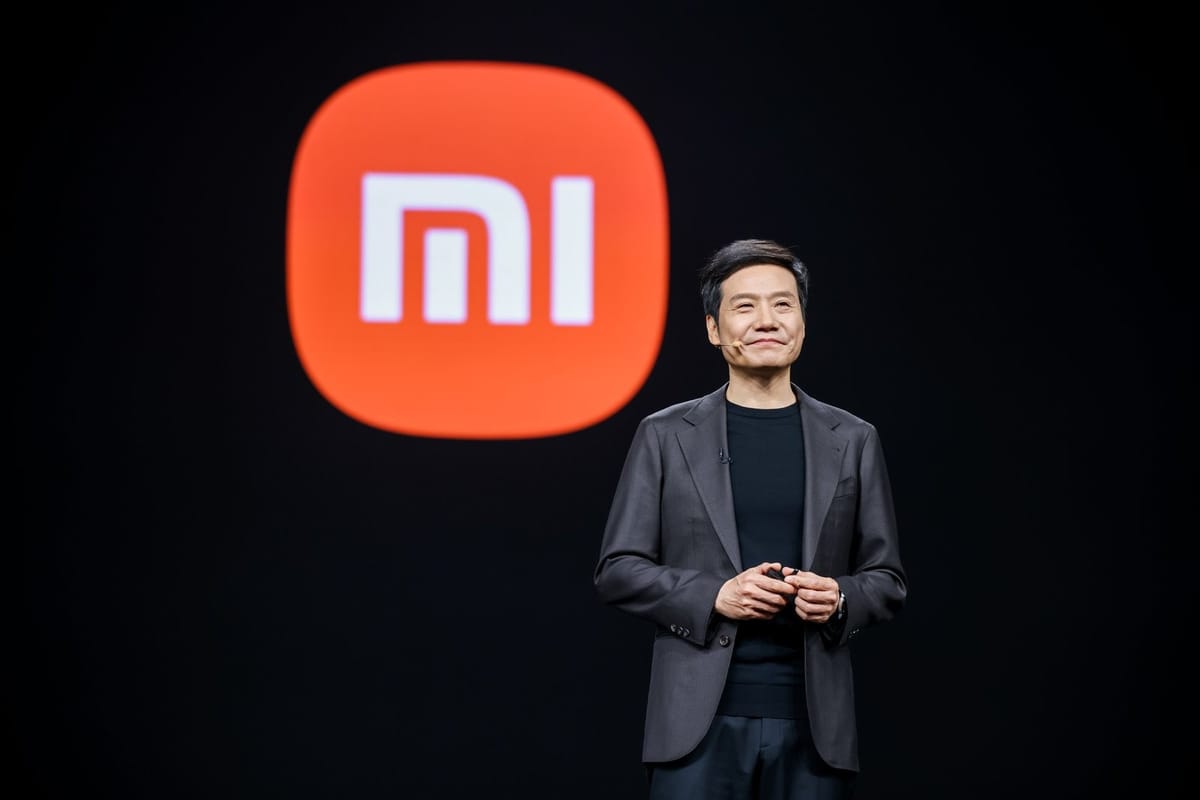
Xiaomi deployed its most ambitious product offensive to date on September 7, launching three proprietary chips, two flagship devices and four new vehicles simultaneously — a coordinated push that signals the company has moved from building individual hardware to engineering a vertically integrated technology stack.
The autumn event in Beijing marked the commercial debut of the Xring O3 — Xiaomi's second-generation flagship mobile SoC — aboard the Xiaomi 18 Fold foldable smartphone, priced from RMB 10,999 (US$1,527), and the Xiaomi Pad 9 Pro Max tablet, starting at RMB 4,799 (US$667). The simultaneous reveal of four SkyNomad extended-range SUVs, spanning RMB 209,900 to RMB 299,900 (US$29,153 to US$41,653), completed a product matrix that spans consumer electronics, computing and automotive — a combination that no other Chinese technology company currently fields at scale.
Market observers noted that the pricing of the 18 Fold — roughly RMB 4,000 below comparable foldables from Huawei Technologies — combined with the device's positioning as Xiaomi's highest-tier handset, reflects a deliberate attempt to use in-house silicon to compress costs while expanding margins.
Xring O3 Enters Its Most Demanding Arena Yet
The strategic logic behind debuting the Xring O3 in a mid-fold form factor — rather than a conventional slab flagship — is calculated aggression. Mid-fold devices, constrained to approximately 5mm of unfolded thickness, historically throttle sustained performance due to thermal limits. By choosing this platform, Xiaomi implicitly argued that O3's power efficiency renders active cooling redundant.
Benchmark data disclosed at the event reinforces that claim. The Xiaomi Pad 9 Pro Max, which benefits from a larger chassis and a proprietary capillary cooling structure, recorded an AnTuTu score of 5.61 million — the highest ever recorded on an Android tablet — with Xiaomi benchmarking it directly against Apple Inc.'s M5-based MacBook configurations rather than competing mobile-SoC tablets. That comparison is a deliberate repositioning: Xiaomi is no longer content to win within the Android tablet category; it is targeting the PC productivity market.
The 18 Fold itself concentrates three first-party technologies — Xring O3, HyperOS 4, and the MiMo on-device large language model — in a single device for the first time. It also becomes the first mass-production handset to ship with LPDDR6 memory, developed in partnership with Changxin Memory Technologies, marking a supply-chain milestone for China's domestic semiconductor ecosystem.
Pad 9 Pro Max Signals Xiaomi's Quiet Push into PC Territory
Beyond raw benchmark performance, the Pad 9 Pro Max carries architectural features that suggest Xiaomi is systematically dismantling the barrier between mobile and personal computing. A "PC Engine" layer enables execution of select native Linux applications — including CAD editing and professional video production workloads — without Android emulation overhead. Support for DisplayPort input via full-function USB-C allows the tablet to function as a zero-latency external monitor for PCs, consoles and smartphones, a capability that circumvents the resolution and latency penalties inherent in wireless projection.
Accessory support extends to a premium floating keyboard and professional stylus peripherals targeting graphic design and 3D modelling workflows. Taken together, these design choices indicate that Xiaomi's chip team has already begun the software-ecosystem groundwork necessary to support a Xring-based laptop — a product category the company has not yet announced but which the current hardware trajectory makes increasingly plausible.
SkyNomad SUV Line Demonstrates Cross-Division Technology Leverage
The four SkyNomad vehicles — N70 Pro, N70 Max, N90 Max and N90 Max Explorer Edition — extend Xiaomi's automotive footprint into the mainstream extended-range SUV segment, a category that has seen explosive demand growth in China through 2025 and into 2026 as consumers seek vehicles with long range that eliminate charging anxiety.
The N70 series (4,960mm length, 2,950mm wheelbase) targets volume buyers with a starting price under RMB 210,000. The N70 Max's 76kWh ternary lithium battery delivers a CLTC pure-electric range of 505km — claimed to be the longest of any extended-range model currently on sale in China — while the N70 Pro's 52kWh lithium iron phosphate pack achieves a combined CLTC range of 1,351km. Both variants run on Xiaomi's proprietary 1.5T range extender and accept 92, 95 and 98 octane fuel.
The vehicles' intelligence stack — a four-in-one domain control module pairing a Qualcomm 4nm flagship SoC with an Nvidia Thor-U 4nm autonomous driving chip, alongside LiDAR and 4D millimetre-wave radar — reflects Xiaomi's decision to source driving-compute from established suppliers while retaining proprietary control over the cabin operating system and connectivity layer. HyperOS for automotive now covers 95% of vehicle control functions via the Super XiaoAi voice interface.
What differentiates the SkyNomad line from competing extended-range SUVs is less the powertrain specification and more the evidence of genuine cross-divisional integration. The in-car refrigerator, display and climate systems trace their engineering lineage to Xiaomi's home appliance division. The 25-speaker, 7.1.4 Dolby Atmos-equivalent "Xiaomi Xingxian" audio system was calibrated entirely in-house, without the third-party brand partnerships that rivals routinely employ to signal audio credibility. This internal coherence — hardware teams sharing components and calibration data across product lines — represents a structural cost and quality advantage that external suppliers cannot easily replicate.
The N90 Max Explorer Edition, priced at RMB 299,900, introduces China's first factory-fitted electrically deployable roof pod in a production SUV. When raised, it creates a two-level LOFT interior with 2,290mm of standing headroom and a 200kg load capacity — a concept vehicle brought to production, signalling that Xiaomi's automotive division has accumulated sufficient margin and engineering confidence to pursue differentiated, lower-volume models.
A RMB 105.5 Billion R&D Bet Begins to Pay Compound Returns
The September event is best understood as the first visible return on a multi-year capital commitment. In 2021, Xiaomi founder and CEO Lei Jun pledged RMB 100 billion (US$13.89 billion) in core technology investment over five years. As of the event date, cumulative R&D expenditure has reached RMB 105.5 billion (US$14.65 billion), with the chip programme alone allocated RMB 50 billion over a decade, of which RMB 21 billion has been deployed to date.
The output metrics are now tangible. Xring O1 — launched in May 2025 as mainland China's first 3nm flagship SoC — has surpassed one million units in cumulative shipments. The MiMo V2.5-Pro language model ranked joint-first globally among open-source models on the Artificial Analysis intelligence index in April 2026, and MiMo V2.5 topped both the weekly and monthly usage charts on the OpenRouter API aggregation platform in July 2026. Xiaomi's automotive unit has delivered more than 800,000 vehicles in 29 months — the fastest cumulative delivery ramp in China's new-energy vehicle industry.
Lei Jun acknowledged the gap that remains: "In the chip space, Xiaomi is still a latecomer. Today's results only mean we have just begun." The declaration was paired with the announcement that Xring O100, a high-bandwidth AI accelerator, and Xring D100, a high-compute autonomous driving chip, will enter commercial deployment in 2027 — positioning Xiaomi among a handful of global technology companies simultaneously developing smartphone SoCs, AI inference accelerators and autonomous driving silicon.
Impact Assessment: What This Means for Investors and Competitors
For investors, the critical variable is whether Xring silicon can sustain a pricing premium that offsets the substantial ongoing R&D cost. The 18 Fold's RMB 10,999 entry point, combined with the chip's claimed performance parity with Qualcomm's and MediaTek's concurrent flagship SoCs, suggests Xiaomi believes it can. The decision to equip the remainder of the Xiaomi 18 series with third-party Qualcomm and MediaTek processors — rather than mandating Xring across the line — is a pragmatic hedge: it protects volume while allowing the in-house chip to prove itself at the premium tier.
For Qualcomm and MediaTek, the trajectory is a slow-burning threat. Xiaomi's chip team is still a latecomer by any measure, but the combination of a dedicated RMB 50 billion budget, access to TSMC's leading-edge nodes and a captive device ecosystem to absorb output creates a credible long-term alternative to merchant silicon procurement. If Xring O3 performs as benchmarked in sustained real-world workloads, the commercial case for Xiaomi to progressively expand in-house chip penetration across its device portfolio strengthens with each generation.
For the broader Chinese technology sector, the convergence of in-house chips, a proprietary operating system and a vertically integrated hardware ecosystem across phones, tablets, cars and appliances represents the most advanced execution of the "full-stack" strategy that Beijing has encouraged since 2020. Xiaomi's ability to ship this stack commercially — rather than merely announce it — elevates it as a benchmark for what domestic technology self-sufficiency can look like in practice.
Related Coverage:
Xiaomi’s Three-Chip Xring Push Takes on Qualcomm and AI Accelerators