
Xiaomi’s Upgraded SU7 EV Secures 15,000 Orders, Accelerating AI Ecosystem Push
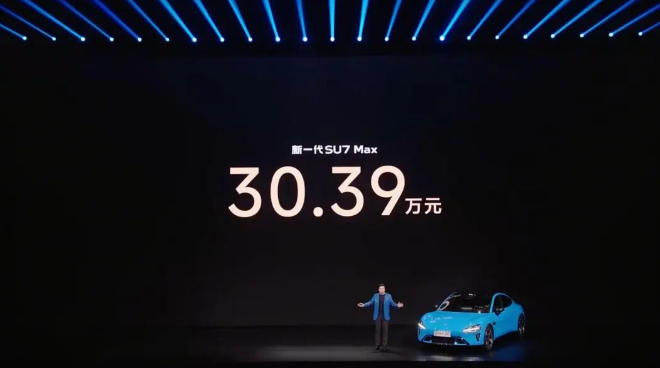
Xiaomi locked in 15,000 firm orders within 34 minutes for its newly upgraded SU7 electric vehicle, signaling a maturation in consumer demand as the tech giant pivots toward a broader physical artificial intelligence ecosystem.
Launched on March 19, 2026, the facelifted SU7 lineup—priced between RMB 219,900 (US30,541) and RMB 303,900(US42,208)—represents a modest RMB 4,000 premium over its predecessor despite a raw material cost increase exceeding RMB 20,000. The aggressive pricing strategy highlights the company's reliance on supply chain optimization, manufacturing efficiency, and economies of scale to absorb component inflation.
Initial market reactions reflect a stabilization in order velocity. Unlike the explosive 122,000 orders recorded in two minutes for the YU7 model earlier this year, the current trajectory points to normalized delivery expectations. This steady momentum is supported by expanded manufacturing capacity, with wait times reduced to one to five weeks, and priority production slots allocated for existing owners upgrading their vehicles.
Upgraded Specs Target Premium Segment Dynamics
The new SU7 models mark a structural shift in product positioning, evolving from a pure performance focus to a premium family-oriented vehicle. The SU7 Pro, expected to be the volume driver, features a 752V high-voltage powertrain platform, dual-chamber air suspension, and a 900km CLTC range.
By addressing the pain points of the first-generation lineup, Xiaomi is leveraging enhanced configurations to capture a wider demographic. The inclusion of the XLA cognitive model, powered by the company's proprietary MiMo-Embodied AI, integrates advanced assisted driving and smart cockpit capabilities, further differentiating the hardware in a hyper-competitive domestic market.
AI Investments Reshape Ecosystem Valuation
Beyond automotive hardware, Xiaomi is actively repositioning itself as a leader in physical AI. The company announced a sweeping RMB 60 billion (US$8.33 billion) investment in AI over the next three years, with RMB 16 billion earmarked for 2026 alone.
This capital expenditure supports the deployment of cutting-edge models—MiMo-V2-Pro, MiMo-V2-Omni, and MiMo-V2-STT—across its "Human x Car x Home" ecosystem. By transforming its EVs into premium, interconnected AI terminals, Xiaomi aims to capture the expanding total addressable market of the global AI industry, shifting investor focus from near-term hardware multiples to long-term ecosystem value creation.
Margin Pressures Test Near-Term Profitability
While the product pipeline remains robust, with a YU7 GT model slated for mid-2026 and a full-size extended-range SUV expected in the third quarter, aggressive pricing and enhanced consumer benefits will weigh on near-term profitability.
Gross profit margins for the EV segment are projected to compress to 17.9% in the first quarter of 2026, down from 22.9% in the fourth quarter of 2025. However, with an ambitious target of 610,000 total EV deliveries in 2026—comprising 190,000 SU7 units, 380,000 YU7 units, and 40,000 large SUVs—Xiaomi's scale may ultimately offset these margin headwinds, cementing its status as a dominant force in the global smart mobility sector.