
XPeng Aeroht Sets 2026 Mass Production Target for Flying Car, Eyes IPO
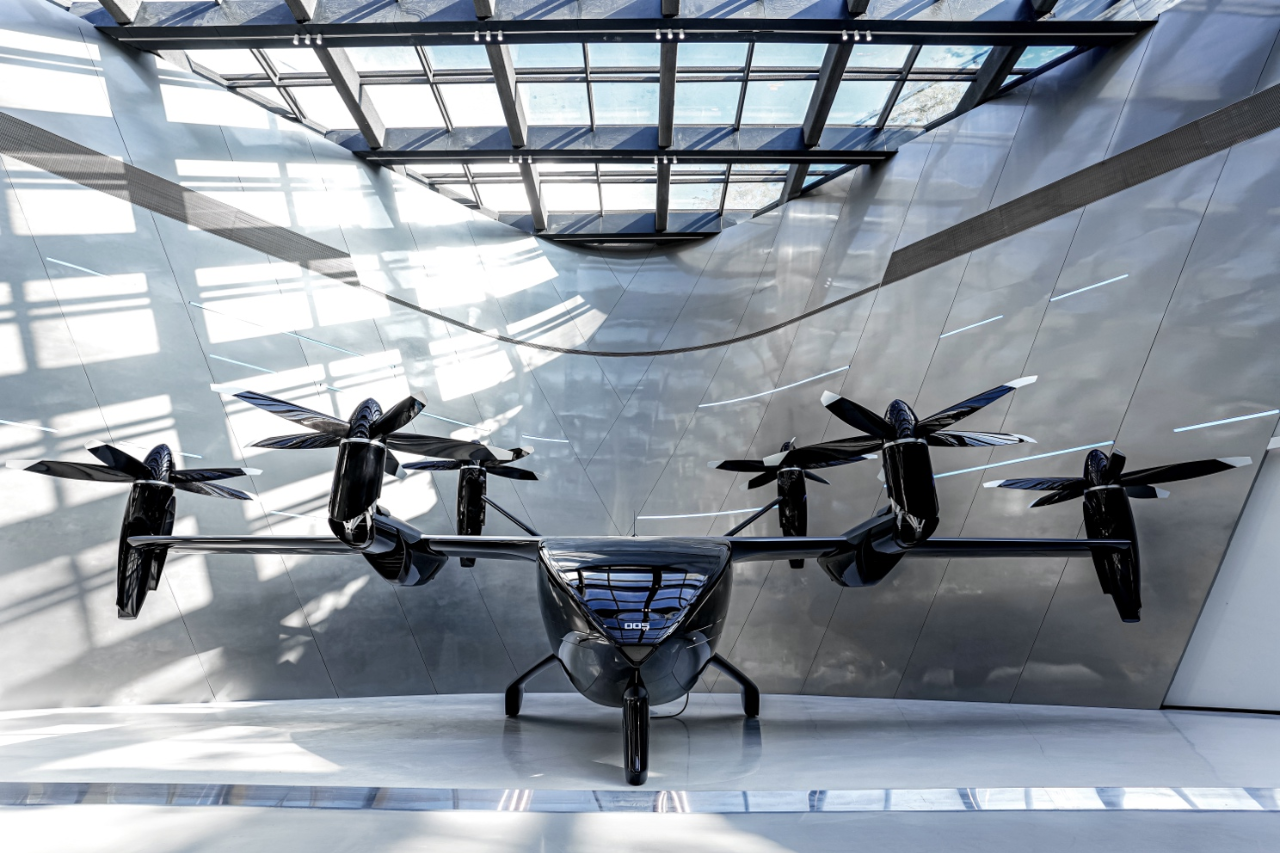
XPeng Aeroht announced its debut flying car will enter mass production in 2026, marking a significant milestone in China's low-altitude mobility sector. The separated flying vehicle, priced under 2 million yuan ($280,000), has already secured 7,000 pre-orders, setting an industry record that could position the company for a capital markets debut coinciding with first deliveries.
The company's manufacturing facility completed trial production on November 3 and rolled out its first flying vehicle, according to founder and president Zhao Deli, speaking at XPeng's 2025 Tech Day on November 6. At full capacity, the factory can produce one flying vehicle every 30 minutes, potentially achieving annual output of 10,000 units—more than triple the global annual delivery volume of approximately 3,000 light aircraft worldwide.
About 90% of current orders come from domestic customers, primarily tech-early adopters who own multiple vehicles and enjoy outdoor activities like off-roading, diving and flying. The initial use cases will focus on "self-flying" tourism experiences at designated flight camps before gradually expanding to wider areas.
Zhao confirmed the company plans to pursue an IPO, stating, "We hope to go public when we start deliveries," though the exchange venue and regulatory filing remain undecided.
Production Capabilities Challenge Traditional Aerospace
XPeng Aeroht's manufacturing approach contrasts sharply with conventional aircraft production methods. Zhao noted that civil aviation authorities described traditional aircraft factories, including Boeing's, as essentially manual workshops after visiting the facilities.
"They found our dark factory very impressive," Zhao said, referring to XPeng's highly automated automotive plants. The current flying vehicle factory operates at an intermediate automation level between manual assembly and full automotive-style production lines, capable of producing one aircraft per hour currently and targeting 30 minutes per unit at full capacity.
The company plans to deploy over 200 flight camps nationwide by 2026, with the first batch scheduled for trial operations starting July 2026. In October 2025, Aeroht launched northwest China's first self-flying route in Dunhuang, creating an integrated "aerial corridor plus ground experience" tourism network.
New Long-Range Model Targets Commercial Market
Beyond the Land Carrier separated design, XPeng Aeroht unveiled the A868, a full-tilt rotor hybrid-electric flying vehicle aimed at multi-passenger long-distance travel. The A868 prototype has completed its maiden flight and entered critical flight verification stages.
The A868's tilt-rotor design allows vertical takeoff and landing while achieving speeds and range comparable to fixed-wing aircraft. Expected specifications include 500-kilometer range and maximum speeds of 360 kilometers per hour, significantly exceeding the Land Carrier's 35-minute flight time and 130 km/h top speed.
Designed for six passengers, the A868 directly addresses business travel needs, particularly in key regions like the Greater Bay Area and Yangtze River Delta where wealthy individuals could use it for intercity trips. The aircraft employs XPeng's aviation-grade hybrid-electric powertrain based on the Kunpeng extended-range architecture, providing sustained energy supply.
Funding Runway Ahead of Revenue
The company has raised over 750 million cumulatively, including a 500 million Series A round in 2021 led by IDG Capital, 5Y Capital and XPeng Motors, then the largest single financing in Asia's low-altitude manned aircraft sector. A $250 million Series B closed in July 2025.
Banking facilities supplement equity funding. In November 2022, four banks provided 6 billion yuan in credit lines, followed by a 1.26 billion yuan ($176 million) syndicated loan from five banks in April 2025 for manufacturing facility construction—the largest bank financing globally for flying car production.
XPeng founder He Xiaopeng disclosed that Aeroht invested 10 billion yuan over the past decade, including 3 billion yuan in 2025 alone. With the 7,000 pre-orders representing potential revenue but no immediate cash inflow, the IPO timing becomes critical to bridge operations until the company achieves positive cash flow from deliveries.
International expansion is underway, with orders including 600 units from groups in UAE, Qatar and Kuwait signed in October—the largest overseas bulk order in the sector. Approximately 10% of current pre-orders originate from overseas customers.
Safety protocols include multiple redundancy systems and a senior management test flight program requiring executives to complete 5,000 kilometers of flight testing before mass delivery. Zhao serves as employee number 001 in the test pilot program.