
XPeng to Roll Out Second-Generation AI Driving System in March, Targeting L4 Capabilities
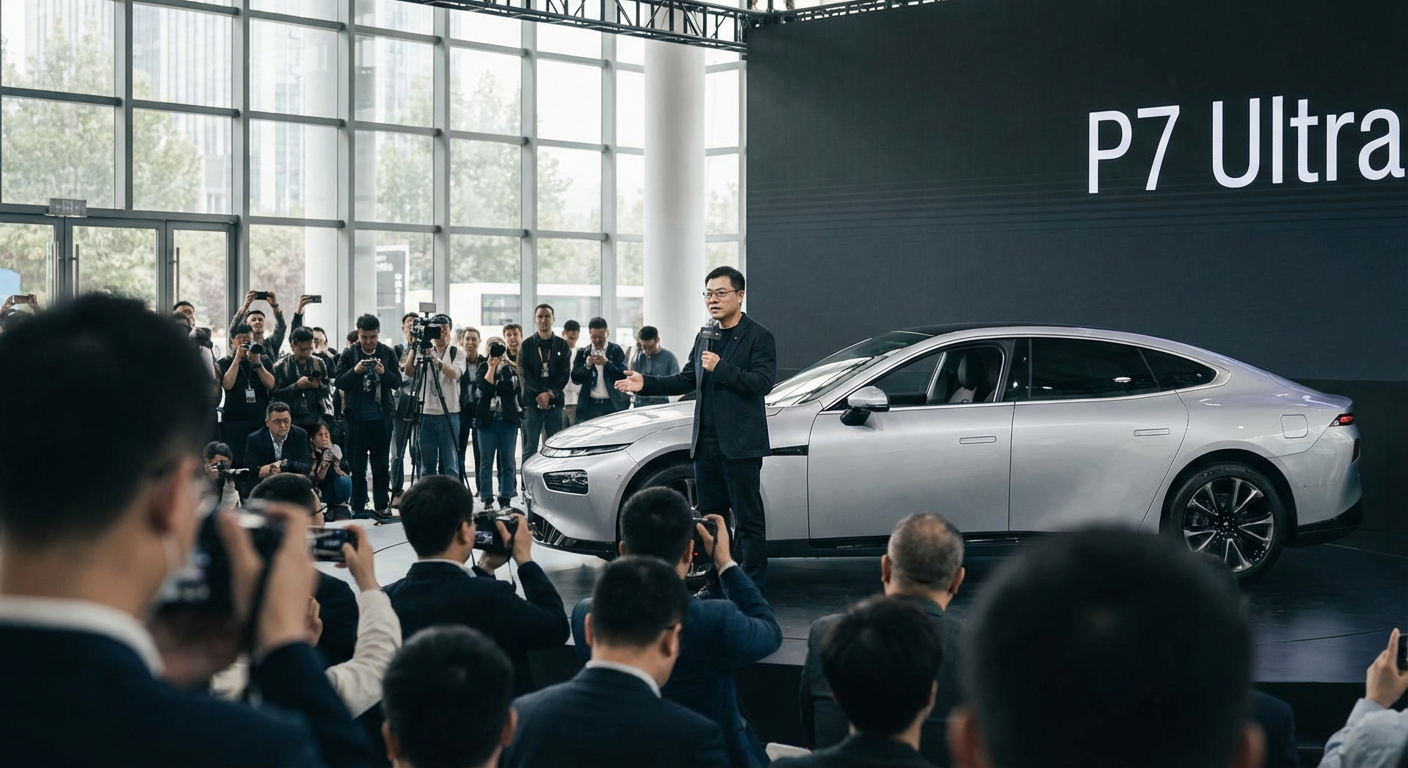
XPeng has announced the official rollout roadmap for its next-generation autonomous driving software, signaling a significant technical shift towards Level 4 capabilities using end-to-end AI models rather than rule-based coding.
According to a transcript of a live stream Q&A session released by XPeng's official media channels this week, the Chinese electric vehicle maker detailed the deployment schedule and technical specifications of its second-generation "VLA" (Vision Language Action) system.
He Xiaopeng, Chairman and CEO of XPeng, confirmed that the over-the-air (OTA) updates will commence on March 19 for select high-end trims, including the P7 Ultra and X9 Ultra. A broader rollout covering 2026 model year vehicles, such as the P7+, G9, and G6, is scheduled to follow in April. The new system distinguishes itself by abandoning reliance on high-precision maps. Instead, it utilizes large AI models to perceive and understand road environments, a strategy the company claims allows for better navigation in unmapped areas and faster adaptation to global markets.
Addressing performance metrics, Liu Xianming, a senior executive at the company, claimed the system offers a comprehensive experience improvement of nearly five times compared to industry competitors. This metric is based on internal testing regarding the frequency of human takeovers during rush hours and complex urban driving scenarios. The company emphasized a significant reduction in "sudden braking," aiming to enhance passenger comfort and stability.
The executives also clarified the hardware hierarchy for the new system. The "Max" tier, equipped with one Turing AI chip, focuses on industry-leading Level 2 driver assistance. Meanwhile, the "Ultra" and "Ultra SE" variants, equipped with two to three Turing AI chips, are designed to support full-scenario driving capabilities oriented towards future Level 4 autonomy.
Regarding competition with Tesla Inc., He noted that while both companies operate in the "first tier" of autonomous driving, XPeng's development within China's complex traffic ecosystem—described as significantly more difficult than U.S. road conditions—provides a robust training ground for edge cases. The company revealed plans to expand its advanced driving features into additional Asian markets by late 2026 or early 2027.
Despite the technical advancements, management maintained a cautious stance on safety. Citing a recent internal test case involving obstacles on the road, the company acknowledged that while the system successfully detects hazards and decelerates, achieving "perfect" handling of all emergency scenarios remains the primary challenge before full autonomous driving can be realized.
Related Coverage:
Xpeng AeroHT eVTOL Completes Batch Trial Production and Test Flights
XPeng's Second-Gen VLA: The DeepSeek Moment for Chinese Autonomous Driving