
Yin Qi Unveils Ambitious AI-Powered Automotive Vision as Afari Technology Accelerates Autonomous Driving Push
Yin Qi, the 37-year-old co-founder of AI unicorn Megvii Technology, has outlined an expansive vision for artificial intelligence integration in automotive systems through his new venture Afari Technology, positioning the company as a bridge toward artificial general intelligence (AGI) through smart vehicle development.
The former AI industry leader detailed plans to deploy over 1,000 robotaxis across 10 global cities within 18 months, targeting Level 4 autonomous driving capabilities by 2026. Afari has forged strategic partnerships with major Chinese automakers including Geely and Changan Automobile.
Yin's "Afari Plan" envisions a unified AI ecosystem spanning autonomous driving, intelligent cabins, and mobility services, with the automotive sector serving as a testing ground for broader AGI applications. The company aims to achieve 70-80% "model content ratio" in its driving systems by year-end, matching global industry leaders.
Industry executives including Geely Chairman Li Shufu and Changan Chairman Zhu Huarong joined Yin at a recent forum, highlighting growing collaboration between AI specialists and traditional automakers in China's rapidly evolving smart vehicle market.
Strategic Partnership with Automotive Giants Accelerates Development
Afari Technology has established comprehensive partnerships with China's leading automakers to accelerate its autonomous driving ambitions. The company is jointly developing specialized robotaxi hardware with Geely, while expanding its intelligent driving assistance systems across multiple vehicle platforms including the Zeekr 9X.
Yin characterized robotaxi development as requiring "triathlon" capabilities: Level 4 autonomous driving technology, dedicated hardware platforms, and city-scale operational expertise. Initial calculations suggest 1,000 vehicles could achieve break-even operations under optimal conditions, though Yin acknowledged these projections remain subject to revision.
The partnerships extend beyond traditional supplier relationships, with Afari forming a computing alliance with Geely and AI model developer StepFun to advance vertical industry applications. Mercedes-Benz's recent strategic investment in Afari signals potential international expansion of these collaborative frameworks.
AI Model Integration Drives Next-Generation Driving Systems
Afari's technology strategy centers on maximizing "model content ratio" – the proportion of AI model-driven versus rule-based decision-making in autonomous systems. While industry averages hover around 40-50%, with leading international competitors achieving 70-80%, Afari targets the higher range through deep integration with large language models.
The company's 6D multimodal perception matrix combines 11 cameras, five millimeter-wave radars, and one LiDAR sensor per vehicle, supported by high-definition mapping. This sensor fusion approach, powered by StepFun's multimodal AI models, enables what Yin terms "bionic control" – mimicking experienced human driver judgment and vehicle handling.
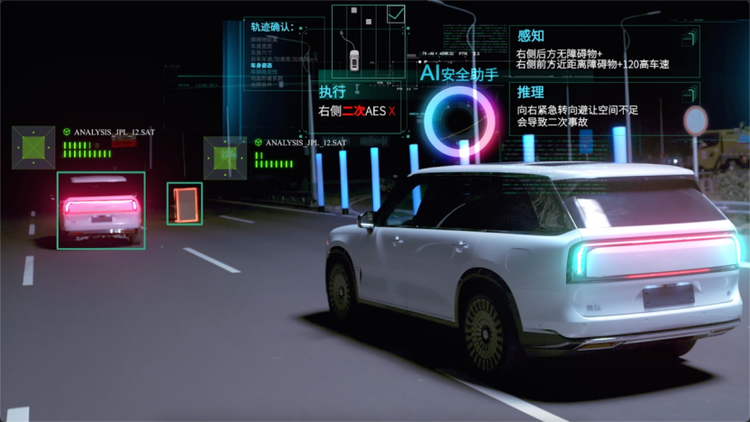
Advanced features include the All-Domain AES system, which autonomously selects between active braking and evasive maneuvers based on real-time risk assessment. The system can execute multiple consecutive avoidance actions and provides low-speed anti-cut-in protection in complex urban environments like Chongqing's Liberation Monument district.
Vision for Unified AI Ecosystem Beyond Automotive Applications
Yin's broader "Afari Plan" outlines three integrated components: "One Brain" utilizing a unified AI model for both autonomous driving and cabin intelligence, "One OS" for cross-device memory and control integration, and "One Agent" serving as an emotional companion and efficiency tool across multiple scenarios.
The automotive sector serves as the primary development platform due to vehicles' natural multimodal sensing capabilities, controlled interior environments, and direct physical human interaction. Yin argues that cars represent optimal testing grounds for intelligent hardware applications compared to other emerging smart devices.
Afari's intelligent cabin features include "super-natural interaction" and "fusion memory" capabilities, transforming vehicle interiors into ChatGPT-like interaction portals. The system processes visual inputs, reads smartphone screens, and maintains conversational context to reduce cognitive load for drivers and passengers.
Beyond immediate automotive applications, Yin envisions the technology expanding into home automation, retail, and industrial settings, with AI-powered vehicles serving as incubators for broader AGI implementation across multiple sectors.