
Zhipu AI Shares Surge 33% After U.S. Export Controls Ground Anthropic's Latest Models
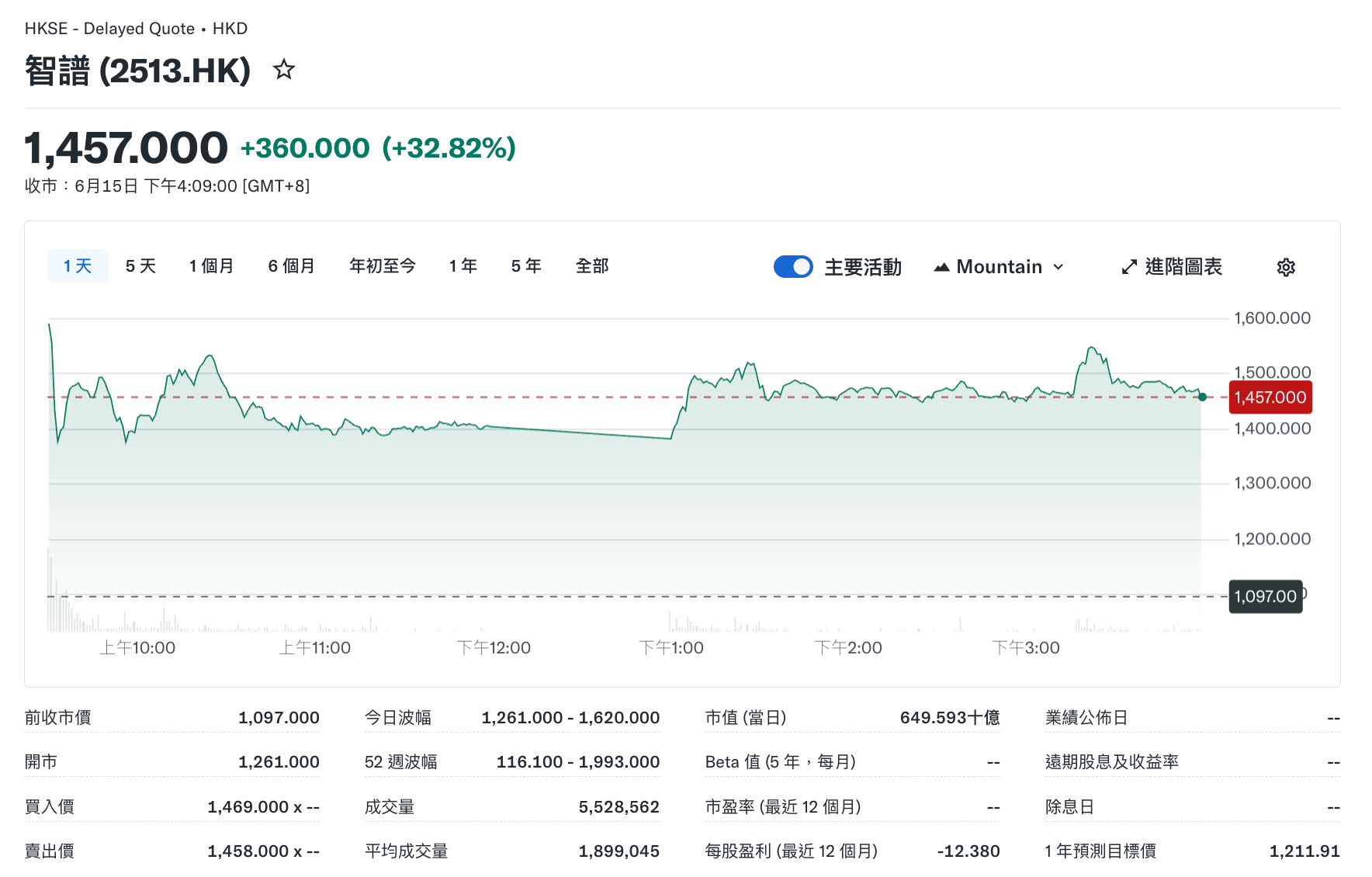
Shares of Zhipu AI surged as much as 47.6% in Hong Kong trading on June 15, 2026, setting a record single-day turnover since its listing, before closing up 32.82% with a total market capitalization exceeding HK$649.6 billion. The rally was triggered by a confluence of two industry developments that exposed a structural vulnerability in the global AI supply chain.
A Sudden Access Freeze
Three days after Anthropic launched its flagship models Claude Fable 5 and Claude Mythos 5, the San Francisco-based AI company announced on June 12 that it had received an export control directive from the U.S. government under national security authorities, requiring it to suspend access for all foreign nationals — including non-U.S. employees within Anthropic itself. Unable to technically distinguish user nationality in real time, Anthropic opted to disable both models globally to ensure compliance. As of the time of writing, neither model has been restored, and no timeline for reinstatement has been provided.
The disruption hit hard. Claude's model series has been deeply integrated by developers and enterprise clients for long-horizon tasks, software development, and complex document processing. The abrupt shutdown forced teams to scramble for alternatives, triggering widespread discussion across developer communities about the risks of relying on foreign-controlled AI infrastructure.
Zhipu's Timing Proves Pivotal
One day after Anthropic's announcement, Zhipu declared a full rollout of GLM-5.2 — its most capable open-source model to date — to all Coding Plan subscribers, covering Lite, Pro, Max, and team tiers. The company also announced that API access and open-source model weights would be available the following week under the MIT license.
In its announcement, Zhipu stated: "Frontier intelligence should not belong only to a few, nor should it be revoked at any time by a handful of rules" — a pointed reference to the access risks the Anthropic episode had just made tangible.
GLM-5.2 supports a 1 million token context window and is specifically optimized for long-horizon coding tasks. Zhipu positions the model as a solution to context degradation in multi-step engineering workflows — a capability increasingly critical as AI agents evolve from conversational tools into autonomous execution systems capable of handling thousands of tool calls, tens of thousands of lines of code, and extensive intermediate state information over hours or even days.
A New Valuation Dimension Emerges
The market reaction reflects more than a short-term sentiment shift. Orient Securities noted in a research report that the Anthropic incident exposed the risk of closed-source model access being subject to a single jurisdiction's regulatory authority, and that the episode could accelerate enterprise migration toward domestic foundation models and localized deployment. The MIT-licensed release of GLM-5.2 further lowers the barrier to enterprise adoption and integration.
For much of the past year, capital markets priced large language model companies primarily on capability benchmarks and market share. The Anthropic episode introduces a new variable: access reliability. As AI transitions from a productivity tool into core infrastructure for software development and business operations, the ability to guarantee uninterrupted, sovereign access is emerging as a distinct competitive and valuation factor — one that open-source, domestically controlled models are structurally better positioned to offer.
The episode marks a potential inflection point in how developers and enterprises weigh model selection: not just who builds the most capable model, but who can guarantee it will remain available.
Related Coverage: