
AgiBot Targets HK$5B Hong Kong IPO With Ecosystem Strategy
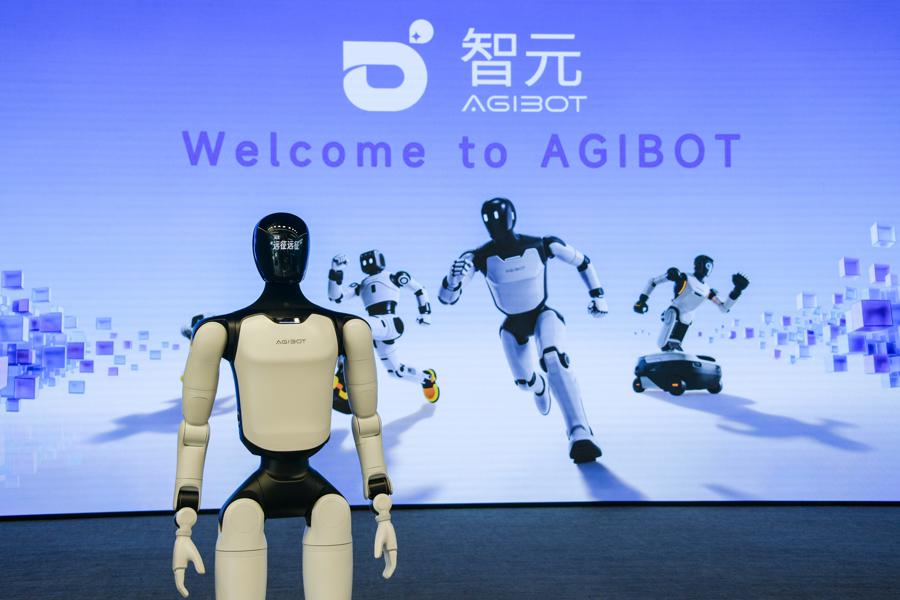
AgiBot, China's fastest-growing general-purpose AI robotics company, has formally initiated a Hong Kong IPO process targeting a valuation of HK$40 billion to HK$50 billion (approximately US$5.1 billion to US$6.4 billion), a price tag that implies a revenue multiple of up to 41 times — and raises pointed questions about whether the market will absorb it.
The July 24 announcement, which came without disclosing a sponsor bank, filing timeline, or fundraising size, marks a notable reversal: AgiBot had previously denied reports — carried by Caijing magazine and other outlets — that it planned a second-half 2026 Hong Kong listing underwritten by China International Capital Corporation (CICC), CITIC Securities, and Morgan Stanley. The company declined to comment on valuation or timing as of publication.
The IPO launch lands as China's humanoid and embodied-intelligence sector experiences an unprecedented capital markets rush, with more than a dozen robotics companies pursuing listings in 2026 alone — a wave that is simultaneously validating the sector's commercial momentum and stress-testing investor appetite for pre-profitability growth stories.
Revenue Trajectory Outpaces Peers, But Valuation Multiple Demands Scrutiny
AgiBot's growth curve is, by any measure, exceptional. Founded in February 2023, the company generated RMB 300,000 (US$41,667) in its first year of operations, scaled to RMB 60 million (US$8.3 million) in year two, and surpassed RMB 1.05 billion (US$145.8 million) in full-year 2025 revenue — a roughly 20-fold year-over-year compounding rate, according to CEO Deng Taihua's remarks at the company's 2026 partner conference. Deng set a target of RMB 10 billion (US$1.39 billion) in revenue by 2027.
More striking is the Q1 2026 data point: sources close to the company and among its investor base told Caijing that AgiBot's first-quarter 2026 revenue already exceeded RMB 1 billion (US$138.9 million) — meaning the company claims to have generated more in a single quarter than its entire 2025 annual haul. On that basis, AgiBot positions itself as the world's largest general-purpose AI robotics company by revenue when combining full-year 2025 and Q1 2026 figures.
Yet the valuation math is unforgiving. At the HK$40–50 billion target range, AgiBot trades at 32 to 41 times its 2025 revenue — a significant premium to the two most relevant comparables. Hong Kong-listed UBTECH Robotics (09880.HK), with a current market cap of HK$44.5 billion and 2025 revenue of RMB 2.001 billion (US$277.9 million), trades at approximately 22 times sales. Unitree Robotics, whose STAR Market IPO registration was approved on July 6, 2026, carries an implied initial market cap of approximately RMB 42 billion (US$5.8 billion) against 2025 revenue of RMB 1.708 billion (US$237.2 million) — a 24 times PS ratio.
One public fund sector analyst cited by Caijing concluded bluntly that the HK$40–50 billion range already represents a premium, even accounting for AgiBot's advantages in mass production, ecosystem depth, and capital mobilization. An investor source noted that AgiBot's founding team had initially sought a valuation closer to HK$80 billion — a figure that would have pushed the PS multiple toward 80 times and was apparently rejected by cornerstone investors.
Ecosystem Architecture Drives Revenue — and Raises Structural Questions
The mechanism behind AgiBot's revenue acceleration is as important as the headline numbers — and more complex. Multiple sources close to the company describe AgiBot's strategic positioning not as a pure robotics hardware manufacturer but as a "platform company," with revenue flowing through a dense web of joint ventures, strategic investments, and government-linked procurement channels.
AgiBot has completed 10 rounds of financing to date, drawing in more than 50 investors spanning financial capital, industrial capital, and government funds. Its current private-market valuation exceeds RMB 20 billion (US$2.78 billion). The company counts more than 400 commercial partners globally, which it classifies as investors, supply chain participants, distributors, and channel partners.
Critically, several AgiBot investors and ecosystem partners told Caijing that some partners purchase robots as a condition of — or to maintain — their commercial relationship with the company. A separate investor active across multiple embodied-intelligence companies characterized this as an industry-wide phenomenon, noting that robotics startups routinely target industrial investors and local state capital with procurement capacity. "The fundamental reason," this person said, "is that commercial deployment capability for robots is not yet mature enough."
The procurement data supports this characterization. Caijing's review of publicly disclosed government project information identified more than ten contracts in which AgiBot directly or indirectly won bids from state-backed entities, with several individual contract values exceeding RMB 10 million (US$1.39 million).
The structural pattern is consistent: AgiBot establishes joint ventures with local state capital, then wins procurement contracts through those same entities. In July 2025, AgiBot won a RMB 12.736 million (US$1.77 million) robot procurement contract from Zhuhai Zhihui Yuanqi Technology., a joint venture in which AgiBot holds a 30% stake and a local state-owned holding company — itself an AgiBot shareholder — controls 40%.
A near-identical structure emerged in Zhejiang. In December 2024, Wolong Electric's subsidiary SIR Robot signed a cooperation agreement with AgiBot. By March 2026, AgiBot had taken a 3.9% strategic stake in SIR; five days later, Wolong became a strategic shareholder in AgiBot. In June 2026, AgiBot, Shaoxing Shangyu State-owned Capital Investment and Operation, and SIR Robot jointly established Zhejiang Hangsao Embodied Intelligence Technology Innovation Co. — in which Shangyu State-owned Capital holds 40% and AgiBot holds 30%. Shortly thereafter, the AgiBot-SIR consortium won a RMB 24.74 million (US$3.44 million) industrial data collection contract from a Shaoxing state-linked entity.
This circular capital architecture — where investors buy robots, joint ventures generate procurement revenue, and state capital provides both equity and offtake — is not unique to AgiBot. But at the scale AgiBot is attempting to monetize it through a public listing, it will face heightened scrutiny from Hong Kong Stock Exchange listing committees and institutional investors who will need to assess revenue quality and related-party transaction risk.
Sector-Wide IPO Rush Tests Hong Kong's Absorptive Capacity
AgiBot's listing push arrives in the middle of what is shaping up as the most concentrated capital markets moment in Chinese robotics history. At least ten embodied-intelligence companies have active listing plans in 2026, spanning three distinct categories: full-body robot manufacturers including Unitree Robotics and GALBOT; AI brain and model specialists such as X Square Robot, Galaxea AI, and AI² Robotics; and core component makers such as Parsini Perception Technology, which focuses on dexterous hands and tactile sensors.
The pipeline is moving fast. Unitree's STAR Market listing is imminent following the China Securities Regulatory Commission's July 2 registration approval. DEEP Robotics had its STAR Market IPO application accepted by the Shanghai Stock Exchange in May. Leju Robotics received Shenzhen Stock Exchange acceptance for a ChiNext IPO in the same month.
On the Hong Kong side, Rokae Robotics listed on the Hong Kong Stock Exchange on July 9, raising approximately HK$875 million (US$111.9 million) at a current market cap of HK$11.5 billion. Standard Robots, Junion Intelligent Technology, and AtomRobot have all filed with the Hong Kong Stock Exchange this year.
The cross-market arbitrage dynamic is also accelerating. Dobot, which listed in Hong Kong in 2024, passed a Shenzhen ChiNext IPO review in July 2026 — becoming the first Greater Bay Area company to execute an "H-to-A" dual listing. Industrial robot leader Topstar Technology, which debuted on Shenzhen's ChiNext in 2017, filed with the Hong Kong Stock Exchange this year to pursue an "A+H" structure.
Cornerstone Dynamics and Lock-Up Risk Cloud Pricing
For cornerstone investors in AgiBot's Hong Kong IPO, the calculus is complicated by standard lock-up mechanics. Hong Kong IPO cornerstone investors typically face a minimum six-month lock-up period. Goldman Sachs research has found that in the three-to-six months following lock-up expiration, Hong Kong IPO stocks experience modest average price declines of 4% to 7%, with significant dispersion — and that companies with high domestic cornerstone investor concentrations tend to face disproportionate selling pressure at unlock.
One hedge fund analyst noted that this dynamic incentivizes cornerstone investors to push back on aggressive IPO pricing, since a lower entry price provides a larger buffer against post-lock-up selling. For AgiBot's founding team, the calculus runs in the opposite direction: a higher initial market capitalization reduces future financing costs across secondary offerings, bond issuance, and M&A — a consideration that explains, at least in part, the reported push for an HK$80 billion valuation that cornerstone investors ultimately declined to support.
The resolution of that tension — between the HK$40–50 billion range that cornerstone investors appear willing to underwrite and the HK$80 billion that management sought — will define both the IPO's structure and the signal it sends to the broader 2026 robotics listing queue.
Related Coverage:
GL Ventures and Agibot Back Quanzhibo as Humanoid Robot Supply Chain Consolidates