
AI Glasses See Sales Surge but Face 50% Return Rate as Industry Questions Viability
China's AI glasses market is experiencing explosive growth but confronting a critical challenge: industry insiders estimate return rates reaching 50%, raising questions about whether the product category represents a sustainable market opportunity or merely a novelty purchase that disappoints consumers upon actual use.
The sector has attracted significant capital and competition in 2025, with nearly 20 manufacturers launching AI glasses in the fourth quarter alone, including startups like Rokid, INMO Technology, and Rayneo Innovation, alongside tech giants Alibaba, Baidu, and Xiaomi. Rokid founder Zhu Mingming said underestimating market demand this year was his biggest mistake, with the company receiving 200,000 orders so far in 2025 compared to initial projections of 100,000 to 150,000 units.
Despite strong sales momentum—AI glasses sales on Taobao during Double 11 increased 25-fold year-over-year—consumers frequently return products after testing them. An entrepreneur in the AI glasses supply chain estimated that return rates could reach 50%, reflecting a gap between consumer curiosity and satisfaction with actual product performance.
The high return rate poses a significant operational challenge for manufacturers attempting to scale production and distribution, potentially threatening the long-term viability of AI glasses as a consumer electronics category.
Rokid's Breakout Performance
Rokid secured the top position in its category during the Double 11 shopping festival, with sales on JD.com increasing tenfold year-over-year, overall platform growth of 800%, and sales exceeding RMB 50 million yuan ($6.9 million). The company achieved this through two products launched in 2024: Rokid AI glasses and a collaboration with Bolon Eyewear that produced a voice-controlled model.
The Rokid AI glasses feature a green-screen display lens overlaid on prescription lenses, while the Bolon AI glasses rely solely on voice interaction with standard prescription lenses. Both products, priced between RMB 2,000 to 3,000 yuan (280 to 420), offer navigation, photography, payment scanning, shopping, and music playback functions.
The different approaches create distinct trade-offs: Rokid AI glasses provide visual information but weigh 49 grams with shorter battery life, while Bolon AI glasses weigh 39 grams with longer battery life but lack visual display. Rokid has integrated navigation through partnerships with AutoNavi, shopping via JD.com, and music streaming through QQ Music into its mobile app.
Zhu emphasized that "fashion" became a key product attribute, with Bolon deeply involved in material selection and structural design to ensure the glasses look attractive and feel comfortable before addressing AI functionality. The collaboration required mutual compromise between Rokid's desire for more technology features and Bolon's insistence on aesthetic design elements.
Zhu's background in operating systems—he founded Mammoth Technology in 2007 to develop mobile operating systems, which Alibaba acquired three years later, before launching Rokid—has informed the company's approach to AI glasses interfaces.
Shifting Product Strategy
Rokid's product evolution reflects broader industry trends. The company has consistently reduced weight from 83 grams for Rokid Air to 49 grams for Rokid AI glasses and 39 grams for the latest Bolon AI glasses. With the development of large language models and AI technologies, the company shifted its positioning from AR glasses mixing computer interfaces with natural vision to AI glasses prioritizing natural vision with supplementary AI interface prompts.
The customer base has expanded beyond technology early adopters to professionals in government affairs, agriculture, education, and construction, with these groups now comprising nearly equal proportions to tech enthusiasts. However, unexpected demand growth has created capacity constraints, with some orders requiring fulfillment in 2026.
Raven, an AI glasses analyst at iResearch, said production scaling faces significant challenges. "AI glasses as emerging precision electronic products still lack mature mass production processes and large-scale manufacturing experience, making it difficult to rapidly improve overall yield rates. For AI glasses with displays, optical module yield rate issues represent the biggest bottleneck for capacity expansion. Compared to highly mature product lines like smartphones with massive order volumes, AI glasses' current market scale is limited, and contract manufacturers often do not prioritize them for capacity expansion resource allocation."
Intensifying Competition
The industry has entered a "hundred glasses war" period in 2025. Among startups, Rokid, INMO Technology, Rayneo Innovation, and XREAL have emerged as leading players, with government backing: Rokid is supported by Hefei and Hangzhou's Yuhang District, INMO by Wuxi, Rayneo by Wuxi and Jiaxing, and XREAL by Pudong. Except for Rokid, all three competitors secured new funding rounds in 2025, while both Rokid and XREAL have achieved valuations exceeding $1 billion.
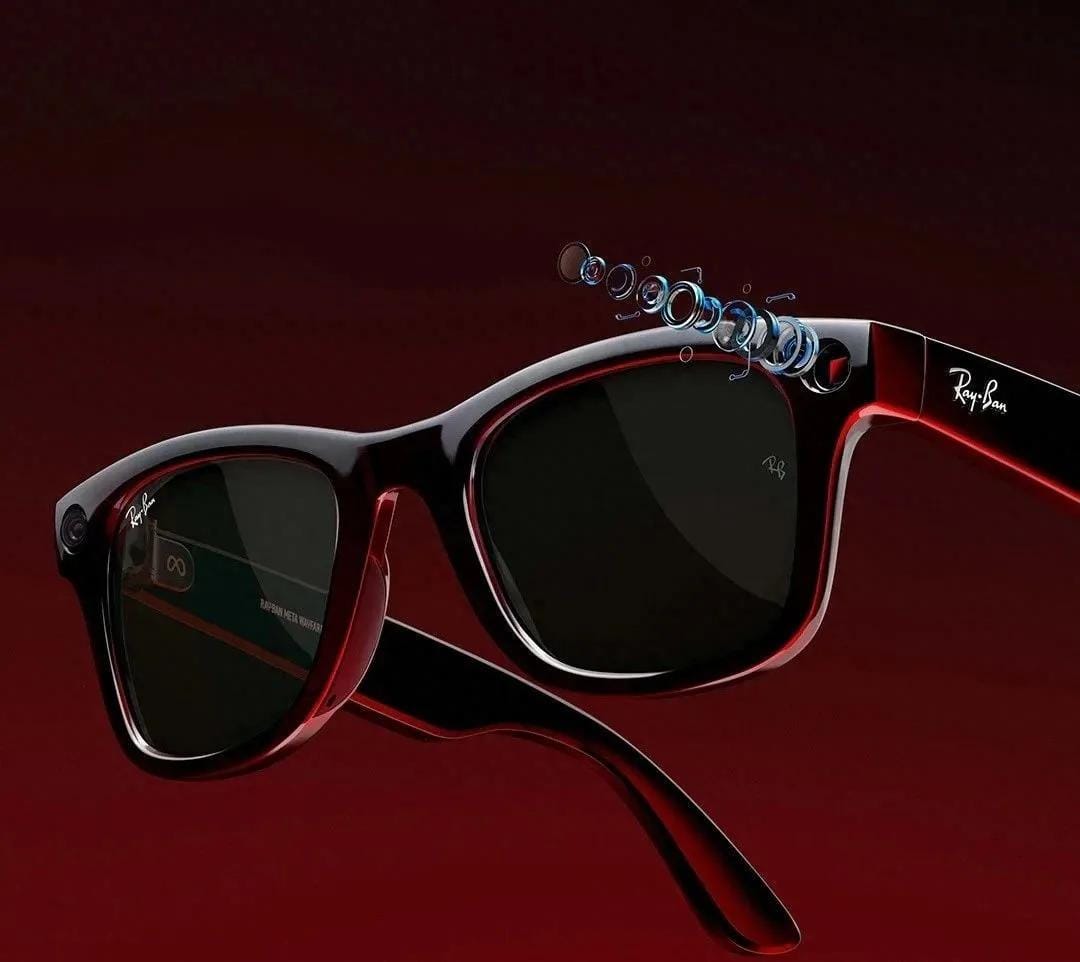
Meta's collaboration with Ray-Ban has inspired Chinese AI glasses startups to partner with traditional eyewear brands. Meta's latest Ray-Ban product has sold out at retail, surpassing 2 million units sold. Rayneo Innovation established a joint venture with Dr. Glasses to co-develop products and provide services at over 100 retail locations. INMO Technology is cooperating with leading eyewear companies to expand offline sales channels and reduce return rates. Rokid's Bolon partnership follows this strategy.
Large technology companies present increasing competitive pressure. Raven noted that major companies can leverage capital, supply chain, and content ecosystem advantages to capture initial users and channel resources more easily, putting pressure on startups in supply chain negotiations, channel access, and customer mindshare.
Zhu acknowledged that while industry growth is rapid, scale remains modest, with large companies still testing the market. Once industry scale expands, major companies will commit more resources, intensifying competition. He projected Rokid sales exceeding 1 million units in 2026, 2 to 3 million units in 2027, and over 10 million units in 2028. "Someone in the industry will definitely achieve this level of sales volume. If we don't do it, someone else will, but I hope it's us," Zhu said.
Zhu suggested startups maintain advantages through broader external partnerships and operational flexibility, while large companies carry historical burdens that limit agility.
Addressing the Return Problem
The high return rate reflects consumer uncertainty about value proposition. Many customers purchase AI glasses online out of curiosity, then utilize seven-day no-questions-asked return policies if products fail to meet expectations.
"Many consumers compare: a pair of ordinary glasses plus a smartphone already satisfies most usage scenarios, so is it necessary to spend several thousand yuan to purchase AI glasses separately?" Raven said. Some manufacturers pursuing better technical performance, such as upgrading from monochrome to full-color displays, have created heavier products at higher prices, potentially degrading user experience.
For AI glasses with near-eye displays, users typically require both prescription lenses and display lenses, creating excessive thickness for high myopia patients that causes discomfort. Higher refractive index lenses reduce thickness but add hundreds to thousands of yuan to costs.
Offline try-on services represent the primary approach to reducing returns. Rokid leverages its Bolon partnership to provide try-on services at over 15 eyewear retail chains, including Baodao Optical, Dr. Glasses, and Maochang Optical, with optical fitting services available. Through offline try-on and fitting, consumers can evaluate products before purchase, identifying issues like light leakage, excessive weight, or poor fit.
Raven said the industry remains in early growth stages. "In the short term, the core challenge is for companies to find differentiated positioning. Looking long term, there's an 'impossible triangle' among weight, battery life, and performance. Currently, no company excels at all three dimensions. Whoever finds the optimal balance will have the opportunity to become this industry's 'iPhone.'"