
Robot Era Secures RMB 1 Billion in Series A+ Funding Led by Geely Capital as Orders Surge
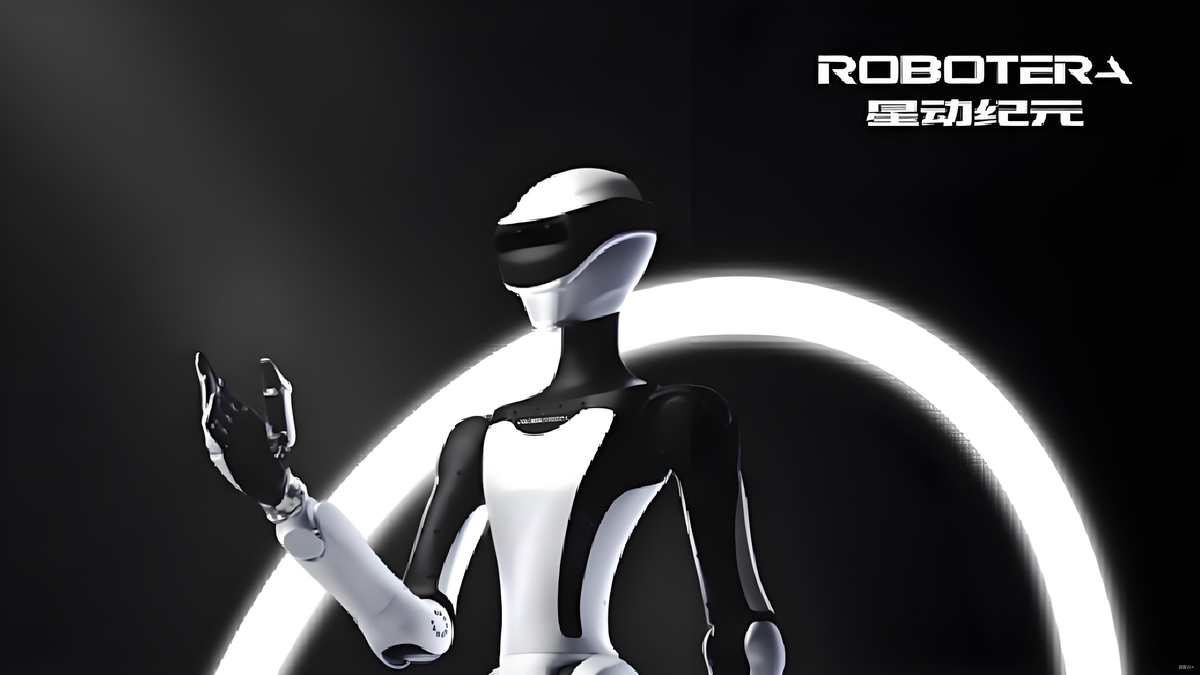
Robot Era has raised nearly RMB 1 billion yuan (US$138 million) in a Series A+ funding round, underscoring the growing appetite among industrial giants for embodied artificial intelligence technology. The financing was led by Geely Capital, an investment arm of the automotive heavyweight, marking a significant endorsement of the startup's potential to integrate humanoid robotics into manufacturing and logistics workflows.
Strategic backing also came from BAIC Capital, alongside the Beijing AI Industry Investment Fund and the Beijing Robot Industry Development Fund. The participation of major automotive and state-backed investors highlights a broader push to align AI development with industrial applications. The capital injection will be utilized to accelerate the iteration of the company’s end-to-end Vision-Language-Action (VLA) embodied model, ERA-42, and to scale its deployment in commercial settings.
The funding follows a period of rapid commercial growth for the Beijing-based company, which reported that its total order volume has surpassed RMB 500 million yuan (US 69 million). Of particular note is a single order in the logistics sector valued at nearly RMB 50 million yuan (US 6.9 million), signaling that the technology is moving beyond pilot phases into standardized, large-scale operational solutions.
The involvement of Geely Capital and BAIC Capital is expected to open substantial strategic synergies, particularly in the automotive manufacturing sector where humanoid robots are increasingly viewed as a solution for complex assembly tasks. By securing backing from international industrial giants and top-tier domestic funds, Robot Era is positioning its "embodied brain" technology as a critical infrastructure for the next generation of smart manufacturing.
Commercial Expansion and Global Reach
Robot Era has established a diversified revenue stream, achieving a balanced 50-50 split between its domestic and international businesses. In the domestic market, the company focuses on providing integrated solutions for embodied intelligence, securing partnerships with major conglomerates including Geely, Renault, SF Express, TCL, Haier Group, Lenovo Group, and Century Golden Resources Group.
Internationally, the company targets the developer market, counting nine of the world’s top 10 technology companies by market capitalization among its clients. Its overseas footprint spans North America, Europe, the Middle East, Japan, and South Korea. Robot Era has become a preferred supplier for top-tier research institutions and tech firms, including ByteDance, MIT, and Stanford University.
Advancements in Embodied AI Landscape
The company is distinguishing itself through significant technical milestones in its ERA-42 embodied brain, which utilizes a "World Model" approach to enhance robotic understanding of the physical environment. Robot Era claims to be the only Chinese company—and one of only four globally, alongside Tesla Inc., Nvidia Corp., and Figure—to achieve precise control over full-sized humanoid robots and five-finger dexterous hands using such advanced models.
In late 2024 and throughout 2025, the company released a series of algorithmic breakthroughs, including the HiRT architecture which connects a 7 billion-parameter world model with a 40 million-parameter execution model. The introduction of the "Ctrl-World" controllable generative world model, developed in collaboration with teams from Tsinghua University and Stanford, has reportedly improved the success rate of robots performing downstream tasks in unfamiliar scenarios by 44.7%. These advancements allow the robots to mentally "rehearse" tasks and evaluate strategies before execution.
Hardware Integration and Product Lineup
Beyond software, Robot Era maintains a high degree of vertical integration, with a self-development rate for hardware exceeding 95%. The company produces its own joint modules, dexterous hands, motors, reducers, and controllers, allowing for supply chain stability and rapid product iteration.
This capability has enabled the launch of a tiered product portfolio catering to research, industrial, and service sectors. Key releases include the "Star XHAND" series for precise manipulation, the wheeled service robot "Star Q5" released in June 2025, and the full-sized humanoid robot "Star L7" launched in July 2025. The Star L7 is positioned as a new productive force for manufacturing and logistics, capable of fulfilling roles such as parts sorting, assembly, and high-precision quality inspection.
Operational Efficiency in Real-World Scenarios
The company’s "AI flywheel" strategy—leveraging data capability to enhance model intelligence—is showing results in practical applications. In logistics, Robot Era’s units are deployed for sorting and scanning pharmaceuticals and parcels, while in the commercial service sector, robots like the Star Q5 provide guided tours and delivery services. In select scenarios, the company reports that its robots have achieved an efficiency rate of 70%, validating the viability of humanoid robotics in complex, unstructured environments.