
AI Memory Squeeze Drives China’s Sole DRAM Maker to US$3.4B Q1 Profit
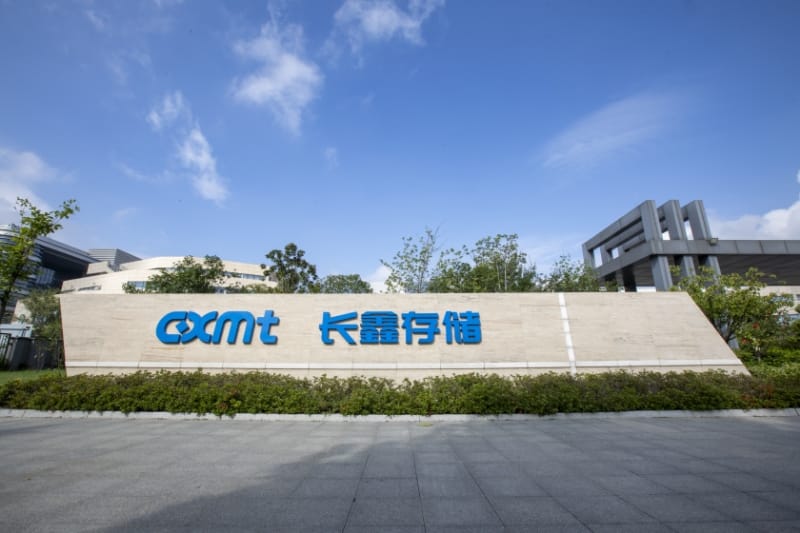
China’s sole mass producer of dynamic random access memory (DRAM) wiped out nearly a decade of accumulated losses in a single quarter, capitalizing on a structural global memory shortage driven by artificial intelligence demand.
In an updated prospectus filed on May 17, 2026, for its initial public offering on the Shanghai STAR Market, Changxin Technology reported a first-quarter net profit of RMB 24.76 billion (US$3.44 billion), up 1,688.3% year-on-year, on revenue of RMB 50.8 billion (US$7.06 billion). The results position the Hefei-based company as the world’s fourth-most profitable memory manufacturer, trailing only Samsung Electronics, SK Hynix, and Micron Technology.
The financial pivot shifts the market narrative surrounding China’s semiconductor self-sufficiency from state-subsidized survival to commercial viability. Changxin forecasts first-half 2026 net profit to reach between RMB 50 billion and RMB 57 billion. This rapid cash generation complicates its IPO pricing, sparking debate among institutional investors over whether to value the firm as a highly cyclical asset or a structural growth monopoly shielded by domestic substitution mandates.
AI Squeezes Capacity, Triggering Structural Price Surge
The catalyst behind Changxin’s margin expansion is a fundamental rewiring of the global memory supply chain. The current DRAM shortage, characterized by industry executives as the most severe in 15 years, is driven by structural AI computing requirements rather than traditional consumer electronics cycles.
To capture premium margins from AI server demand, the industry's top three manufacturers have aggressively reallocated advanced fabrication lines to High Bandwidth Memory (HBM). This pivot has severely cannibalized the production capacity for standard DDR4 and DDR5 memory—the core segments where Changxin operates.
According to TrendForce, DRAM prices surged 171.8% year-on-year in the third quarter of 2025, with standard DDR5 16Gb chips spiking over 627%. Contract prices continued to climb by up to 98% quarter-on-quarter in Q1 2026. With SK Hynix warning that supply deficits could persist until 2030 and top-tier capacity sold out for the year, Changxin has secured a prolonged pricing umbrella to monetize its legacy and standard memory inventory.
Erasing Historic Losses Sparks Valuation Divide
Operating as an Integrated Device Manufacturer (IDM) with three 12-inch wafer fabs in Hefei and Beijing, Changxin operates in a highly capital-intensive sector. Between 2023 and the end of 2025, the company accumulated RMB 36.65 billion (US$5.09 billion) in losses. The Q1 2026 earnings effectively erased that deficit, validating the high-risk strategy orchestrated by Chairman Zhu Yiming, who previously founded NOR flash designer GigaDevice.
The company's capitalization table reflects a synchronized push by state and private capital, featuring the National Integrated Circuit Industry Investment Fund (Big Fund Phase II), Anhui provincial funds, and tech conglomerates including Alibaba, Xiaomi, and Midea.
However, the upcoming IPO faces a severe valuation dichotomy. Changxin plans to raise RMB 29.5 billion (US$4.10 billion) by issuing up to a 10% stake, implying a baseline valuation of RMB 295 billion. Yet, based on projected 2026 earnings of RMB 100 billion and the semiconductor sector's average forward price-to-earnings ratio, bullish analysts argue the company's intrinsic market value exceeds RMB 2 trillion. Skeptics caution that memory pricing remains inherently cyclical, warning that a normalization in supply could rapidly compress margins, justifying a lower multiple.
Consolidating Market Share Highlights Supply Chain Bottlenecks
Beneath the financial windfall, Changxin is rapidly consolidating its global footprint. Data from Omdia shows the company’s global DRAM market share nearly doubled from 3.97% in Q2 2025 to 7.67% by Q4 2025. By rolling out DDR5 products with transfer rates up to 8,000MT/s, Changxin is closing the technological gap in standard memory.
Despite the record profits, structural vulnerabilities remain. Changxin’s capacity is limited to three facilities, keeping its scale significantly behind international rivals. Furthermore, the company remains exposed to geopolitical choke points regarding advanced semiconductor manufacturing equipment, and its entry into the highly lucrative HBM market lags a full generation behind industry leaders.
For investors, Changxin’s Q1 performance signals a transition in the Chinese semiconductor investment thesis. The narrative has moved from policy-driven speculation to tangible earnings delivery, testing whether a domestic champion can leverage a global super-cycle to fund the next decade of advanced semiconductor R&D.
Related Coverage:
Changxin Technology Targets Star Market IPO After High-Stakes Bet on Memory Chip Expansion