
AI² Robotics Wins Near-RMB 500 Million Order for Factory Robots from HKC Unit
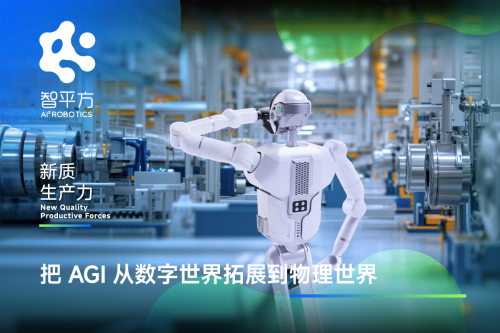
AI² Robotics has secured a landmark order worth nearly RMB 500 million yuan (US$69 million), the largest publicly disclosed deal to date in China's burgeoning humanoid robotics sector, signaling accelerating industrial adoption of embodied artificial intelligence.
The agreement is with Shenzhen Huizhi Wulian Technology, a wholly-owned subsidiary of leading display panel manufacturer HKC Corporation Limited. The strategic partnership will see the deployment of over 1,000 embodied intelligence robots across HKC's global production bases over the next three years, according to a statement.
The value of the order, confirmed by sources familiar with the matter, significantly surpasses previous nine-figure deals in the industry, including those announced by UBTECH Robotics Corp. and Unitree Robotics.
The deployment aims to automate HKC's entire manufacturing workflow, spanning warehouse logistics, material loading and unloading, component assembly, and quality inspection. The move underscores a push to integrate advanced robotics and AI into the high-precision fields of semiconductor display and smart terminal manufacturing.
Scope of Deployment
The robots, from AI² Robotics' AlphaBot series of wheeled, dual-arm models, will first be deployed in printed circuit board (PCB) handling operations. Their role will expand to more complex tasks such as organic light-emitting diode (OLED) vacuum lamination, consumables management, and the recycling of waste materials.
In precision-sensitive applications like vacuum lamination, the robots are designed to apply precisely controlled suction force to prevent material wrinkling and enhance process consistency, a critical factor in display manufacturing.
AI at the Core
The collaboration extends beyond hardware procurement. As part of the deal, a jointly developed on-device AI model, optimized for display panel manufacturing, will be integrated into HKC's production line control systems. This is designed to enable lower-latency real-time decision-making and more efficient energy management, improving the robots' speed and reliability in complex industrial settings.
Furthermore, the two companies will establish a joint technical team to develop a next-generation Vision-Language-Action (VLA) model and lightweight inference models for on-device use. The goal, according to the companies, is to create “smart workers” that can continuously learn, evolve, and truly understand the intricacies of the screen manufacturing process, leveraging HKC's extensive industrial know-how and production data.
The Players Involved
HKC Corp., founded in 2001, is a major Chinese manufacturer of display panels for televisions, laptops, smartphones, and automotive applications. The company operates multiple high-generation LCD production lines in cities including Chongqing, Changsha, and Mianyang, holding a top-three global market share in large-size LCD panels at approximately 10-13%, according to third-party data.
AI² Robotics is an embodied intelligence startup founded in 2023 by Guo Yandong, a former chief scientist at electric vehicle maker Xpeng Inc. and an R&D executive at smartphone giant OPPO. The company recently announced the completion of its Series A financing round of over RMB 100 million, led by Shenzhen Capital Group Co., Ltd., with participation from industrial investors including HuaXi Bio-tech and a major retail enterprise.
Industry in Motion
The HKC deal marks a significant commercial milestone for AI² Robotics. The startup has already secured partnerships in other sectors, including a collaboration announced in March 2025 with JINGNENG Microelectronics, a subsidiary of Geely Group, to develop robotics solutions for semiconductor manufacturing. It also has applications in automotive manufacturing, biotechnology, and public services.
To support its commercial expansion, AI² Robotics began operations at its own factory in September 2025. The facility has an annual production capacity of over 1,000 robots, laying the groundwork for large-scale deployments.