
Alibaba’s AI Chip Spin-Off Hype Meets Reality Check: JPMorgan Calls T-HEAD IPO a Sentiment Catalyst, Not a 2026 Deal
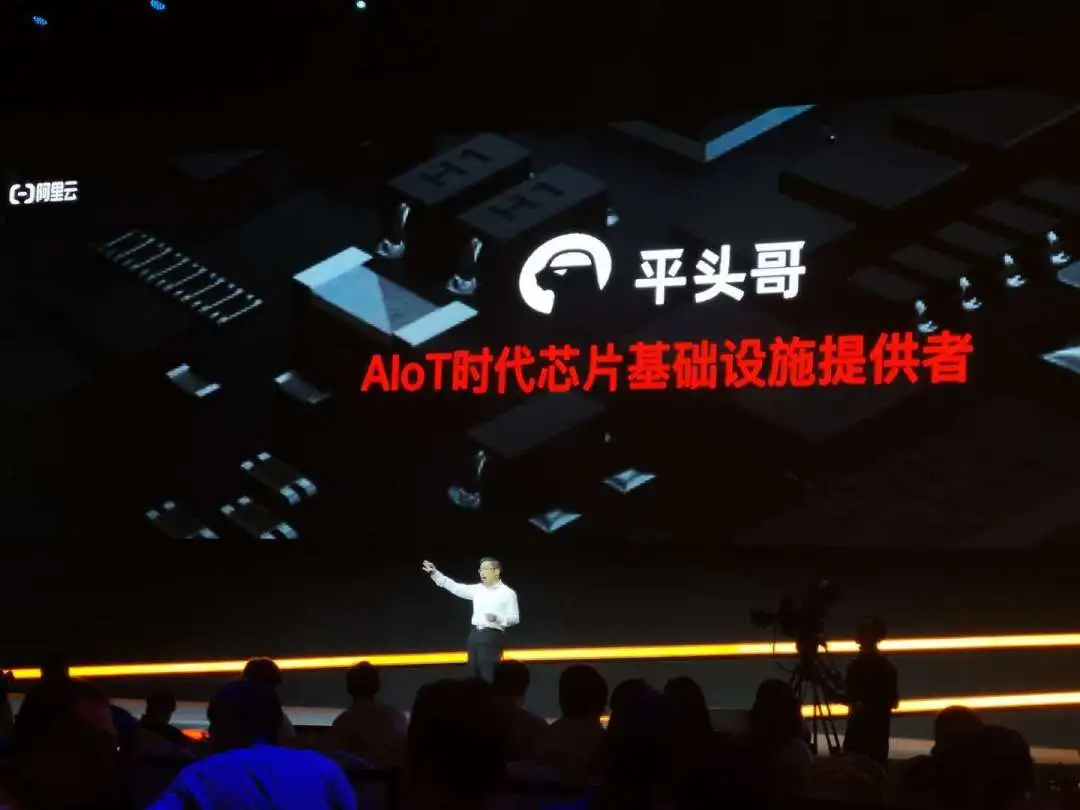
In a China equity research note dated January 23, 2026, JPMorgan turned market attention to a familiar but potent trigger: a potential IPO. The subject is Alibaba and its in-house AI chip unit T-Head. Media reports suggesting a possible standalone listing have reignited the long-dormant “value unlocking” narrative around Alibaba. JPMorgan’s conclusion, however, is more measured: the story is powerful as a sentiment catalyst, but weak as a near-term transaction.
Why does this matter? Because after years of regulatory pressure and aborted restructuring plans, any hint that Alibaba might again monetize strategic assets is enough to move markets—even if execution remains uncertain.
A Headline That Moves Stocks
According to JPMorgan, the market reaction has less to do with numbers and more to do with signaling. The bank says it was “surprised by the release of this information,” not because of T-HEAD’s fundamentals, but because it represents “a meaningful return of capital-market value-unlocking optionality.”
Bloomberg reported that Alibaba may first internally restructure T-HEAD—potentially introducing partial employee ownership—before exploring IPO options. No timeline has been confirmed, and Alibaba has not officially commented.
JPMorgan frames this as a classic short-term catalyst: powerful enough to lift sentiment, but fragile if follow-up confirmation fails to materialize.
The Valuation Optionality: Real, But Abstract
JPMorgan does not dismiss the valuation upside. Using peer EV-to-revenue ranges and what it describes as an “aggressive” 2026 revenue proxy, the bank estimates that a standalone T-HEAD valuation could range from US$25 billion to US$62 billion—equivalent to roughly 6% to 14% of Alibaba’s current market capitalization.
That range, however, is deliberately framed as optionality rather than intrinsic value.Given limited disclosure, JPMorgan avoids building a full semiconductor fundamentals model. Instead, it simplifies the question: if T-HEAD were separately valued today, how much implied option value would the market assign? The answer is non-trivial—but highly sensitive to structure, credibility, and timing.
“Internal First” Remains the Base Case
A central constraint is T-HEAD’s business model. JPMorgan stresses that the unit has historically been optimized for internal use rather than broad commercialization.
Public records support this view. Alibaba’s Yitian 710 CPU was previously described as not intended for external sales, while the Hanguang 800 inference chip has been positioned as internal infrastructure to accelerate search, recommendation, and e-commerce workloads.
That said, T-HEAD is no longer entirely “zero external.” JPMorgan cites a Reuters report from 2025 noting that China Unicom’s Qinghai data center deployed around 23,000 domestically produced AI chips, with approximately 72% supplied by T-HEAD. For JPMorgan, this represents meaningful—but still limited—external validation.
Why 2026 Is Likely Too Soon
Despite the market excitement, JPMorgan is explicit about its skepticism that an IPO could realistically happen in 2026.
“When demand and commercialization remain heavily dependent on the parent company,” the report notes, “investors, exchanges, and regulators will closely scrutinize independence.” In practice, that means Alibaba would need time to expand third-party orders, establish independent governance and employee equity structures, and disclose cleaner, standalone financials.
These steps, JPMorgan argues, typically take longer than a year. Bloomberg’s reference to “employee ownership first” reinforces the view that the process is still preparatory, not transactional.
Revenue Visibility: The Missing Ingredient
For Chinese semiconductor listings, JPMorgan points out that equity valuations are often driven less by technology narratives and more by revenue scale and predictability. On that front, T-HEAD still faces long lead times.
Design wins, deployment, customer validation, and revenue recognition can easily push meaningful external revenue into late 2026 or beyond. As a result, JPMorgan sees a low probability of “large, clean” external revenue contributions in 2026–2027 without a step-change in commercialization.
Sentiment Now, Structure Later
JPMorgan’s bottom line is blunt. The T-HEAD IPO story works as a headline and a mood booster. It revives the idea that Alibaba still holds latent assets the market may one day price more generously. But until credibility, structure, and external scale improve, the trade remains driven by belief rather than balance sheets.
For now, T-HEAD is best understood not as a spin-off in waiting, but as a strategic option—one the market is eager to price, even if the exercise date remains unclear.