
Apple Eyes Chinese Memory Chipmakers CXMT and YMTC to Diversify Supply Chain, Counter Rising Costs
Apple is reportedly weighing a significant shift in its memory and storage supply chain strategy, with the tech giant exploring partnerships with two Chinese semiconductor manufacturers to reduce cost pressures and lessen its dependence on established Japanese and South Korean suppliers, according to a report by a foreign technology media outlet.
According to Wccftech's report, Apple is evaluating the integration of DRAM chips from Changxin Memory Technologies (CXMT) and NAND flash storage from Yangtze Memory Technologies (YMTC) into its upcoming iPhone 18 lineup, as well as MacBook and desktop Mac products.
The move comes amid mounting pressure on Apple's profit margins from surging memory chip prices. Apple currently sources the majority of its DRAM and NAND flash from Samsung Electronics, SK Hynix, and Kioxia. According to the report, approximately 60% of DRAM used in the iPhone 17 series was supplied by Samsung, with SK Hynix and Micron covering the remainder. The pricing environment has become increasingly hostile — Kioxia reportedly agreed to supply NAND flash to Apple this quarter only at double its previous price, insisting on quarterly rather than semi-annual pricing negotiations.
Apple CEO Tim Cook stated during the company's most recent earnings call that memory supply had been "arranged," yet industry-wide price increases continue to weigh on margins. Ming-Chi Kuo, analyst at TF International Securities, has previously cautioned that absorbing higher memory costs to protect market share would be easier said than done.
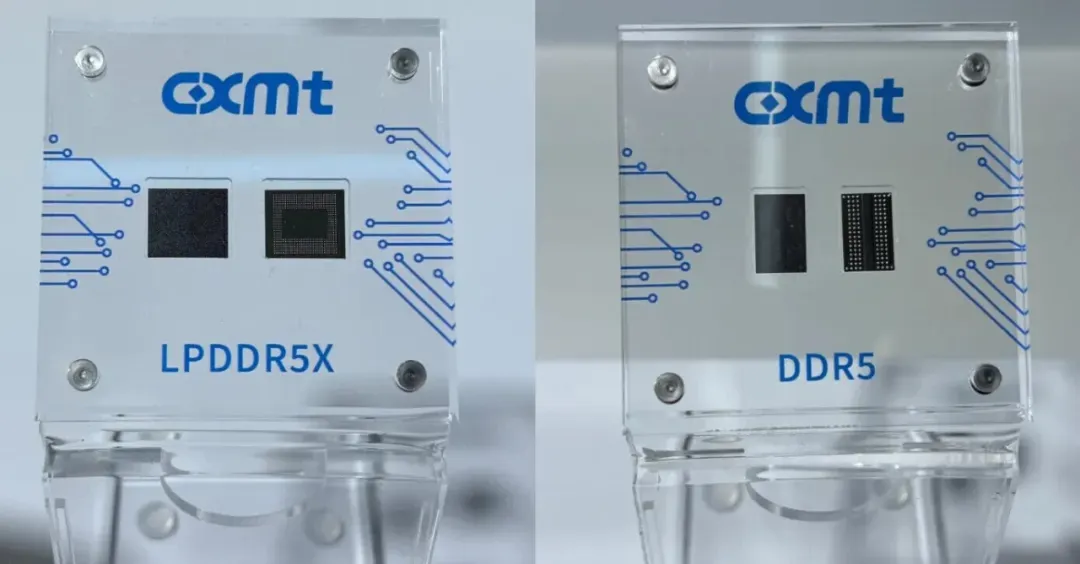
On the technical side, both Chinese chipmakers appear capable of meeting Apple's specifications. CXMT has entered mass production of LPDDR5X and DDR5 variants — formats directly compatible with Apple's iPhone and M-series SoC platforms — with 12Gb and 16Gb LPDDR5X capacities covering both mobile and computing applications. YMTC, meanwhile, has mass-produced fifth-generation 3D NAND with a total stack of 294 layers, achieving bit density approaching 19.8 Gb per square millimeter, a level that rivals leading global NAND manufacturers, according to analysis by TechInsights.
From a cost perspective, CXMT and YMTC reportedly price their chips 10% to 15% below Samsung and SK Hynix, benefiting from lower labor costs and significant economies of scale. CXMT currently operates at a monthly wafer capacity of 300,000 units with plans to expand to 500,000, while YMTC's 400,000-unit monthly capacity could push its global market share beyond 12% upon further expansion.
The geopolitical dimension, however, adds considerable complexity. Both CXMT and YMTC were briefly added to the U.S. Department of Defense's "Restricted Companies" list on February 13, 2026, before reportedly being temporarily removed by the Commerce Department's Bureau of Industry and Security — only to be reinstated shortly thereafter. The report suggests these regulatory shifts may be connected to Apple's supply chain deliberations.
Technical gaps also remain. CXMT's DDR5 yield rate stands at approximately 75%, compared to Samsung's 95%, while YMTC's most advanced NAND products may require further maturation before qualifying for Apple's premium product lines.
Should Apple proceed, the partnership would serve dual strategic purposes: providing leverage in negotiations with incumbent suppliers while simultaneously diversifying supply chain risk — a calculus that may ultimately prove difficult to ignore.