
Autonomous Variable Robotics Secures $140M as ByteDance Joins China's Embodied AI Arms Race
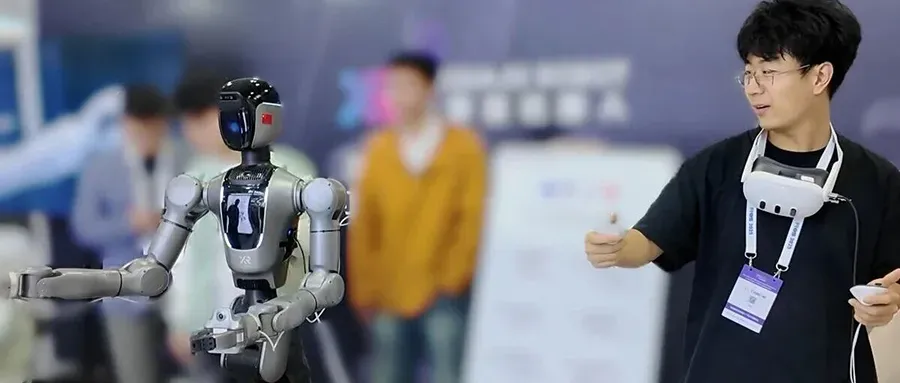
A Shenzhen-based robotics startup founded barely two years ago has closed what amounts to China's largest robotics funding round this year, underscoring how quickly embodied intelligence has shifted from research curiosity to strategic imperative for China's tech giants. Autonomous Variable Robotics announced $140 million in A++ financing led by ByteDance, Sequoia China, and a consortium of state-backed funds, marking the third consecutive mega-round for a company that now counts Alibaba Cloud, Meituan, and ByteDance among its backers—a distinction no other Chinese embodied AI firm currently holds.
ByteDance's Strategic Pivot Beyond Content Algorithms
ByteDance's entry represents a tactical departure from its core content recommendation infrastructure. While Alibaba Cloud and Meituan pursued robotics investments aligned with their logistics and service ecosystems, ByteDance's participation signals recognition that the architectural breakthroughs enabling large language models—attention mechanisms, multimodal processing, world modeling—transfer directly to physical manipulation tasks. The company's interest likely stems from convergence between video synthesis capabilities (critical for robot simulation) and embodied control systems that require real-time sensorimotor coordination.
Autonomous Variable's technical approach validates this convergence thesis. Founded in December 2023 by Wang Qian, a Tsinghua alumnus who pioneered attention mechanisms in neural networks during his doctoral research at U.S. robotics labs, the startup claims end-to-end learning architecture differentiation. Its WALL-A model integrates Vision-Language-Action systems with world models—a design choice that enables the robot to predict spatial-temporal states while processing environmental feedback through visual causal reasoning. This architecture allowed the company's "Quantum" robot to master traditional handicraft tasks like sachet assembly within days, demonstrating generalization capabilities that typically require months of task-specific programming.
Hardware-Data-Model Closed Loop as Moat Strategy
The company's $280 million cumulative capital raise over six months finances full-stack vertical integration rarely seen in robotics startups. Autonomous Variable manufactures its wheeled dual-arm platforms—Quantum One and Quantum Two—alongside proprietary joint modules, actuators, and master controllers. Quantum Two's 20-degree-of-freedom hands incorporate arm-hand integrated exoskeleton teleoperation, enabling high-fidelity data collection that directly trains the WALL-A model. This closed-loop system addresses robotics' persistent data scarcity problem: most manipulation datasets contain thousands of demonstrations, while useful generalization demands millions.
The startup's data pipeline employs model-driven filtering, augmentation, and annotation—processes that convert raw teleoperation recordings into training samples optimized for specific task distributions. By controlling hardware specifications from the model's architectural requirements, Autonomous Variable circumvents the sim-to-real transfer gap that plagues teams using off-the-shelf platforms. The vertical integration strategy also compressed unit economics; the company reports substantial per-robot cost reductions, though specific figures remain undisclosed.
Manufacturing and Elderly Care as Beachhead Markets
Autonomous Variable positions industrial manufacturing, logistics, and elder care as initial deployment targets—sectors where labor shortages intersect with tolerance for semi-autonomous operation. China's working-age population contracted by 10 million between 2020 and 2023, while its population aged 65-plus exceeded 200 million in 2023. These demographics create structural demand for robotics that can handle unstructured tasks—loading irregular components onto assembly lines, sorting heterogeneous logistics parcels, assisting with patient mobility.
Unlike narrow automation, embodied intelligence systems promise adaptability: the same foundational model can transfer learned manipulation skills across contexts with minimal retraining. However, regulatory uncertainty persists around safety certification for robots operating in close human proximity, particularly in healthcare settings where liability frameworks remain ambiguous. The company's disclosed client engagements span multiple industries but stop short of naming specific enterprise partners or deployment volumes.
Capital Concentration Risks in Chinese Robotics Ecosystem
The funding announcement positions Autonomous Variable within a broader capital consolidation pattern. Chinese robotics investments increasingly concentrate among firms demonstrating multimodal foundation model capabilities and hardware manufacturing capacity. This mirrors dynamics in the large language model sector, where compute access and data scale create winner-take-most outcomes. Sequoia China's participation—alongside state-backed Beijing Information Industry Development Fund and Shenzhen Capital Group's inaugural AI fund investment—suggests institutional validation of the embodied intelligence thesis.
Yet dependency on a narrow investor coalition introduces strategic exposure. Alibaba, Meituan, and ByteDance compete across multiple business lines; their simultaneous backing creates potential conflicts if Autonomous Variable pursues applications that disrupt any backer's core operations. The company's ability to navigate these relationships while maintaining technical independence will determine whether it sustains access to both capital and the cloud infrastructure essential for training foundation models at scale.
By ChinaBiz Insider Analysis Desk