
Chinese AI Pet Toys Emerge as Consumer Hardware's Latest Battleground After $2.5 Billion Market Sprint
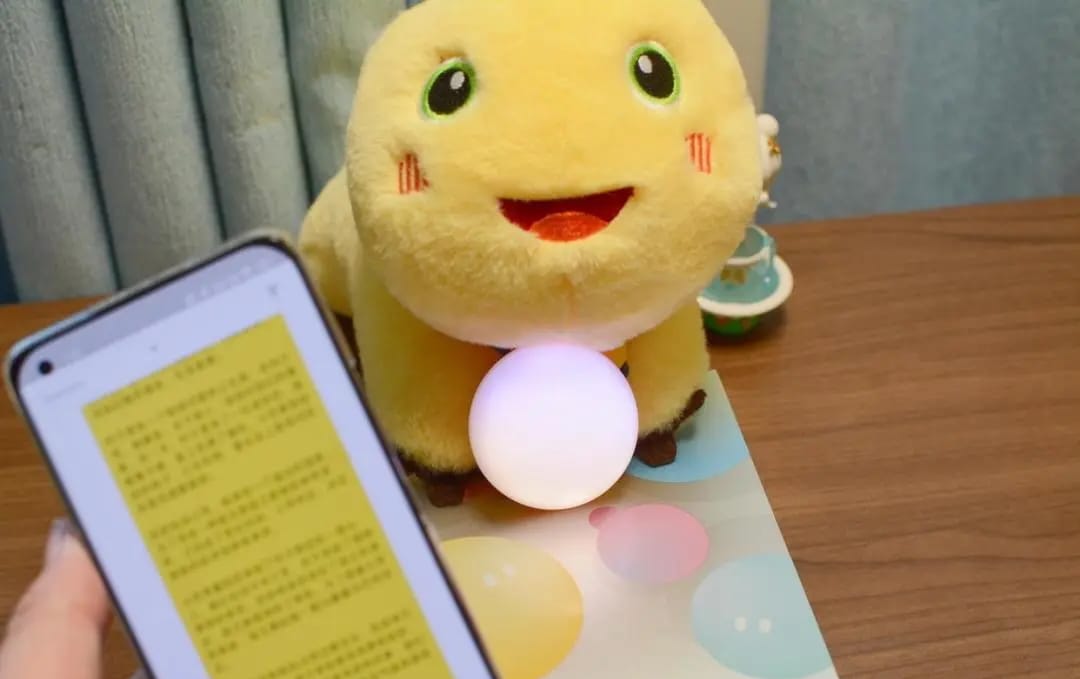
Over 30 Chinese companies showcased AI companion pets at CES 2026, marking a decisive shift from consumer electronics prototypes to commercially scaled products. The convergence of lightweight language models, sensor miniaturization, and emotional consumption trends has created what investors now view as AI's most viable consumer entry point since smart speakers—one where relationship-building replaces task execution.
From Plush Accessories to Adaptive Companions
Shenzhen-based Hugbibi's Joobie owl, Luobozhineng's Fuzozo character series, and Huawei's recently launched "Smart Hanhan" share a deliberate design philosophy: they prioritize perceived aliveness over functional complexity. Unlike earlier voice-activated toys with pre-recorded responses, these products integrate multi-point touch sensors, pressure detection, and behavioral memory systems. Joobie reacts to hugs and movement patterns without speech output, while Fuzozo generates differentiated personality traits based on seven-day interaction cycles—what its maker calls "MBTI for Pets." Huawei's co-developed product with Luobozhineng taps the company's "Xiaoyi" large language model for natural dialogue, selling out its initial inventory within hours of launch.
The strategic departure from humanoid or service robot complexity reflects pragmatic engineering constraints and consumer psychology insights. These products accept emotional ambiguity rather than problem-solving precision, demanding lower computational overhead while sidestepping the "uncanny valley" phenomenon that plagues more anthropomorphic designs. Pricing between RMB 300-1,000 (42−42−140) positions them as impulse purchases rather than considered investments, deliberately undercutting smart home devices.
Capital Consolidation Signals Industry Validation
Investment activity accelerated sharply in 2025 with 19 funding events, compared to 14 in 2024 and three in 2023, according to IT Juzi data. Sequoia Capital China led Luobozhineng's "Angel+" round after the company moved 120,000 Fuzozo units in six months—making it one of few AI companion hardware products to demonstrate retail traction at scale. GSR Ventures backed both Luobozhineng and Yueran Innovation, the latter securing RMB 200 million in Series A for BubblePal, a retrofit device enabling traditional plush toys to generate contextual speech.
This momentum builds on Pop Mart's validation of emotional-value consumption in Chinese markets. But where collectible toys offer static gratification, AI companions promise evolving relationships—a subscription-adjacent model without explicit recurring fees. The hardware provides margin structure (gross margins reportedly between 40-50% for leading products), while potential software upgrades create retention hooks that pure collectibles lack.
Four distinct player categories now compete: venture-backed startups like Hugbibi and Luobozhineng led by former Xiaomi Robotics designers; consumer electronics giants including TCL and Honor treating the category as IoT ecosystem extensions; internet platforms such as JD.com and ByteDance leveraging content distribution advantages; and legacy toy manufacturers adding sensors to existing IP portfolios. This breadth suggests the opportunity extends beyond hardware novelty into infrastructure reconfiguration—China's toy manufacturing hubs in Guangdong and Zhejiang have launched policy incentives for AI integration, while MIIT's November 2025 guidance explicitly named AI toys as industrial upgrade priorities.
Market Projections Meet Structural Uncertainties
MIIT estimates China's AI toy market reached RMB 24.6 billion (US$3.4 billion) in 2024, with the global market growing from US$11 billion in 2024 to US$1858 billion by 2030, implying a 30% CAGR. These figures assume sustained emotional computing improvements and sticky user engagement—both unproven at multi-year timescales.
Technical differentiation remains narrow. Most products combine off-the-shelf IMUs, capacitive touch arrays, and cloud-connected inference engines running 1-7 billion parameter models. True behavioral divergence depends on training data scale and personalization algorithms, where first-movers like Luobozhineng hold temporary advantages but face replication risks as component costs decline. The absence of defensible moats beyond brand affinity and distribution speed raises questions about long-term unit economics once customer acquisition costs normalize.
Regulatory frameworks for AI-generated content in children's products remain underdeveloped, particularly around data retention from minors' interactions and emotionally manipulative design patterns. Companies emphasize on-device processing for privacy, yet companion experiences degrade without cloud connectivity—a tension likely to attract scrutiny as adoption widens.
The sector's trajectory hinges less on whether AI can simulate companionship than whether simulated companionship sustains purchasing behavior beyond novelty cycles. Early sales velocity indicates product-market fit within specific demographics, but the gap between 120,000 units and projected tens of millions separates proof-of-concept from category transformation. What remains clear is that China's consumer AI hardware race has found its most emotionally accessible form factor yet—one optimized for cultural preferences around portable, low-maintenance relationships rather than Western markets' task-oriented smart home paradigms.
By ChinaBiz Insider Analysis Desk