
DeepSeek V4 and the Shift to ‘Vibe Coding’: Industrializing the AI Agent Economy
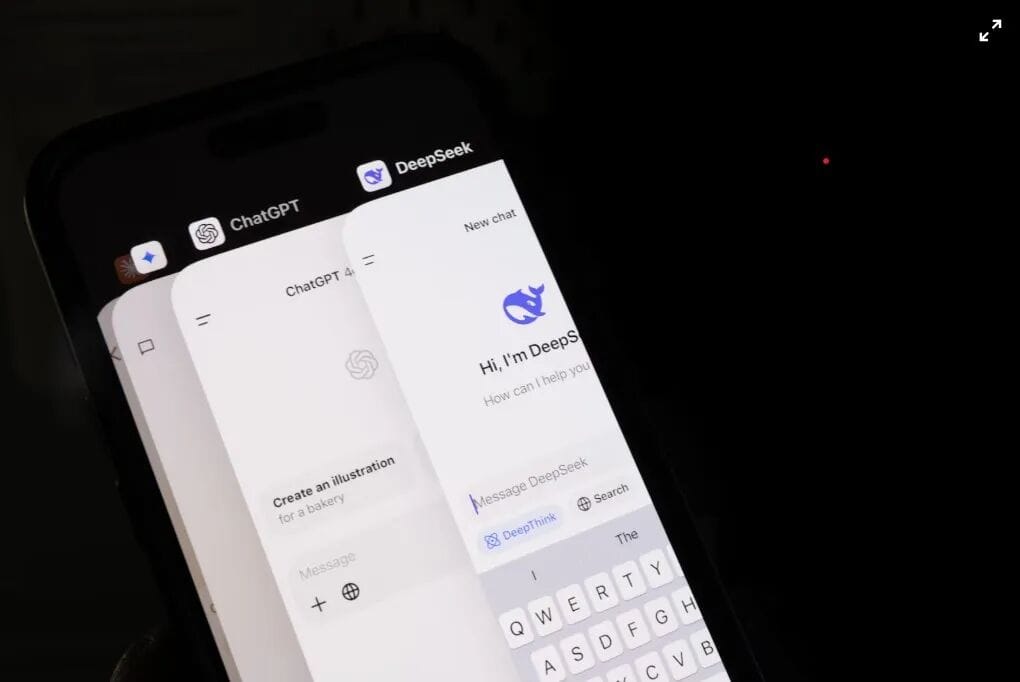
The anticipated mid-February launch of DeepSeek-V4 marks a critical pivot in the global AI arms race, moving beyond the "low-cost reasoning" proved by its predecessor to high-fidelity software engineering capabilities designed to rival Anthropic and OpenAI.
By reportedly solving the industry-wide bottleneck of "catastrophic forgetting" through novel architectural constraints, the Beijing-based lab is positioning V4 not merely as a chatbot, but as the foundational infrastructure for the nascent autonomous agent economy. This technical escalation coincides with a massive capital market validation of the Chinese AI sector, underscored by the explosive Hong Kong IPO debuts of Zhipu AI and MiniMax.
Overcoming Catastrophic Forgetting via mHC Architecture
The central differentiator for V4 appears to be architectural stability rather than raw parameter scaling. Industry insiders suggest that DeepSeek has addressed "catastrophic forgetting"—the tendency for models to degrade in earlier competencies while learning new data patterns—by implementing the "Manifold Constrained Hyper-Connections" (mHC) architecture.
Detailed in a December 31, 2025 paper co-authored by founder Liang Wenfeng, this architecture introduces a signal "valve" that strictly controls gain to approximately 1.6x. This solves the signal gain instability that typically plagues models as they scale in depth and complexity. In preliminary testing on the BIG-Bench Hard reasoning benchmark, models utilizing mHC demonstrated a 2.1% performance lift across parameter scales from 3B to 18B.
This architectural breakthrough is critical for the "Agent Era." Unlike creative writing, coding agents require absolute logical continuity; a model cannot hallucinate a variable definition it "learned" 5,000 tokens ago without crashing the entire software build. The shift from the DeepSeek-R1’s "strawberry counting" errors—which stemmed from rote memorization rather than conceptual understanding—to V4’s deep logic retention suggests a model built for complex, multi-file engineering environments.
The Rise of ‘Vibe Coding’ and the Agentic Moat
DeepSeek’s strategic focus has migrated to "Vibe Coding," a development paradigm where the AI interprets the developer's "flow" and intent rather than just autocompleting syntax. This moves the competition metric from simple code generation to complex project architecture management.
The timing of DeepSeek’s disclosure supports this aggressive upgrade cycle. In early January 2026, the team expanded their arXiv paper on the previous R1 model from 22 to 86 pages, fully open-sourcing their training pipeline, including cold start mechanisms and rejection sampling. In the tech sector, such a "clearing of the deck" typically signals that a company views its previous flagship technology as a commodity and has already secured a new, higher-order defensive moat—in this case, the V4 codebase.
This follows the validation of their low-cost efficiency model. The team successfully rebutted "distillation" accusations in Nature by revealing a post-training cost of merely $294,000 for R1, proving they can iterate faster and cheaper than US-based competitors burdened by higher compute costs.
Quant Funds and Hardware Ecosystems Crowd the Vertical
While DeepSeek challenges OpenAI globally, the domestic landscape has bifurcated into specialized vertical players and ecosystem giants. The barrier to entry for high-performance coding models is eroding, evidenced by the entry of quantitative finance firms into the LLM space.
The "IQuest-Coder-V1," developed by the research arm of hedge fund giant Ninekun Investment, recently achieved an 81.4% score on the SWE-bench Verified test. Despite running on a relatively lean 40B parameter architecture, it rivals the performance of Claude, leveraging the rigorous mathematical logic inherent in quantitative trading strategies.
Simultaneously, ecosystem giants are moving the battleground from the cloud to the edge. ByteDance has integrated its Doubao model into the hardware layer via the Nubia M153, enabling cross-application execution (e.g., booking tickets via voice), while Alibaba’s Qwen Code v0.5.0 now supports multi-instance parallel processing. DeepSeek faces a dual threat: the specialized precision of quant-backed models and the distribution hegemony of hardware-integrated AIs.
Capital Markets Validate the Model Wars
The impending V4 launch arrives against a backdrop of renewed investor confidence, dismissing earlier fears of an "AI bubble" burst in Asia. The Hong Kong Stock Exchange has seen a frenzy of activity with the listings of Zhipu AI and MiniMax in early January 2026.
Zhipu AI’s debut, valuing the company at HKD 57.89 billion, and MiniMax’s staggering 109% Day 1 surge to a HKD 105.4 billion valuation, provide a crucial signal: the secondary market is willing to pay a premium for generative AI despite ongoing operational losses. This capital influx creates a safety net for the industry, allowing top-tier labs like DeepSeek to pursue aggressive R&D cycles without the immediate existential threat that plagued the sector during the "Hundred Model War" of 2024.
The release of DeepSeek-V4 will serve as the ultimate litmus test: whether a pure-play research lab can maintain its edge against well-capitalized commercial giants and specialized financial algorithm firms in the race to automate software engineering.
By ChinaBiz Insider Analysis Desk