
Avatr Technology Upgrades Flagship EV with Tri-Motor Setup and Enhanced Lidar
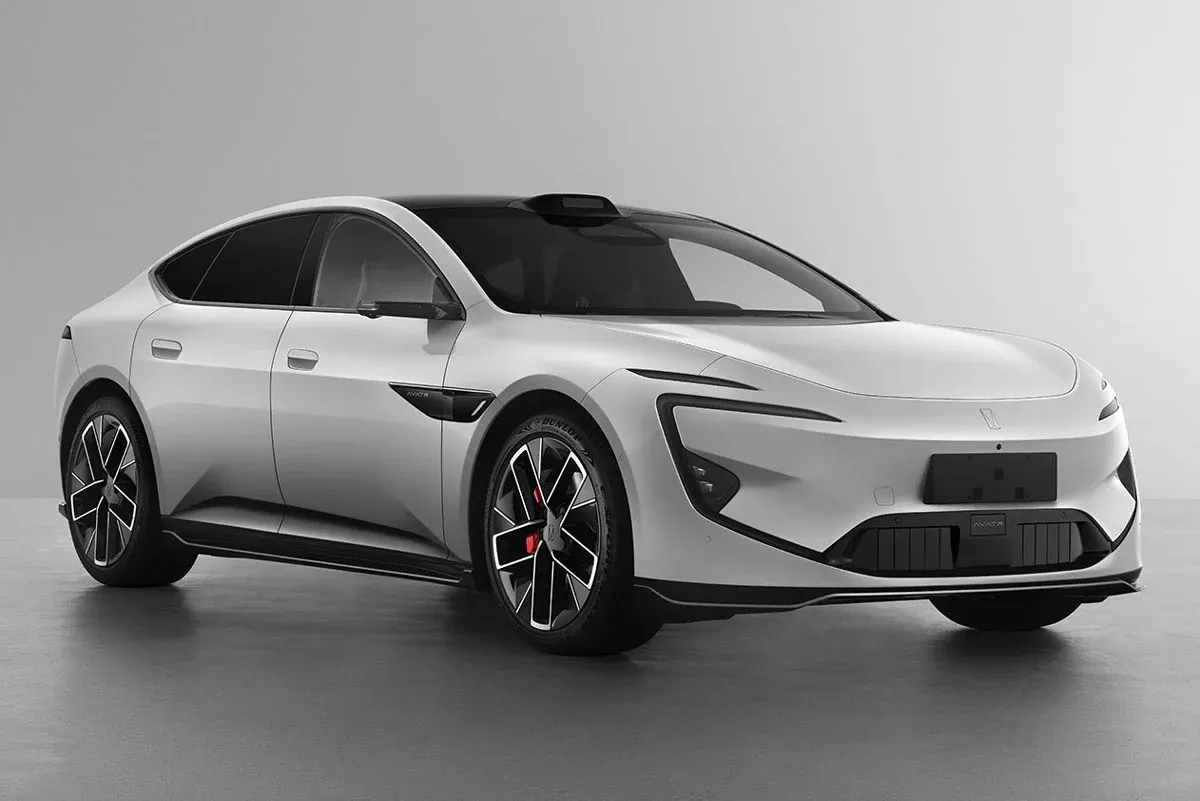
Avatr Technology, an electric vehicle brand backed by Changan Automobile, Huawei Technologies, and Contemporary Amperex Technology, is set to launch an updated version of its Avatr 12 sedan. Regulatory filings with China’s Ministry of Industry and Information Technology reveal significant upgrades to the vehicle’s powertrain and autonomous driving hardware, signaling an aggressive push into the high-performance segment of the world's largest EV market.
The latest iteration of the Avatr 12 marks the first vehicle developed under a joint innovation framework between Avatr and Huawei’s new automotive unit, Huawei Qiankun. The most visible alteration involves the repositioning of the front lidar sensor from the bumper to a roof-mounted “watchtower” configuration. This adjustment is designed to mitigate repair costs associated with minor collisions while extending the forward detection range.
Industry analysts speculate that the upgraded sensor suite may incorporate Huawei’s latest 520-line lidar technology, offering higher resolution and longer detection capabilities. The vehicle retains side-facing lidar sensors on the front fenders and is expected to keep a rear-facing unit, maintaining a quad-lidar hardware standard. These enhancements are anticipated to support Huawei’s Qiankun ADS 4.0, a mature advanced driver-assistance system (ADAS), strengthening the model's competitive position in intelligent driving.
Design modifications also extend to safety compliance and user experience. The retractable door handles have been replaced with a semi-hidden design, likely supporting a two-stage physical opening mechanism to align with potential regulatory updates. The vehicle maintains its distinctive fastback coupe silhouette with a length exceeding 5 meters and a wheelbase surpassing 3 meters, offering 20-inch and 21-inch wheel options.
The most substantial technical overhaul appears in the powertrain configurations. For the extended-range electric vehicle (EREV) variant, the company retains a 1.5-liter turbo range extender rated at 115 kW and a 52.01 kWh lithium iron phosphate battery from Contemporary Amperex Technology. However, the rear drive system has been significantly upgraded. The single 231 kW rear motor has been replaced by dual rear motors, each rated at 200 kW. While this increases performance, the WLTC pure electric range has slightly decreased to 261 kilometers, and fuel consumption has marginally risen by 0.04 liters per 100 kilometers.
The pure electric version introduces dual-motor and tri-motor configurations supplied by Chongqing Tsingshan Industrial. The dual-motor variant features two rear-mounted 251 kW motors. The new tri-motor performance flagship adds a 210 kW front motor to this rear-drive foundation. This setup represents a major leap from the current model's maximum output of 402 kW for the all-wheel-drive version. Given that the current dual-motor model accelerates from 0 to 100 km/h in 3.8 seconds, the tri-motor variant is expected to deliver supercar-level acceleration, maintaining a similar curb weight despite the power increase.
Market projections suggest Avatr will adopt an aggressive pricing strategy to capture market share in the premium sedan segment. Estimates place the starting price for the EREV model at approximately RMB 270,000 (US$38,512), the dual-motor pure electric version at RMB 290,000 (US$41,365), and the tri-motor version at RMB 320,000 (US$45,644). With promotional launch incentives, the high-performance tri-motor model could potentially fall below the RMB 300,000 (US$42,791) threshold, intensifying competition in the RMB 250,000 to RMB 300,000 mid-to-large sedan market.