
Chinese Robotics Giants Command 70% of Global Floor Cleaning Market Through 'Embodied AI' and Supply Chain Velocity
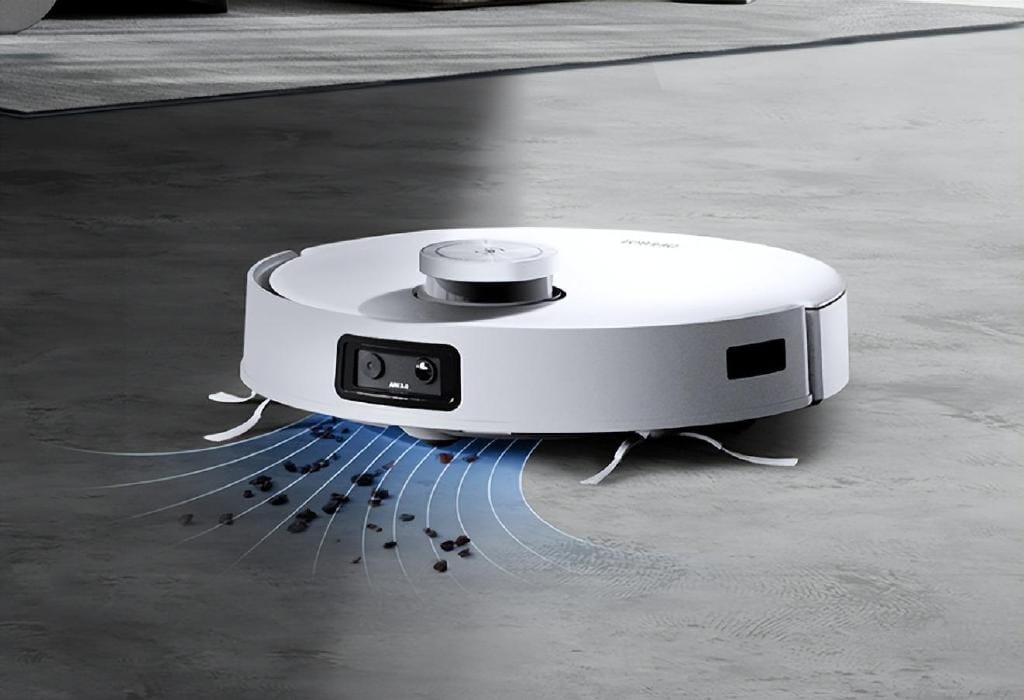
Chinese manufacturers have effectively cornered the global market for autonomous cleaning devices, capturing nearly 70% of global shipments in the first three quarters of 2025. By leveraging supply chain agility to introduce "embodied AI" features—such as stair-climbing capabilities and drone-hybrid flight—brands including Roborock and Dreame are widening the technological gap against legacy Western competitors to an estimated two generations.
The Consolidation of a Global Oligopoly
The global smart vacuum sector is no longer a fragmented competitive landscape but a concentrated oligopoly led by Chinese engineering. Data from IDC indicates that global shipments reached 17.42 million units in the first three quarters of 2025, marking an 18.7% year-over-year increase. More critically, the top five entities driving this volume—Roborock, Ecovacs, Dreame, Xiaomi, and Narwal—are exclusively Chinese brands.
This dominance is not merely a function of pricing power but of rapid market absorption. In Western Europe, a traditionally high-barrier market for consumer electronics, Chinese brands now account for more than 6 out of every 10 units sold, spanning price points from €200 to the premium €2,000 tier. This penetration suggests that European consumers prioritize feature velocity over brand legacy, allowing Chinese firms to displace incumbents like iRobot by offering superior navigation and cleaning efficacy at comparable or lower price points.
Escaping the 2D Plane: The Era of Embodied Intelligence
The consumer electronics narrative has shifted from "automated cleaning" to "embodied AI," a transition vividly demonstrated at CES 2026 in Las Vegas. Chinese manufacturers utilize this platform to redefine the robot vacuum from a 2D floor-mapping device to a 3D environmental navigator.
Roborock and Dreame have introduced distinct solutions to the industry’s longest-standing bottleneck: verticality. Dreame’s integration of a tank-like caterpillar track system allows its units to ascend staircases in under 30 seconds. Concurrently, Roborock has engineered a chassis with independently articulating "legs" capable of extension, flexion, and jumping, enabling the unit to negotiate obstacles and clean individual steps autonomously.
Perhaps the most radical departure from traditional form factors comes from MOVA, which debuted a unit equipped with flight capabilities. Designed for multi-story villas and complex architectural layouts, this drone-hybrid addresses "dead zones" that wheeled robots cannot reach. These innovations signal that Chinese R&D is moving beyond iterative suction improvements to focus on "Embodied AI"—giving machines the perception, decision-making, and execution capabilities required for complex, unstructured domestic environments.
Asymmetric Regional Penetration Strategies
While Western Europe represents a mature market conquest, Southeast Asia serves as the primary growth engine for these manufacturers. The speed of market capture in this region has been aggressive; Chinese brand share in Southeast Asia vaulted from 38.8% in 2024 to 64.1% in 2025.
This surge is attributed to hyper-localized product development. Executives at Lazada note that Chinese brands rapidly adapted their hardware for the specific climatic conditions of the region. Recognizing the high humidity levels in Southeast Asian homes, manufacturers prioritized "mop-and-vacuum" hybrids with integrated self-drying and anti-bacterial functions. This responsiveness contrasts sharply with the "one-size-fits-all" approach often taken by global competitors, allowing Chinese firms to achieve double-digit penetration growth in under 12 months.
Supply Chain Velocity Widens the Generational Gap
The structural advantage underpinning this 70% market share lies in the proximity between R&D centers and the Pearl River Delta supply chain. Industry analysts, including those from NIQ-GfK, observe that Chinese brands maintain a technological lead of one to two generations over their international rivals.
This gap exists because the localized supply chain allows for rapid prototyping and component iteration. When a feature like "obstacle avoidance via LiDAR" moves to "visual recognition via AI cameras," Chinese firms can source components and retool assembly lines months faster than competitors relying on fragmented global logistics. The transition to "embodied AI" requires complex electromechanical integration—servos for legs, rotors for flight, advanced sensors for 3D mapping—which plays directly into the strengths of China's advanced manufacturing ecosystem. As the hardware becomes more complex, the barrier to entry for non-Chinese competitors lacking this integrated supply chain network continues to rise.
By ChinaBiz Insider Analysis Desk