
BYD Executes Strategic Brand Bifurcation with Launch of Fleet-Specific ‘Linghui’ Marque
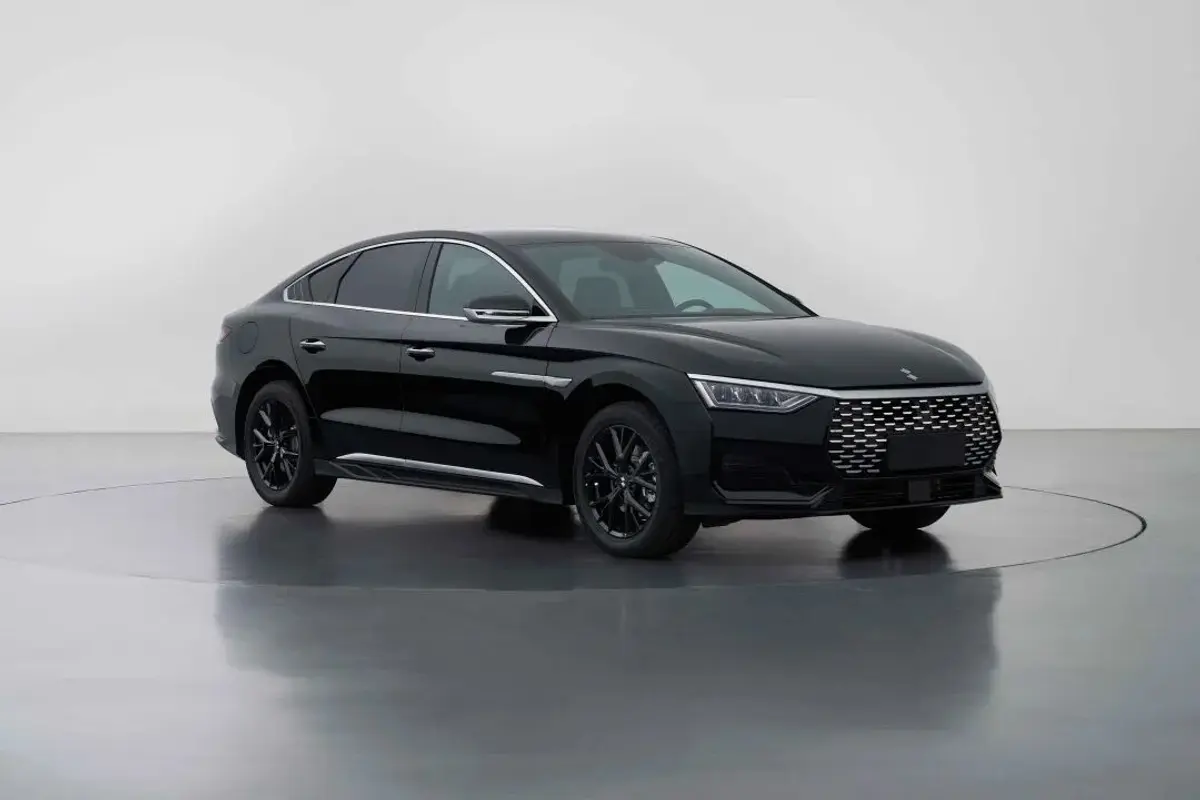
BYD has formally initiated a strategic decoupling of its commercial fleet operations from its consumer retail business by registering a dedicated B2B brand, "Linghui", with China’s Ministry of Industry and Information Technology (MIIT). This move is less about product innovation and more about brand hygiene: by quarantining commoditized ride-hailing models into a separate entity, BYD aims to protect the premium pricing power of its Dynasty and Ocean series as it aggressively targets higher margins in 2026.
Sanitizing the Premium Funnel through Asset Reallocation
The regulatory filing reveals that Linghui’s initial portfolio—comprising the e5, e7, e9 sedans, and the M9 plug-in hybrid MPV—are not ground-up designs but rebranded iterations of existing BYD bestsellers. These vehicles are derivatives of the mass-market Qin PLUS EV, the premium Han DM-i, the Sea Lion 07 EV, and the Xia MPV.
By repackaging these models under the Linghui badge (a trademark BYD has held since 2010), the automaker is executing a classic "brand firewall" strategy. The ubiquity of BYD vehicles in China’s ride-hailing sector has created a perception ceiling for the brand; wealthy consumers are often reticent to pay premium prices for vehicles identical to those used as taxis.
This bifurcation allows BYD to maintain high utilization rates at its factories by fulfilling bulk purchase orders via Linghui, while simultaneously marketing the visual twins in the Dynasty and Ocean networks as exclusive, high-tech consumer products. This distinction is critical as BYD seeks to improve upon its 2025 performance, where despite a 7.73% year-over-year volume growth to 4.6 million units, its high-end Denza sub-brand accounted for only roughly 180,000 units—a mix the company is desperate to enrich.
Countering the ‘Aion Dilemma’ in a Saturated Market
The launch of Linghui mirrors a broader corrective trend within the Chinese automotive sector, specifically addressing the "Aion Dilemma." GAC Aion, a major competitor, saw its brand equity diluted by heavy reliance on the B2B market, leading to a consumer perception of Aion as strictly a "ride-hailing brand." GAC has since moved to separate its channels to salvage its retail appeal.
BYD is acting preemptively to avoid this trap as the market consolidates. With over 100 active automotive brands in China, 2026 is projected to be a year of intense attrition. While start-ups are focusing on survival, established giants are focusing on "resource integration" and cost efficiency. Linghui operates on a separate sales channel system, ensuring that a corporate fleet manager purchasing 500 units for a taxi service does not interface with, or dilute the experience of, a retail customer buying a luxury Fang Cheng Bao or Yangwang vehicle. This separation of distribution channels is as vital as the rebadging of the metal itself.
Aligning Volume Strategy with High-Margin Ambitions
The creation of Linghui aligns with forecasts from CITIC Securities, which identify "high-end acceleration" as a primary theme for the Chinese auto market in 2026. While the lower and middle segments of the market face brutal price wars, the high-end segment offers sustainable marginal profits for market leaders.
However, to compete with luxury incumbents and new entrants like the Huawei-backed brands (e.g., Dongfeng’s Yijing and GAC’s Qijing), BYD must cultivate a pristine brand image. Linghui serves as the designated volume-absorber for the B2B sector, effectively removing the "fleet sales" stigma from the main balance sheet’s public image. This allows the parent company to pursue a dual-track growth model: Linghui generates cash flow through volume and scale effects in the commoditized transport sector, providing the financial stability for the main BYD brands to pursue higher R&D and marketing spend required to capture the luxury consumer.
By ChinaBiz Insider Analysis Desk