
Chinese Home Appliance Giants Pivot to Thailand to Hedge Trade Risks and Capture Growth
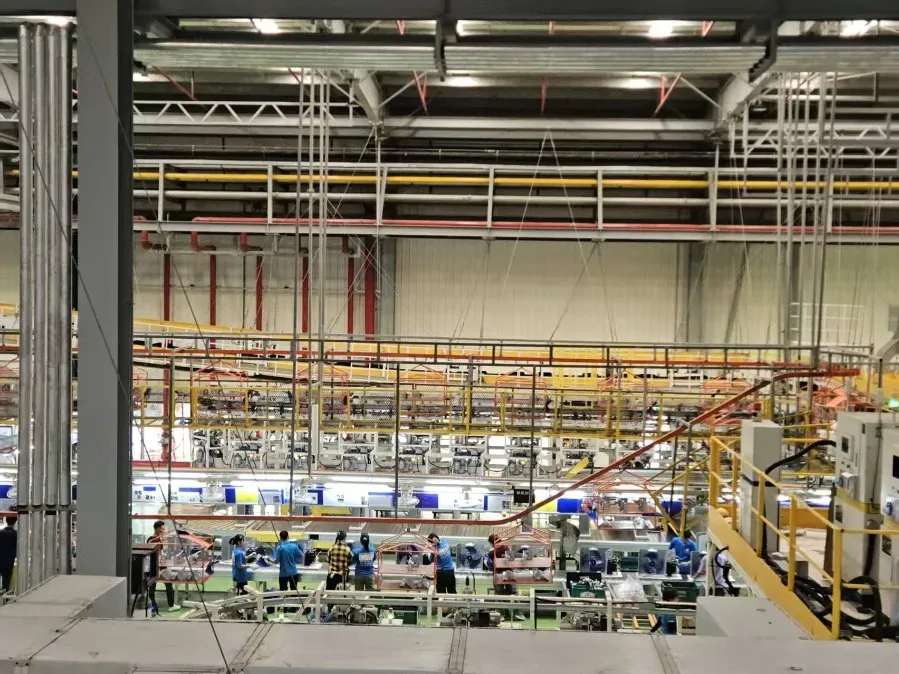
Chinese home appliance manufacturers are aggressively expanding their production footprints in Thailand, transforming the Southeast Asian nation into a critical global export hub and a regional headquarters to challenge entrenched Japanese and Korean rivals. Companies including Midea Group and Haier Smart Home are accelerating capacity upgrades, driven by the need to regionalize supply chains amid persisting global trade frictions and tariff uncertainties.
The shift is marked by significant capital injection and aggressive output targets. Midea is aiming for a production volume of 6 million units for the "2026 cooling year" at its Chonburi facility, having already established Thailand as its largest overseas manufacturing base. Similarly, Haier inaugurated its new air-conditioner industrial park in Chonburi in September 2025, marking the largest facility of its kind for a Chinese brand in Southeast Asia.
This strategic migration highlights the sector’s evolution from simple product exports to establishing comprehensive ecosystem capabilities overseas. With international markets now contributing roughly half of total revenue for these corporations, Thailand offers a logistical advantage for shipping to Western markets—mitigating delivery times and tariff exposure—while serving as a testing ground for high-tech product adoption in the ASEAN region.
Industry executives cite Thailand's mature supply chain, political stability, and strategic location within the Eastern Economic Corridor (EEC) as primary drivers for the cluster effect. While Japanese brands have historically dominated the region, Chinese entrants are leveraging rapid product iteration and multi-tiered pricing strategies to gain market share, although challenges remain in penetrating premium business-to-business (B2B) channels.
Expanding the Manufacturing Footprint
The concentration of Chinese manufacturing power is focused heavily in Thailand’s Rayong and Chonburi provinces. In addition to Midea and Haier, other players are solidifying their presence. Homa Appliances received approval from Thailand’s Board of Investment (BOI) in October 2025 to establish a new production base, while Hisense recently commenced construction on its HHA intelligent manufacturing park.
For Midea, Thailand is being positioned as a "second home field" after China. The company is constructing a new technology park in Rayong and has set up its Asia-Pacific headquarters in the country. Jiang Xuan, President of Midea Group’s APAC region, noted that while the company operates bases in Vietnam, Indonesia, and Brazil, Thailand offers superior infrastructure and labor demographics suitable for a global export hub.
Operations are currently running at high capacity to meet year-end demand from the United States. Midea’s Chonburi plant, where local staff comprise over 98% of the workforce, is seeing saturated order books, driven by the need to account for shipping times to Western markets.
Revenue Shifts and Financial Impact
The reliance on international revenue is growing. Midea reported operating revenue of RMB 363.06 billion (US$50.4 billion) for the first three quarters of 2025. Notably, revenue from its overseas Own Brand Manufacturing (OBM) business has surged, now accounting for over 45% of its consumer-facing business.
Haier is experiencing a similar trajectory, with overseas markets generating more than half of its total revenue. In the first half of 2025, Haier Smart Home reported overseas revenue of RMB 79.08 billion, an increase of 11.7% year-on-year.
Market Share and Product Strategy
Chinese firms are eroding the long-standing market dominance of Japanese and Korean brands through faster product development cycles. Dong Jianping, General Manager of Haier Electrical Appliances (Thailand), observed that while traditional competitors may have product iteration cycles exceeding five years, Chinese companies introduce new technologies to the Thai market almost simultaneously with their domestic launches.
This speed is translating into market share. Haier claims the top spot for air conditioners in Thailand, while Midea holds leading positions in refrigerators and microwaves. TCL Technology Group ranks second in television market share.
To capture the local market, companies are localizing aggressively. Haier developed voice-controlled air conditioners specifically for the Thai climate, addressing consumer habits of adjusting temperatures at night without leaving bed. Marketing efforts have also intensified, with brands utilizing high-profile endorsements, such as Midea partnering with Muay Thai star Buakaw Banchamek.
Navigating High-End and B2B Barriers
Despite gains in the consumer retail sector, challenges persist in the premium and B2B segments. Japanese brands maintain a stronghold in developer channels and real estate projects, where brand perception often commands a premium. Industry insiders note that developers frequently prefer Japanese legacy brands to justify higher property prices, a sentiment that Chinese firms admit will take time to shift.
Midea’s Jiang Xuan argues against a purely high-end strategy, warning of an "innovation dilemma" where rising prices depress sales volume. Instead, Midea advocates for a multi-brand portfolio that covers high-end segments while maintaining competitiveness in the mass market.
Service infrastructure is identified as a critical battleground for closing the gap with incumbents. Midea is investing heavily in its after-sales service network to improve response times and call center efficiency, acknowledging that service quality is as vital as product reliability for long-term brand retention.
Hedging Against Protectionism
The expansion into Thailand also serves as a hedge against rising protectionism and tariff volatility anticipated in 2025. Executives view regionalization as a necessary evolution of globalization. By establishing full value chains—including R&D, supply chain, and manufacturing—in regions like Southeast Asia, companies can better absorb policy shocks.
"Regionalization helps resist risks," noted Haier’s Dong. A distributed global footprint ensures that capacity in one region, such as Thailand, can support other markets if trade barriers rise elsewhere. This "systematic going global" represents a new phase for Chinese manufacturers, moving beyond simple exports to replicating entire industrial ecosystems abroad.