
China’s Autonomous Driving Push Reaches a Turning Point With L3 Approval
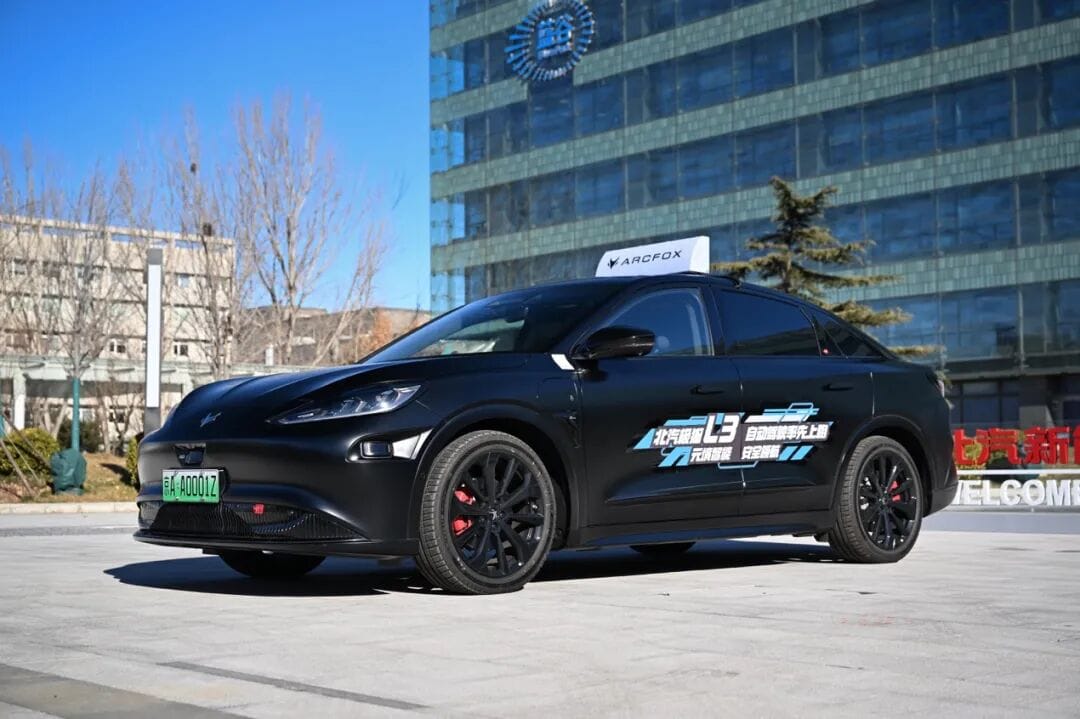
China’s push for autonomous driving has reached a pivotal milestone as major automakers secure regulatory approval for Level 3 (L3) operations, signaling a decisive shift from closed-course testing to commercial validation. This development coincides with aggressive technical benchmarks set by electric vehicle upstarts, intensifying the competitive landscape for advanced driver-assistance systems (ADAS) heading into 2026.
The Ministry of Industry and Information Technology has officially granted entry permits to BAIC BluePark New Energy and Chongqing Changan. These permits authorize the deployment of intelligent connected vehicles equipped with conditional autonomous driving capabilities on designated public roads.
Under the new regulatory framework, these vehicles are permitted to operate autonomously at speeds up to 80 km/h in Beijing and 50 km/h in Chongqing. This approval marks a critical transition for the industry, establishing a replicable operational model in two major municipalities that is expected to facilitate broader expansion into other urban centers.
Amid these regulatory gains, XPeng is escalating the technical rivalry, claiming its upcoming software architecture will match the latest capabilities of Tesla Inc. The convergence of state-sanctioned operational permits and aggressive corporate technical targets highlights the accelerating race toward higher-level autonomy in the world's largest auto market.
The Leap to Level 4
While incumbents focus on L3 deployment, XPeng Chairman He Xiaopeng is projecting a faster transition to Level 4 (L4) autonomy. Following a test drive of Tesla’s FSD v14.2 in Silicon Valley in late 2025, He described the system as reaching a "quasi-L4" status, suggesting that consumer vehicles could potentially bypass the L3 interim stage entirely.
XPeng has announced that its VLA 2.0 system, slated for release next year, aims to achieve parity with Tesla’s latest FSD iteration. The company’s confidence is underscored by a high-stakes internal wager regarding the system's performance benchmarks, reflecting an aggressive push to close the gap with global leaders.
The distinction between these levels is critical for investors and insurers. While L2 requires constant driver supervision, L3 allows drivers to disengage under specific conditions but requires readiness to intervene. L4 and L5 shift the liability and operational responsibility entirely to the manufacturer, a change that fundamentally alters the risk profile of the automotive sector.
Safety Redundancy and Infrastructure Risks
Despite the regulatory green light, industry participants acknowledge that "anytime, anywhere" autonomy remains a distant goal due to safety redundancies. A recent power outage in San Francisco highlighted the vulnerabilities of infrastructure-dependent systems, where Waymo robotaxis stalled in intersections due to the loss of traffic signals.
The incident has reignited the debate between sensor-heavy approaches and vision-based strategies. Waymo relies on a fusion of LiDAR, radar, and high-definition maps, which can struggle when external infrastructure fails. In contrast, Tesla relies on vision and AI, which proved resilient during the blackout but faces challenges in low-visibility conditions where LiDAR excels.
BAIC has noted that the transition from human-controlled to vehicle-controlled driving involves significant variables. The consensus among experts is that removing steering wheels and pedals—a hallmark of Level 5 autonomy—remains premature until systems demonstrate absolute resilience against infrastructure failures and extreme weather.
Supply Chain Consolidation
As the technology matures, cost control is driving a consolidation of the supply chain. Automakers are increasingly questioning the efficiency of in-house R&D for autonomous driving stacks, turning instead to third-party suppliers to spread costs and accelerate time-to-market.
Data as of December 2025 indicates a significant market shift. Huawei now supplies its smart driving and cabin systems to 35 models, while Momenta powers over 160 models. Collectively, these two suppliers command a 30% market share.
This trend suggests that as L3 vehicles enter mass production, economies of scale provided by major tech suppliers will be essential for making the technology affordable for the mass market. While the consumer trust curve remains steep, the regulatory and supply chain foundations for autonomous driving in China are now firmly established.