
China’s Robot Leasing Boom: A Commercial Lifeline or Mere Performance?
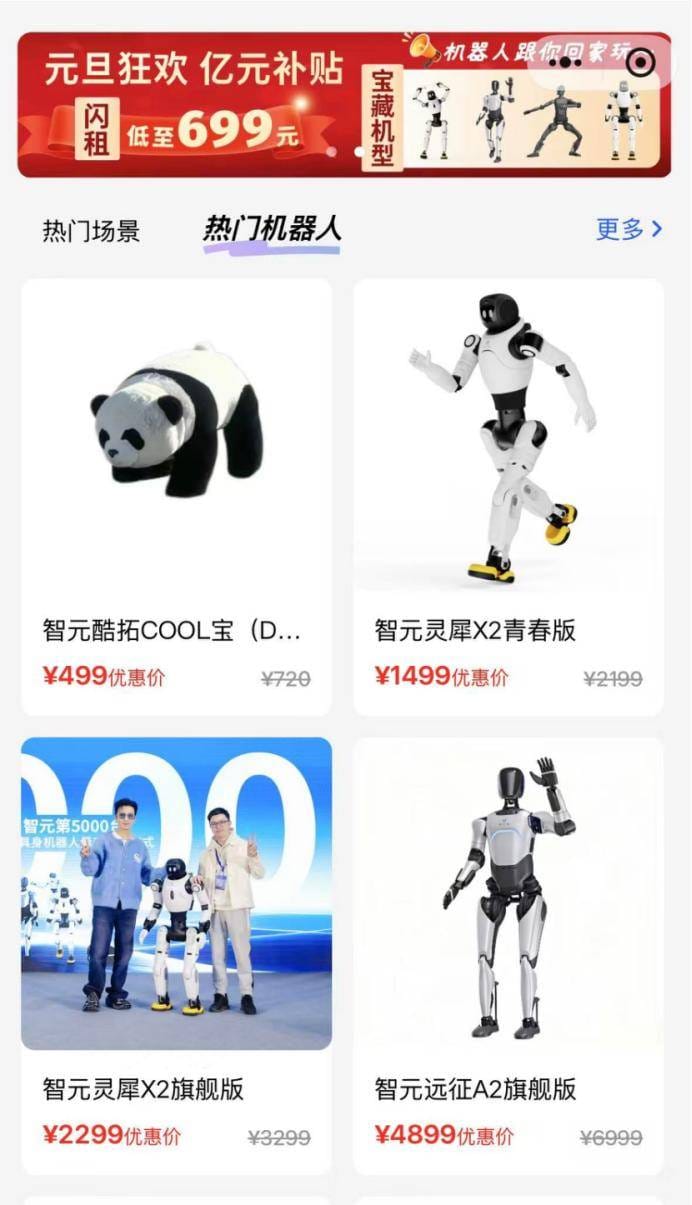
Agibot has launched "Sky-Rent", the first open robot leasing platform in China, aiming to commercialize humanoid robots through an "asset-light" rental model rather than direct sales. This strategic pivot attempts to move the industry from technical demonstrations to market circulation by targeting entertainment and commercial sectors such as annual galas and exhibitions.
The platform sets ambitious targets for 2026, aiming to deploy 2,000 units across 200 cities and aggregate services in a manner akin to ride-hailing applications. Pricing structures have been explicitly tiered, with daily rates ranging from roughly RMB 200 yuan (US27) for desk top units to RMB 4,899 yuan(US673) for flagship humanoid models, addressing a surge in hardware inventory that has driven rental prices down significantly this year.
While the initiative offers a liquidity solution for over 1,000 newly established leasing firms facing inventory pressure, market analysts warn the model relies heavily on human operation and pre-scripted content rather than genuine autonomous intelligence. The trend highlights a sector grappling with high costs and immature technology by shifting focus to "performance" economies to generate cash flow.
As the industry seeks sustainable revenue streams, the viability of this "Robot-as-a-Service" (RaaS) model faces scrutiny regarding its long-term scalability and its potential to distract from necessary advancements in core AI capabilities.
The “DiDi” Model for Humanoid Robots
Agibot executives describe Sky-Rent not as a hardware manufacturer, but as an infrastructure provider connecting devices, content creators, and service vendors. By the Spring Festival of 2026, the platform aims to host over 10 manufacturers, 200 service providers, and serve 400,000 customers. Currently, more than 300 robot leasing companies have registered on the platform.
The platform focuses on practical utilization rather than raw technical specifications. It allows users to select robots for specific scenarios—such as dance performances, wedding guidance, or supermarket promotion—through a standardized digital interface.
Pricing reflects a market dealing with oversupply. The popular "Lingxi X2 Youth Edition" from Agibot rents for RMB 1,499 yuan (US206) per day. High−end models like the "ExpeditionA2" command higher fees, while third−party desk top units like the F1 lite enter the market at RMB 1,200 yuan(US165). This structure allows leasing firms, many of whom lack independent marketing capabilities, to mobilize assets that would otherwise depreciate in warehouses.
Content-Driven Operations Mask Technical Limits
Despite the "intelligent" branding, the current operational logic is closer to "Content-as-a-Service" than autonomous robotics. Robots on the platform function primarily as execution devices for pre-designed scripts and motion packages.
Agibot has developed a "Lingchuang Platform" where creators upload specific movements and interaction logic, effectively creating a marketplace for robotic skills. However, this approach reveals that the robots are not making real-time intelligent decisions but are performing standardized routines.
Furthermore, the service heavily relies on human intervention. Platform executives admit that the ideal ratio of robots to human operators is currently 1:1. The industry faces a shortage of skilled operators, necessitating extensive training programs. This labor-intensive structure mirrors the early days of the gig economy, where technology facilitates the transaction, but humans deliver the core service.
Short-Term Liquidity vs. Long-Term Viability
Industry observers view Sky-Rent as a pragmatic response to the commercial difficulties facing the humanoid robot sector. For manufacturers, leasing lowers the decision-making threshold for clients who find purchasing prices—often exceeding hundreds of thousands of yuan—prohibitive. It also helps establish service standards and content ecosystems.
However, risks regarding sustainability remain high. The model currently depends on subsidies and intensive operational coordination. Experts question whether the system can function autonomously once subsidies are withdrawn or if human oversight is reduced.
There is also the risk of customer fatigue. The primary demand currently stems from the novelty of seeing robots at commercial events. Once this novelty fades, the pressure on content creators to constantly innovate will increase.
Ultimately, while the leasing boom may improve asset utilization rates in 2025, it potentially masks the industry's slow progress in embodied intelligence. By focusing on "scripted" revenue, companies may inadvertently delay the transition from human-operated machinery to truly autonomous service robots.