
Shanghai Puyu Raises Capital to Accelerate LEO Satellite Chip Development
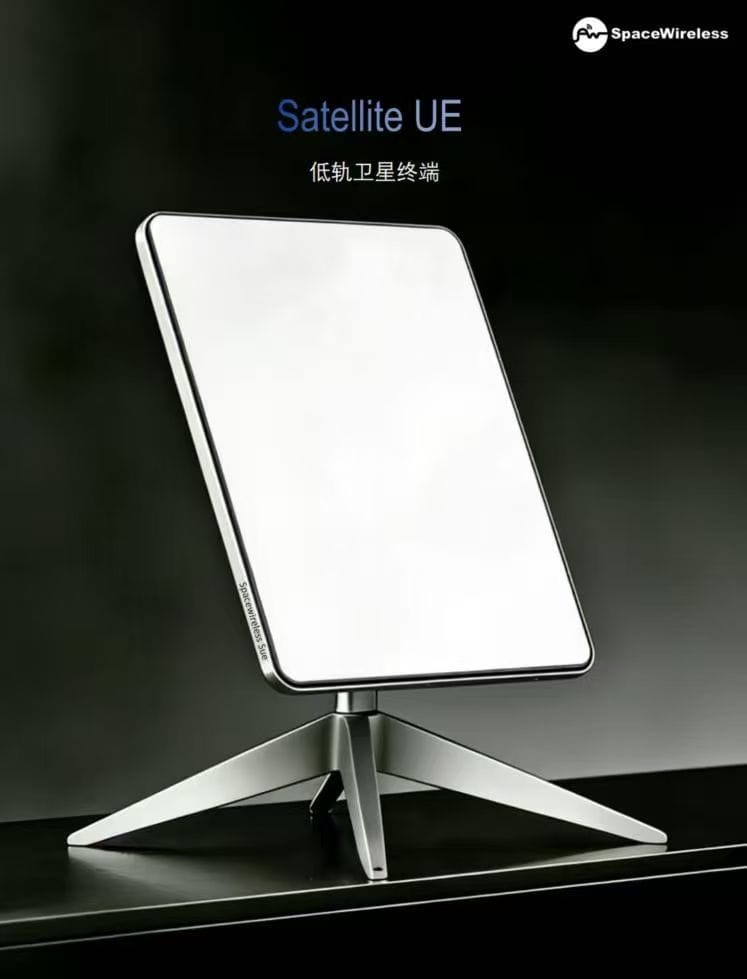
Shanghai Puyu Technology has secured tens of millions of yuan in fresh capital to advance its low-earth orbit (LEO) satellite communication capabilities. The financing underscores the growing investor appetite for China's nascent commercial space sector as it prepares for large-scale deployment and commercialization.
The Series A+ funding round was led by Loongson Capital, with participation from Jinsha Capital, Pudong Venture Capital, and existing shareholders. While the exact valuation remains undisclosed, the investment involves tens of millions of yuan (millions of US dollars).
Proceeds will be directed toward the research and development of next-generation LEO satellite communication chips and millimeter-wave phased array technology. The capital injection is also set to accelerate the mass production and commercial expansion of the company’s terminal products, moving beyond prototype phases into broader market adoption.
This financing comes as China solidifies the strategic status of commercial spaceflight, a sector highlighted in government reports for both 2024 and 2025. With industry executives describing the market as being on the "eve of an explosion," the focus is shifting toward scaling infrastructure and reducing hardware costs to compete globally.
Technology and Commercial Rollout
Founded in 2021 and headquartered in Shanghai's Pudong New Area, Puyu Technology focuses on satellite terminals designed for diverse environments, including aviation, maritime, and emergency response scenarios. The company has also begun deploying ground feeder systems and is actively researching 6G non-terrestrial network (NTN) standards.
Puyu has developed proprietary LEO satellite baseband systems and millimeter-wave phased array technologies. According to the company, its products have successfully passed on-orbit testing and have entered batch application. These terminals are currently being deployed in shipborne and airborne settings.
Beyond commercial applications, Puyu’s self-developed terminals and ground verification systems have been adopted by major domestic satellite manufacturers. These systems are utilized for satellite manufacturing, payload research, and field testing, serving as quality assurance tools within the supply chain.
Expanding the Orbital Ecosystem
The investment aligns with China’s broader ambitions in the space sector. The country has filed applications with the International Telecommunication Union for approximately 51,300 LEO satellites, with major projects such as the GW Constellation, G60 Qianfan Constellation, and Honghu-3 Constellation drawing significant attention.
Industry estimates suggest that as these LEO constellations complete their networking phases, the market for user terminals could reach the level of RMB 100 billion yuan (US$13.8 billion). Investors are betting that the completion of these networks will trigger exponential demand for compatible communication devices.
Loongson Capital, the lead investor, identified satellite internet as a core foundation for the next generation of global communication networks. The firm noted that Puyu Technology’s accumulation of expertise in chips and terminals positions it well for the upcoming explosive growth in both business-to-business and consumer markets.
Addressing Cost Barriers
Despite the optimistic outlook, the sector faces significant economic hurdles. Xie Anliang, founder and CEO of Puyu Technology, acknowledged that manufacturing and launch costs for domestic satellites and terminals remain high compared to foreign competitors. He attributed this to the industry's later start and current lack of scale advantages.
Xie, a former Bell Labs researcher with over two decades of wireless system experience, emphasized that the industry is currently in a rapid development phase where technology is still iterating. He argues that significant room exists for cost optimization through continued R&D investment and technical innovation.
The company’s strategy involves accelerating the networking process to complete business loops and expand the user base. Xie stated that achieving these milestones is essential for Chinese companies to compete effectively with overseas LEO constellations in the global market over the next few years.
Investor Sentiment
Institutional investors are increasingly positioning themselves across the commercial space value chain. Jinsha Capital noted that after a decade of preliminary development in rocket and satellite manufacturing, the next decade will be defined by constellation construction and ecosystem enrichment. The firm views Puyu as a strategic entry point into the terminal and application segment of this ecosystem.
Pudong Venture Capital echoed this sentiment, highlighting its local focus. By investing in Puyu, along with other portfolio companies such as LandSpace (rocket launch) and various satellite component makers, the firm aims to foster a clustered aerospace economy within Shanghai’s Pudong district.