
Willand’s Navimow Defines New Robotics Standard at CES 2026 with Advanced Autonomous Mowing Technology
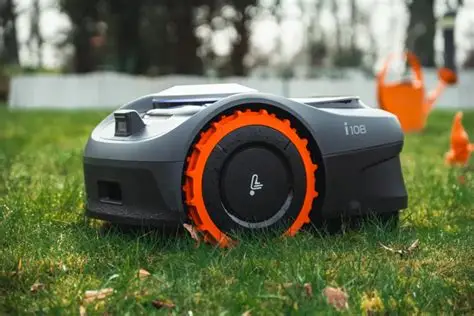
Willand, the Chinese robotics innovator behind the Navimow brand, unveiled a comprehensive suite of new lawn care solutions and autonomous technologies at CES 2026, marking a significant shift in the maturity of the outdoor robotics sector. By introducing a new industry benchmark dubbed the "Navimow Standard," the company is effectively addressing the technical bottlenecks—specifically navigation reliability and installation complexity—that have historically hindered the mass adoption of robotic mowers in Western markets.
The company showcased five new product lines designed to cover the full spectrum of consumer and commercial needs. These include the flagship X4 series for large, complex terrains; the H2 series featuring triple-fusion positioning; the i2 AWD and i2 LiDAR models for small-to-medium lawns; and the Terranox series for commercial applications. This expansion follows Navimow’s successful penetration of 400,000 households globally, signaling that Chinese manufacturers are replicating their dominance in the robot vacuum sector within the emerging field of outdoor embodied intelligence.
The announcements at CES 2026 underscore a pivotal transition for the industry: moving from hardware-centric competition to software-defined reliability. Willand’s introduction of "deployment-free" mapping and "triple-fusion" positioning systems directly targets the high failure rates associated with complex Western garden environments. For investors and market observers, this technological leap suggests that robotic mowers are transitioning from niche gadgets to reliable household infrastructure, potentially accelerating market saturation in Europe and North America.
Eliminating Deployment Barriers with Network RTK
A central theme of Willand’s presentation was the elimination of the complex setup processes that frustrate consumers. Traditional robotic mowers require physical boundary wires or the installation of private base stations for Real-Time Kinematic (RTK) positioning. Willand has replaced this with a "Network RTK" approach.
According to Willand President and CTO Chen Zichong, this technology allows robots to access carrier-grade RTK data directly via 4G networks, bypassing the need for users to install antennas or base stations in their yards. This shift enables a "out-of-the-box" experience. Coupled with the GeoSketch™ feature in the companion app, users can create virtual boundaries and customize mowing zones through a visual interface similar to a video game, significantly reducing the cognitive load and technical expertise required for installation.
Triple Fusion Positioning for Complex Environments
To address the issue of signal loss in gardens with dense tree cover or tall structures, Willand introduced the EFLS™ LiDAR⁺ Triple Fusion Positioning System. This proprietary technology integrates three distinct data streams: Solid-state LiDAR, Visual Perception, and Network RTK.
In scenarios where satellite signals are obstructed, the system automatically switches priority to LiDAR and visual data to maintain centimeter-level accuracy. For example, in open fields, Network RTK leads navigation; near buildings or under foliage, LiDAR and visual sensors provide the necessary spatial awareness. This redundancy ensures that the robot can navigate continuous, complex environments without the "getting lost" phenomena that plague single-sensor devices.
Solid-State LiDAR and Visual AI Integration
Willand has adopted solid-state LiDAR technology to enhance durability and performance. Unlike traditional mechanical LiDAR used in early autonomous vehicles, the solid-state units have no moving parts, making them more resistant to the vibration and shocks inherent in outdoor landscaping work.
The system scans approximately 200,000 points per second with a range of 70 meters. By fusing this 3D depth data with AI visual recognition, the robots can distinguish between grass boundaries, obstacles, and living beings. This allows the mower to identify over 200 types of objects, enabling it to differentiate between a fence (a boundary) and a pet or person (an obstacle to avoid), thereby significantly enhancing safety protocols.
Turf Preservation via Xero-Turn™ Technology
Addressing consumer complaints regarding turf damage caused by the turning mechanisms of traditional robots, Willand debuted its Xero-Turn™ solution. Standard robots often tear grass when rotating in place due to lateral friction.
The new Navimow models feature an active steering module where the wheels can adjust their angle independently. This allows the robot to execute turns similar to a car or perform zero-radius turns without dragging the tires sideways. Combined with Electronic Stability Control (ESC) and Traction Control Systems (TCS), the robots can navigate slopes and wet grass without slipping or digging ruts, ensuring the aesthetic integrity of the lawn is maintained.