
Baidu Launches “Red Finger Operator,” Bringing Cross-App AI Agents to Android Phones
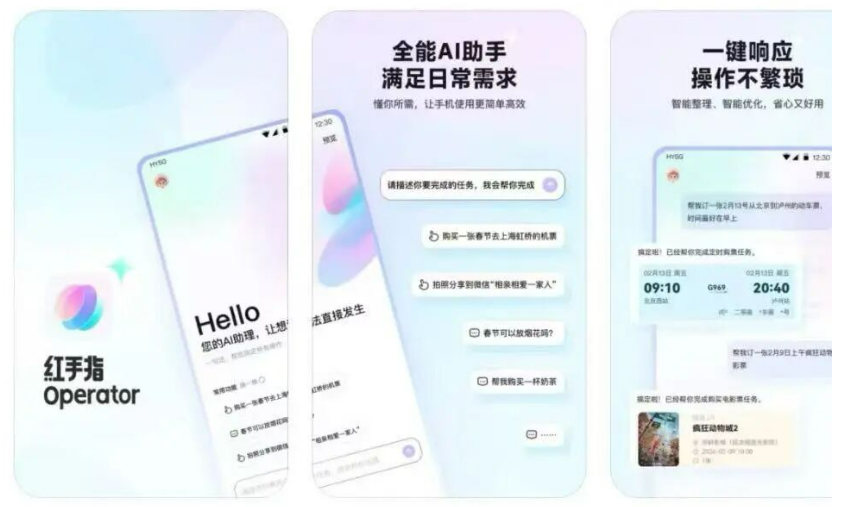
Baidu has released “Red Finger Operator,” positioning it as the world’s first “mobile lobster” app that lets users command a phone to complete tasks across multiple apps via chat. The launch signals Baidu’s push to shift AI agents from PC and web environments into higher-frequency mobile use cases, potentially reshaping how consumers interact with apps.
The product went live on March 12 and is currently available only on Android, according to the company. An iOS version is expected to launch later this month, extending Baidu’s reach into a broader slice of mobile users.
Red Finger Operator is designed to execute actions directly on a handset—calling apps, navigating interfaces and chaining workflows—based on a user’s natural-language instructions. Baidu is framing the tool as a step toward “hands-on” mobile assistants that reduce multi-step app operations into a single command.
The release also adds momentum to Baidu’s recent rollout of OpenClaw-related products and deployment options, as it tries to lower friction for users and developers adopting agent-style automation.
A Chat Interface That “Takes Over” the Phone to Complete Tasks
Red Finger Operator packages agent execution capabilities—previously concentrated in PC and web contexts—into a mobile app that can operate other apps on the device. Users download the app, register and log in, then issue commands in a chat interface.
Baidu’s pitch is workflow compression: the agent interprets the goal, launches the relevant app, and carries out steps across apps when needed. Tasks cited include buying tickets, hailing rides, ordering food, collecting information and making queries—use cases where users typically hop among multiple applications.
From Vague Prompts to Scheduled Actions
Beyond basic execution, Baidu is emphasizing semantic understanding, aiming to turn incomplete or conversational requests into structured tasks. In examples shared alongside the launch, a request such as booking a train ticket to Luzhou at a specified time is parsed into fields like origin, destination and departure time, then converted into a scheduled ticket-buying task.
The app is also positioned as an information-organizing tool. Baidu cited scenarios such as generating a “classic” three-day, two-night itinerary for Changsha based on a broad prompt, or setting a recurring daily task—such as checking Xiaohongshu for the latest AI news at 10 a.m.
A Broader Push to Lower the Barrier to “Agent” Adoption
Red Finger Operator follows a series of OpenClaw-focused releases in recent weeks. On Feb. 14, Baidu App added one-click access to OpenClaw after users complete deployment, allowing them to summon a local personal assistant from the search box or message center.
Baidu AI Cloud has also simplified OpenClaw deployment and listed capabilities—including Baidu AI Search, Baike, e-commerce and a Qianfan deep research agent—as Skills in the ClawHub open community, enabling easier reuse. On March 11, Baidu AI Cloud introduced a zero-deployment service called DuClaw, which removes steps such as choosing images, deploying cloud servers or configuring API keys; its web version is already live, with planned support for enterprise apps including WeCom, DingTalk and Feishu.
Why the Mobile, App-Layer Approach Matters
Baidu is taking an app-layer route rather than relying on system-level changes, arguing this approach can reach users faster without requiring new devices or operating system upgrades. By letting users install an app to delegate parts of phone operation to an agent, Baidu is betting that “goal-first” interactions—where users state an outcome and the AI executes the steps—can become a practical alternative to today’s app-by-app navigation.
Whether that model scales will hinge on how reliably agents can operate across diverse apps and real-world user requests. But Baidu’s latest release underscores a clear direction: AI agents are moving from demos and desktop workflows toward everyday mobile execution.