
Baidu's AI Bet Pays Off: Revenue Share Disclosure Marks Strategic Inflection Point
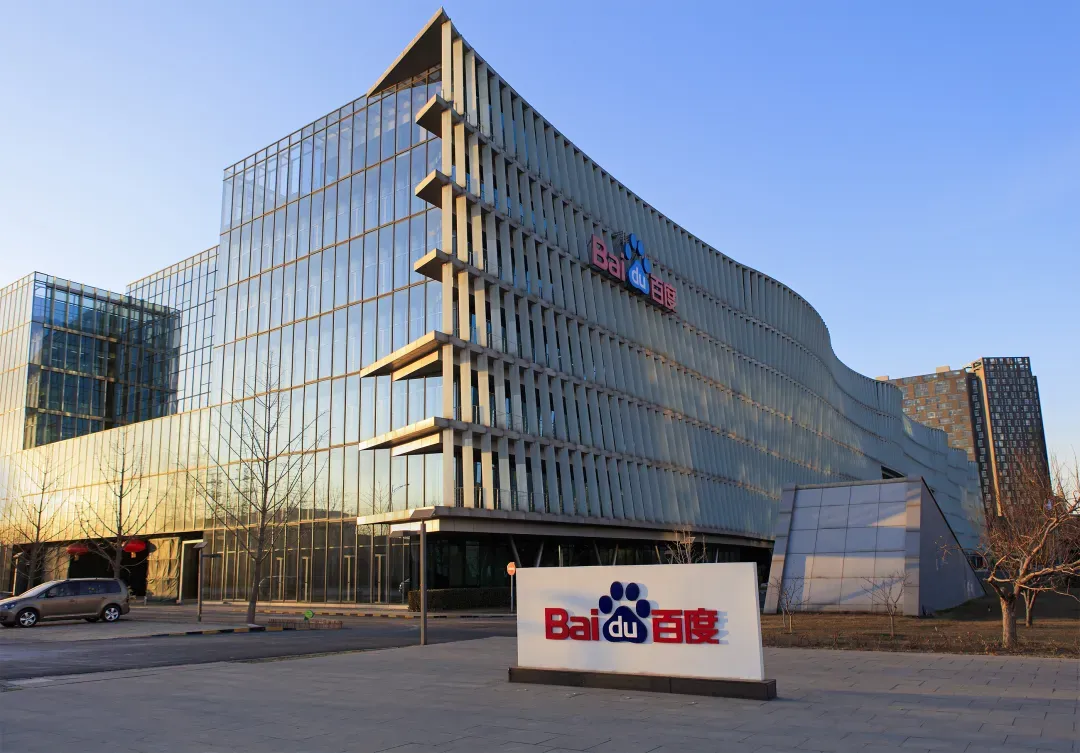
Baidu has crossed a threshold that few Chinese technology companies have reached: its artificial intelligence business is no longer a cost center — it is a profit engine. The company's fourth-quarter and full-year 2025 earnings, released on February 26, revealed for the first time that AI-related revenue accounted for 43% of its core business revenue in Q4, a disclosure that signals a fundamental shift in how the search giant should be valued.
The headline numbers underscore the transformation. Full-year 2025 total revenue reached RMB 129.1 billion yuan (approximately US$17.8 billion), with AI business revenue contributing RMB 40 billion. The Q4 AI revenue share of 43% exceeded market expectations, triggering a reassessment among analysts who had long questioned whether Baidu's heavy AI investment could translate into sustainable commercial returns.
The strategic significance of the disclosure itself should not be underestimated. When Amazon first broke out AWS revenue and Apple began reporting services separately, investors were forced to reprice businesses they had previously misunderstood. Baidu's decision to publish AI revenue as a proportion of core income follows the same logic — it is an invitation to the market to apply a new valuation framework.
"2025 was a pivotal year in which AI became Baidu's new core," said founder and CEO Robin Li. "As our AI-first strategy takes clear shape, we are confident in our ability to create lasting value in the AI era."
From Investment to Revenue: The Numbers Behind the Shift
The granular data embedded in Baidu's earnings report tells a story of accelerating monetization across multiple AI verticals. Baidu AI Cloud revenue grew 34% year-on-year in 2025, with subscription revenue from AI high-performance computing infrastructure surging 143% in Q4 alone. AI-native marketing services posted full-year revenue growth of 301%, while AI application revenue exceeded RMB 10 billion for the full year.
These are not vanity metrics. The revenue streams are predominantly driven by enterprises and consumers paying for measurable outcomes — not subsidized traffic or promotional incentives. The distinction matters: outcome-based monetization implies durability, whereas subsidy-driven growth typically collapses once incentives are withdrawn.
Baidu's ability to generate this revenue is rooted in what it describes as a full-stack, end-to-end AI capability — integrating chips, cloud infrastructure, foundation models, and application-layer tooling into a unified offering. Its proprietary Kunlun chip, designed from the architecture level for AI workloads, provides the computational backbone, while platforms such as Qianfan allow enterprises to deploy AI capabilities with reduced integration complexity and cost.
The commercial validation of this approach is reflected in third-party data. A January 2026 report by Frost & Sullivan identified Baidu Intelligent Cloud as the market leader in China's self-developed GPU cloud segment, with a 40.4% market share. The company also ranked first in both the number of large model-related contract wins and total contract value for 2025 — a distinction it held for the second consecutive year.
Enterprise Ecosystem Deepens as Partner Network Scales
Baidu's B2B AI strategy is not purely a direct-sales model. The company has built what it characterizes as a "grand ecosystem" integrating product partners, business development partners, delivery partners, and channel partners — a structure designed to extend its commercial reach beyond what an internal sales force alone could achieve.
The results are notable. Core partner revenue grew more than 100% year-on-year, and channel-side partners reaching annual revenue in the tens of millions tripled. Delivery partners participated in 100% of completed implementation projects, and co-developed solutions ready for replication across industries now number in the hundreds.
Baidu also introduced Famo, a commercially deployable self-evolving super-agent, in November 2025. Within its first month, more than 2,000 enterprises applied for trial access, spanning logistics, manufacturing, and AI-for-science applications. Early use cases illustrate the potential: a collaboration with CITIC AiBank improved financial risk control feature-mining efficiency by 100%, while automotive design firm Altair reduced aerodynamic analysis time from 10 hours to minutes, cutting vehicle development cycles by an average of 25%.
These case studies are important not merely as marketing material, but as evidence that Baidu's AI products are delivering quantifiable productivity improvements — the prerequisite for sustained enterprise spending.
Consumer AI: Paying Users, Not Just Active Users
On the consumer side, Baidu's metrics reflect a maturing monetization model. Monthly active users of Baidu App reached 679 million in December 2025, while Wenxin Assistant reached 202 million MAU, with the figure growing fourfold year-on-year following the Lunar New Year promotion campaign.
More significant from a revenue perspective is GenFlow 3.0, Baidu's AI productivity tool, which reached 20 million monthly active users — users who are paying subscription fees. Subscription revenue from productivity tools represents a structurally different and higher-quality income stream than advertising, as it reflects willingness to pay for utility rather than passive exposure to content.
The distinction between MAU growth and paying user growth is one that investors in AI consumer products have increasingly scrutinized. Baidu's ability to convert active users into paying subscribers suggests its AI tools are delivering sufficient value to justify recurring expenditure — a validation that many AI consumer products have yet to achieve.
Apollo Go Expands Globally, Opening a New Growth Frontier
Baidu's autonomous driving unit Apollo Go delivered 3.4 million fully driverless rides globally in Q4 2025, a year-on-year increase exceeding 200%, with weekly peak rides surpassing 300,000. As of February 2026, cumulative global rides have exceeded 20 million, spanning 26 cities worldwide, with total autonomous driving mileage exceeding 300 million kilometers — of which more than 190 million kilometers were fully driverless.
The international expansion is accelerating. On January 17, 2026, Apollo Go launched fully driverless commercial operations in Abu Dhabi in partnership with AutoGo, initially serving Yas Island with plans for broader coverage. The launch marks the first time Apollo Go has offered fully driverless public-facing service outside China, representing a meaningful step in the commercialization of Chinese autonomous driving technology on the global stage.
The robotaxi business remains in an investment phase, but its scale metrics — particularly the pace of mileage accumulation and international expansion — are increasingly relevant to long-term valuation discussions.
Capital Allocation Strategy Signals Confidence and Prompts Analyst Upgrades
Baidu's earnings release is accompanied by an aggressive capital return program that has drawn considerable attention from institutional investors. On February 5, the company announced a new US$5 billion share buyback program valid through the end of 2028, alongside its first-ever dividend policy, funded from operating profits and proceeds from non-core asset disposals.
The scale of the buyback is striking in context. While companies such as Apple and Alphabet typically repurchase 2%-4% of their market capitalization annually, and even the more aggressive Meta has rarely exceeded 5%, Baidu's buyback represents approximately 10% of its market cap — a level that signals either deep conviction in the company's undervaluation or a deliberate effort to communicate that conviction to the market.
Management has emphasized that the buyback will not compromise AI research and development spending, a reassurance designed to address concerns that capital returns and technology investment are in tension.
Separately, Kunlun Chip filed for a main board listing on the Hong Kong Stock Exchange in January 2026. The strategic rationale is straightforward: Baidu's AI hardware assets have historically been obscured within a valuation framework dominated by its search advertising business. An independent listing for Kunlun Chip would compel the market to apply a sum-of-the-parts methodology, potentially unlocking significant value that has been invisible under a blended earnings multiple.
The market response has been constructive. Nearly 20 institutions have raised their price targets for Baidu. Barclays, incorporating Kunlun Chip into its valuation model for the first time, raised its target from US100toUS100toUS147, arguing that Baidu's valuation logic is shifting from a single "search-plus-advertising" framework to a dual-track structure encompassing both its advertising base and AI hardware assets. JPMorgan was more bullish still, lifting its target to US$200, citing the increasingly legible contours of Baidu's AI transformation and improving operational efficiency metrics.
The Valuation Question: Is the Market Catching Up?
The combination of AI revenue disclosure, aggressive capital returns, and a chip spinoff represents a coordinated effort to close what Baidu's management clearly believes is a significant valuation gap. Each element addresses a different dimension of that gap: the revenue disclosure reframes the growth narrative, the buyback and dividend attract value-oriented and income-seeking investors, and the Kunlun Chip listing creates a new pricing mechanism for the company's most forward-looking assets.
Whether the market fully reprices Baidu depends on execution. The 43% AI revenue share in Q4 is a compelling data point, but investors will want to see that figure hold and expand in subsequent quarters. The Kunlun Chip IPO timeline and pricing will be closely watched as a real-time test of how public markets value Chinese AI hardware. And Apollo Go's international expansion will need to demonstrate that its domestic operating model is transferable.
What is no longer in question is whether Baidu's AI investment can generate revenue. The earnings report answers that definitively. The remaining question — and the one that will drive the stock over the next 12 to 24 months — is whether that revenue can scale fast enough to justify a materially higher multiple than the one the market has historically assigned to a Chinese internet advertising business.