
BBA's China EV Comeback: Can German Luxury Brands Reverse Market Share Collapse?
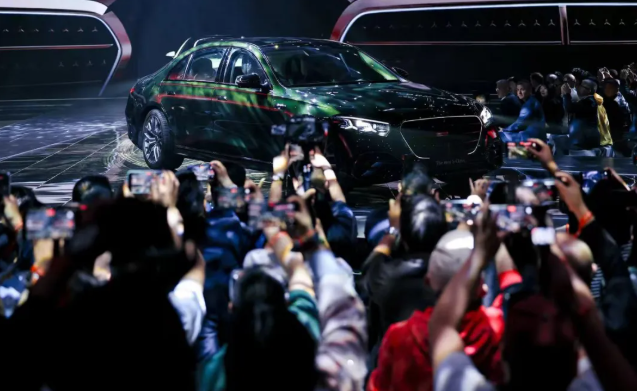
Mercedes-Benz, BMW, and Audi unveiled over 60 electrified models at the 2026 Beijing Auto Show, attempting to reverse collapsing market share after Chinese rivals captured 35% of the premium EV segment worth RMB 300,000-500,000 ($41,700-69,400).
The trio's aggressive product offensive marks a strategic pivot away from "oil-to-electric" conversions toward dedicated EV platforms and China-first localization. Mercedes displayed nearly 40 models including the all-new pure-electric GLC SUV; BMW premiered its "Neue Klasse" long-wheelbase i3 and iX3 with 900km CLTC range; Audi showcased the E7X, its first volume PPE-platform SUV co-developed with SAIC Motor.
Breakdown Exposes Years of Strategic Missteps
The scale of the challenge became evident in 2025 full-year figures: combined BBA pure-EV sales in China totaled under 300,000 units, while individual domestic brands like NIO, Li Auto, and Xiaomi each surpassed 200,000 deliveries. Tesla Model 3 alone outsold Mercedes' entire EQC lineup.
Market penetration data reveal deeper structural weaknesses. As China's NEV adoption rate crossed 50% in 2025, legacy luxury brands lost pricing power in their traditional stronghold. High-end SUVs priced above RMB 300,000 saw domestic nameplates achieve 35% penetration, driven by models like Li Auto L9 and NIO ES9 that redefined six-seat luxury utility with advanced driver-assistance systems calibrated for Chinese road networks.
Platform Overhaul Targets Intelligence Gap
BMW's "Neue Klasse" architecture exemplifies the technical rethink. The 800-volt system supports DC fast-charging at 200kW, cutting 10-80% recharge to under 20 minutes. Crucially, BMW partnered with Beijing-based Momenta to develop full-scenario navigation assist, directly addressing past criticism that German ADAS struggled with China's complex traffic patterns.
Mercedes-Benz chairman Ola Källenius committed to launching over 40 new models through 2027, including seven China-exclusive variants. The pure-electric CLA 260 L adopts reinforcement-learning AI for cabin controls and integrates local mapping data—features absent from previous-generation EQ models that relied on European telematics.
Audi accelerated PPE platform localization through its Shanghai joint venture, targeting 15% cost reduction versus imported CBUs. The E7X mid-size SUV enters production Q3 2026, priced to undercut the RMB 400,000 threshold where Chinese competitors like Zeekr 007 and Xpeng G9 dominate.
Direct-Sales Gambit Risks Channel Backlash
All three brands are abandoning dealer negotiation in favor of fixed online pricing, mirroring Tesla's direct model. Mercedes calls it "one-price transparency"; BMW frames it as "unified pricing"; Audi labels it "integrated direct sales." The terminology varies but the risk is identical: legacy franchise networks accustomed to margin flexibility may resist transition.
Industry observers note the timing aligns with inventory pressure. German premium brands carried 45-60 days of stock in Q1 2026 versus the industry norm of 30 days, per China Automobile Dealers Association data. Fixed pricing eliminates end-of-quarter discounting that eroded resale values, but dealers warn the shift could trigger showroom closures in lower-tier cities.
Execution Uncertainty Clouds Turnaround Prospects
Despite enhanced specifications, the German brands face execution challenges across three dimensions. First, product cycles in China now average 18 months versus traditional 36-month refreshes—Xiaomi's SU7 received three OTA updates adding autonomous parking features in its first six months. Second, local battery partnerships remain underdeveloped; BMW sources cells from CATL but lacks co-engineering depth seen in BYD-Toyota collaborations. Third, Chinese luxury buyers increasingly prioritize rear-seat entertainment and massage functions, specifications that required localized R&D teams German OEMs are still scaling.
The mid-size sedan battlefield illustrates competitive intensity. BMW i3 long-wheelbase confronts not only Tesla Model 3 but NIO ET5, Zeekr 001, and Xiaomi SU7—each offering comparable 800-volt architecture and Level 2+ ADAS at RMB 250,000-350,000 ($34,700-48,600). Consumer clinics show brand loyalty eroding: 2025 conquest data indicated 22% of premium EV buyers considered domestic brands exclusively, up from 11% in 2023.
The SUV segment presents parallel headwinds. Audi E7X targets buyers cross-shopping NIO ES8, Li Auto L8/L9, Zeekr 8X, and Tesla Model Y—a cohort that prioritizes software capabilities and charging network density over traditional badge prestige. Audi's advantage lies in Volkswagen Group's planned 3,000-station Charging+ network, but deployment lags NIO's 2,400 battery-swap stations already operational.
Market Structure Favors Incumbents Despite Share Loss
Paradoxically, BBA retains structural leverage. Their 2025 combined China revenue of RMB 520 billion ($72.2 billion) dwarfs any single domestic competitor, providing capital to sustain R&D investments Chinese startups cannot match. Dealer networks spanning 1,500+ outlets enable same-day test drives nationwide, an advantage direct-sales rivals using mall showrooms lack in Tier 3-4 cities.
Residual value metrics also favor established marques: three-year-old Mercedes E-Class retains 58% of MSRP versus 49% for comparable Chinese EVs, per China Automobile Circulation Association. If BBA's new EV generation achieves parity in technology while leveraging this depreciation advantage, financing costs could offset list-price gaps.
Yet the 2026 Beijing debut represents a compressed timeline. Models unveiled now won't reach volume production until Q4 2026-Q1 2027, granting domestic rivals another 12-18 months to refine competing offerings. Li Auto plans L6 facelift with updated ADAS; NIO's next-generation sedan targets sub-RMB 300,000 pricing. The window for German luxury brands to reclaim initiative is narrowing, not widening.