
Beyond Oil: China Inc. Taps Into Middle East's Economic Transformation
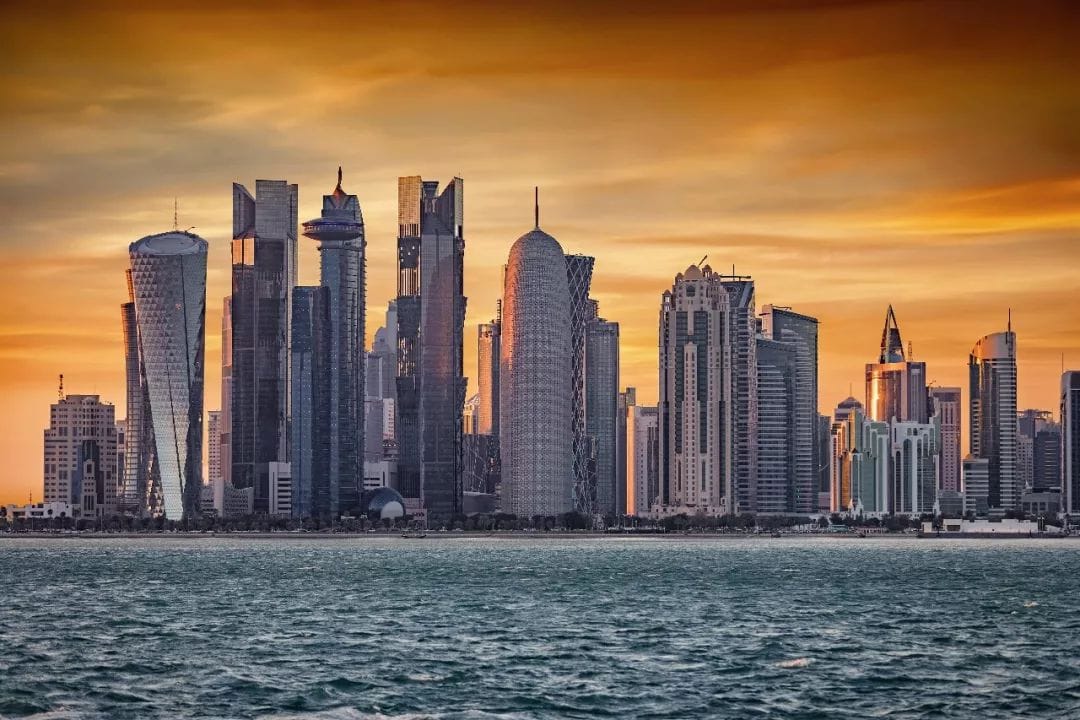
Chinese companies are increasingly securing multi-billion dollar contracts and expanding their market presence across the Middle East, capitalizing on a strategic alignment between Beijing’s outbound industrial capabilities and the region's ambitious economic diversification plans. This commercial pivot is accelerating as Middle Eastern nations, particularly those in the Gulf, push to reduce their reliance on oil revenues, creating fertile ground for Chinese expertise in energy, infrastructure, and technology.
The trend is exemplified by recent moves from China's tech giants. Meituan introduced its Keeta food delivery platform in Saudi Arabia in 2024, quickly becoming a top-two player before expanding into Qatar. In the same year, its Xiaoxiang Supermarket grocery service also launched in the kingdom. Meanwhile, online travel agent Trip.com Group signed a major global cooperation agreement with the Saudi Tourism Authority in 2024 and followed up with strategic partnerships with Oman's and Abu Dhabi's tourism bodies in early 2025, underscoring the deepening commercial ties.
This growing synergy is reshaping regional trade dynamics. As the U.S. has scaled back its strategic focus on the Middle East following its own energy independence, a window has opened for China. Bilateral trade between China and the Middle East has surged past $500 billion annually, with China's "Belt and Road Initiative" dovetailing with national strategies like Saudi Arabia's "Vision 2030."
For investors, this shift signals a broad spectrum of opportunities extending far beyond traditional energy. From renewable power projects and advanced manufacturing to the burgeoning digital economy, Chinese firms are establishing a significant foothold. This realignment represents a fundamental re-wiring of economic partnerships, positioning Chinese enterprises as key players in the region’s next phase of growth.
A New Economic Nexus
The deepening economic relationship is most evident in trade data. In Saudi Arabia, the Middle East's largest economy, China's share of imports reached 24% in 2024, up from just 5% two decades prior, while its share of Saudi exports stood at 15%. In contrast, the U.S. share of the kingdom’s imports and exports has declined to 8% and 4%, respectively. This pattern is mirrored across the region, with China now the top trading partner for the United Arab Emirates.
This "dual-track" dynamic—China’s push to export its industrial capacity and the Middle East’s need for it—has created a win-win scenario. China's strengths in electronics, construction machinery, infrastructure technology, and chemical products align perfectly with the region's industrialization and diversification needs. In return, the Middle East offers the energy resources, capital, and markets that China requires for its own industrial upgrading. In 2023, the Middle East was the largest beneficiary of China's Belt and Road Initiative projects, accounting for 36.7% of the total value.
Beyond Stereotypes: A Favorable Business Climate
Challenging long-held stereotypes of instability, key Middle Eastern markets, particularly the six Gulf Cooperation Council (GCC) nations, offer a surprisingly stable and attractive business environment. With a collective GDP of 5.3 trillion and a population of over 600 million, the wider Middle East is a significant economic bloc with a compound annual growth rate of approximately 4%, which is especially promising.
According to the World Bank’s Doing Business report, the business environment in all six GCC economies has steadily improved over the past five years. IMD's 2024 World Competitiveness Yearbook ranked the UAE 7th globally for its business environment, with Qatar at 11th and Saudi Arabia at 16th. These nations actively court foreign investment through policies like low corporate tax rates, some under 10%, which stand in stark contrast to the regulatory hurdles and policy shifts Chinese firms have faced in other emerging markets.
Powering the Transition: From Gas to Renewables
As Middle Eastern nations prepare for a post-oil future, they are accelerating investment in a diversified energy portfolio, creating significant opportunities for Chinese firms. Saudi Arabia, for example, saw its non-oil private sector contribute 50% to its real GDP in 2023.
- Natural Gas: With a strategic shift towards cleaner energy, countries are ramping up natural gas development. Jereh Group, after years of building its presence, secured a landmark order for gas compression equipment from Kuwait Oil Company in 2021, its largest single contract to date, valued at RMB 2.7 billion yuan (approximately US$375 million).
- Refining and Chemicals: To capture more value from their crude output, Gulf states are investing heavily in downstream refining and petrochemicals. This has benefited Chinese industrial suppliers like Neway Valve, a leading valve manufacturer that has successfully entered the supply chains of Saudi Aramco and Shell. By 2024, the Middle East accounted for 27% of Neway's newly signed orders.
- Renewable Energy: The region's abundant solar resources are being harnessed to meet ambitious renewable energy targets. The UAE aims for 44% of its energy to come from renewables by 2050. Chinese companies, which dominate the global solar supply chain, are providing end-to-end solutions, with firms like Jinko Solar supplying modules, Arctech Solar providing tracking systems, and Deye Technology delivering inverters.
Building and Connecting a Modern Middle East
The region's infrastructure and digital economy are undergoing a parallel boom, fueled by a young demographic—over 45% of the population is under 20—and high internet penetration.
- Infrastructure and Construction: Saudi Arabia's massive infrastructure projects, including the globally watched "The Line," have made it the region's largest construction market. Chinese firms currently hold a 40% share of this market, with state-owned giants like China Communications Construction Company and PowerChina deeply involved in energy, transportation, and building projects. Consequently, Chinese machinery manufacturers like Zoomlion Heavy Industry Science and Technology and Sinotruk have seen their sales in the region soar, with the Middle East comprising 27% of Zoomlion's overseas revenue.
- Digital Economy: High connectivity and a youthful consumer base are driving a digital boom. Saudi Arabia's food delivery market, with a 42.9% penetration rate in 2024, is estimated to be a profitable market exceeding RMB 10 billion. This has attracted Chinese internet players like Meituan, which is rapidly scaling its food delivery and grocery services in the Gulf.
New Horizons: AI, Mobility, and Beyond
Beyond these established sectors, new frontiers of cooperation are emerging. Opportunities in Artificial Intelligence are growing, combining China's algorithms and models with the Middle East's abundant capital and low-cost energy. In mobility, Chinese electric vehicle makers such as NIO, Xpeng, and BYD are expanding their presence, while China's C919 passenger jet is seen as a potential alternative to supply-constrained Western models. Furthermore, as nations like Saudi Arabia aim to localize 50% of their defense procurement by 2030, new opportunities in military trade are opening up for Chinese firms.