
BofA Sees Surgical Robot Market Hitting $52 Billion by 2030 as China Emerges as Remote Surgery Leader
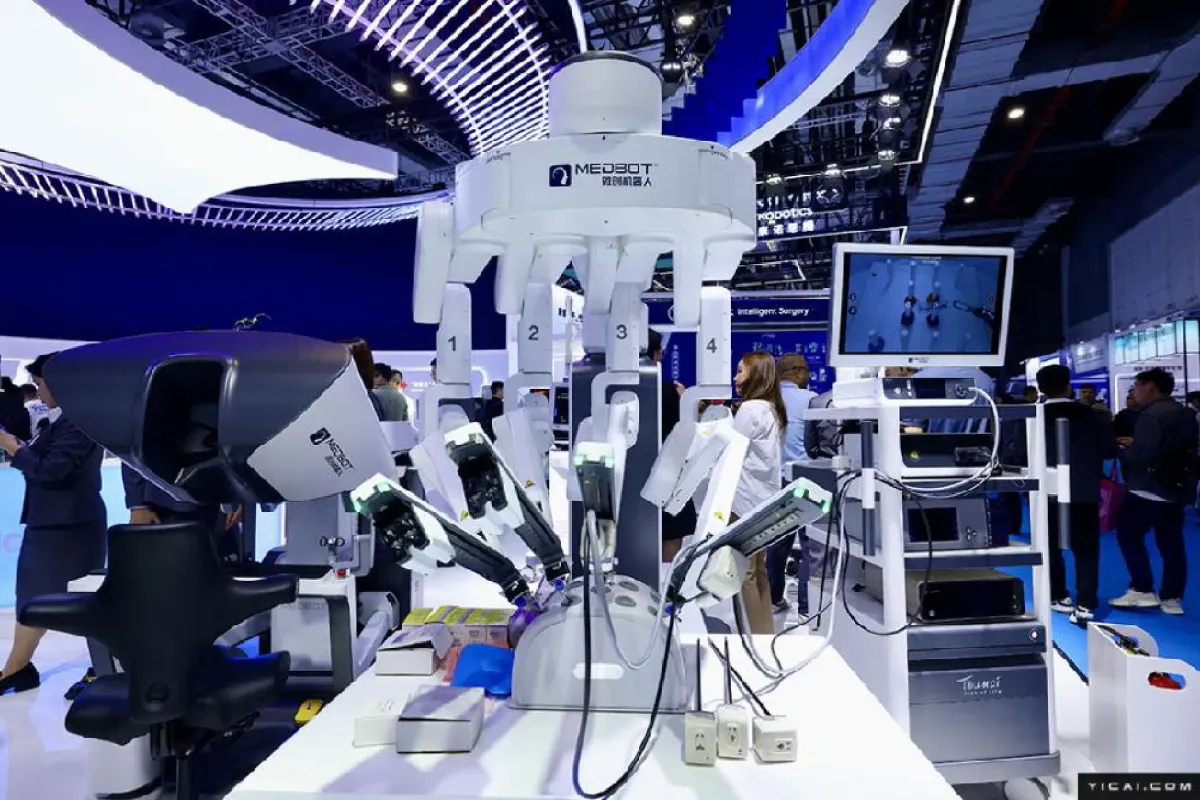
Bank of America Securities released a sweeping industry overview this week spotlighting surgical robotics as the next major medtech growth story, driven by Chinese companies' breakthroughs in remote surgery capabilities and an accelerating recovery in domestic procurement.
In a report dated 13 November 2025, BofA analysts led by Sandra Sun argue the global surgical robot market will more than double from current levels to reach 52 billion by 2030, with China positioned to surge from 1.2 billion this year to 3.5 billion by decade′s end—and as taggering 26 billion by 2040. The thesis rests on four pillars: robust overseas expansion by Chinese pioneers like Microport MedBot, a domestic procurement rebound following late-2024's anti-corruption lull, rapid development of 5G-enabled remote surgery, and fresh policy tailwinds from China's National Medical Products Administration.
China's Remote Surgery Edge: A New Competitive Moat
While Intuitive Surgical (ISRG) remains the undisputed global leader with superior technology and decades of surgical data, BofA highlights an unexpected twist: China is outpacing the US in commercializing remote robotic surgery. Leveraging dedicated 5G private networks and satellite links, Chinese firms have completed intercontinental procedures with ultra-low latency (50-200 milliseconds), high-definition imaging, and near-real-time haptic feedback—capabilities that could democratize access to specialist care in underserved regions and accelerate Chinese brands' overseas penetration.
"From the perspective of surgical robot discovery, the US has more advanced technology," the report notes. "However, China is leading in 5G-enabled telesurgery... This convergence of AI and connectivity could not only boost surgical efficiency and enable equitable healthcare ecosystems but also accelerate China names' overseas expansion in the future."
Microport MedBot's Toumai system secured the world's first NMPA approval for remote surgery in April 2025 and has since completed roughly 500 complex remote operations with a 100% success rate as of mid-year. The remote surgery capability is emerging as a core differentiator: hospitals in lower-tier cities may adopt systems compatible with top-tier institutions to facilitate telemedicine workflows, while mobile surgical units could enable urgent interventions—such as stroke procedures—with surgeons operating from centralized facilities.
Three-Stage China Installation Cycle: Quota Expansion and Post-2031 Boom
BofA models China's laparoscopic surgical robot adoption in three distinct phases.
Stage 1 (2020-2025) saw quota-constrained growth as domestic brands like Microport MedBot, Edge Medical, and Sagebot launched following NMPA approvals from 2022 onward. Over 100 laparoscopic robots were newly installed in China during 2024, roughly half from domestic suppliers. However, rigid Class-B large-scale medical device quotas—559 units allocated for 2021-2025, up 148% versus the prior five-year plan—capped expansion.
Stage 2 (2026-2030) anticipates quota doubling again to approximately 1,200 units (BofA estimate) to be announced by year-end 2026 or early 2027. Combined with falling system prices (domestic brands price 20-30% below multinationals), BofA expects penetration among Class 3A hospitals to climb from 21% in 2025 to 36% by 2030, with average robots per hospital rising from 1.5 to 2.0. Robotic surgery penetration in China should jump from 1.5% in 2024 to 5.5% by 2030—still far behind the US's 25.5% forecast for the same year, but a meaningful step forward.
Stage 3 (2031-2040) envisions surgical robots removed from quota restrictions entirely as average selling prices decline further and insurance coverage broadens nationwide. BofA projects 70% of Class 3A hospitals will deploy robots by 2040 (averaging 3.0 units each), with penetration reaching 40% of Class 3 (non-3A) hospitals and 15% of Class 2 facilities. The China market could reach RMB 195 billion yuan (US$27 billion) by 2040, cementing surgical robotics as a cornerstone of the country's "new quality productivity" medtech agenda.
Microport MedBot: First-Mover Advantage and Global Footprint
BofA lifted its price objective on Microport to HK17.0 from HK16.8, citing better-than-expected overseas orders for Toumai and likely rapid installation growth in China from 2027. As of mid-2025, Microport MedBot had installed 36 Toumai and 8 Skywalker orthopedic systems domestically, plus 27 and 27 units respectively overseas across nearly 40 countries—including Italy, Belgium, India, Brazil, and the UAE. By October 2025, Toumai had secured over 60 overseas orders.
"We believe Microport MedBot can still see first-mover advantage, given it has already accumulated a large amount of clinical data (15,000+ clinical surgeries by October 2025 globally) and hospitals would generally prefer those brands with longer track record," the analysts wrote. Surgical robotics now contributes roughly 5% of Microport's total revenue but is forecast to reach 19% by 2034.
Risks and Runway: Pricing Pressure, Quota Uncertainty, and Insurance Coverage
BofA acknowledges downside risks. Intensifying domestic competition—over 10 Chinese laparoscopic robot brands now vie for limited quota slots—could drive system and consumable prices lower than modeled. Surgical robots' long breakeven periods (typically 3-5 years) and hospital financial pressures under China's DRG/DIP cost-control reforms may dampen near-term procurement. If quota expansion disappoints or surgical robots remain in the Class-B device category post-2031, installation growth would stall. Likewise, absent nationwide insurance reimbursement for robot-assisted procedures (currently available only in Beijing, Shanghai, and select provinces), patient demand may remain tepid.
On the global stage, geopolitical tensions pose a wildcard. Should the US or EU impose tariffs or bans on Chinese surgical robots—akin to restrictions on other high-tech sectors—overseas expansion could derail. Supply chain dependencies on imported servo systems and reducers from the US, Germany, and Japan add vulnerability, though BofA notes domestic substitutes are emerging.
The Bottom Line
BofA's stock picks reflect the shifting landscape: Buy ratings on Intuitive Surgical (price target 650, citing the Da Vinci 5 platform as a catalyst for robotic surgery becoming standard−of−care), Medtronic(price target 100, with Hugo robot US approval expected by mid-fiscal 2026), and Microport. The analysts argue the razor-and-razor-blade business model—low-margin system sales followed by high-margin consumables and service revenue—will drive margin expansion as installed bases scale. Intuitive's gross margin reached 65.5% in 1H25, up from 47.1% in 2002, with instruments now contributing 61% of revenue versus 20% two decades ago. Chinese players remain in the early innings: Microport MedBot's revenue breakdown in 1H25 mirrored Intuitive's 2002 profile, with systems accounting for 78% of sales.
In an industry where precision, dexterity, and surgeon ergonomics increasingly trump brute-force manual skill, surgical robots are poised to transition from niche to necessity. China's remote surgery leadership and aggressive overseas push add a geopolitical dimension to a market that, until recently, was overwhelmingly a US story. Whether procurement quotas expand as forecast—and whether insurance coverage follows—will determine if BofA's $26 billion China TAM by 2040 proves prescient or premature.