
Goldman Sachs Bullish on Tencent's AI-Driven Beat, But All Eyes on Capex Trajectory
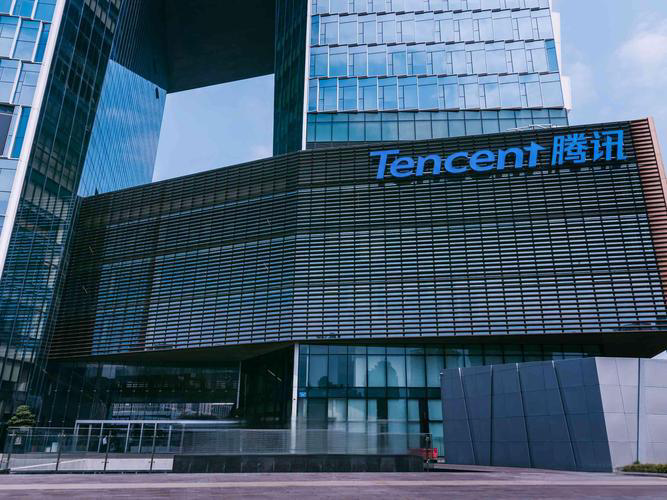
Goldman Sachs analysts led by Ronald Keung issued an upbeat note on Tencent following the Chinese internet giant's third-quarter 2025 results, predicting investors will respond positively to what the bank characterized as a "solid beat" driven by artificial intelligence-enhanced revenue growth. The report, published November 13, highlights accelerating monetization across Tencent's ecosystem while flagging a critical question for the upcoming earnings call: whether the company can maintain its AI infrastructure buildout amid chip supply constraints.
Tencent's Q3 revenue jumped 15% year-over-year, outpacing expectations, with games revenue surging 23% and AI-powered advertising revenue accelerating to 21% growth. Adjusted operating profit rose 18% year-over-year, roughly in line with Goldman's 17% estimate. The print sent shares of major investor Prosus up 3% in early trading.
Yet buried in the strong numbers was a sequential decline in capital expenditure that Goldman attributes to "foreign chip supply constraints"—dropping to RMB 13 billion ($1.8 billion) in Q3 from RMB 19 billion in Q2. That retreat, the analysts note, likely reflects both chip availability issues and some GPU equipment rentals rather than outright purchases, raising questions about Tencent's ability to compete in what Goldman describes as the "ongoing AI infrastructure equipment race" among global and Chinese cloud providers.
AI Becomes Revenue Accelerant Across Business Lines
The quarter's standout performance came from Tencent's marketing services segment, which posted RMB 36.2 billion in revenue, up 21% year-over-year and ahead of Goldman's 19% forecast. The bank credits the launch of Tencent's new AIM+ automated ad campaign solution and robust demand across Video Accounts, Mini-Programs, and Weixin Search—all benefiting from AI-driven targeting and optimization.
Gaming remained the crown jewel, with domestic titles up 15% to RMB 42.8 billion and international games exploding 43% higher to RMB 20.8 billion. Goldman highlights contributions from Honour of Kings, Peacekeeper Elite, VALORANT, and the recently launched Delta Force, alongside continued strength from acquired studio Supercell. Deferred revenue—a leading indicator for gaming—grew 11% year-over-year, though that marked a slight deceleration from 12% in the prior quarter.
FinTech and Business Services delivered 10% growth to RMB 58.2 billion, with the business services component (including cloud) posting "teens percentage rate" expansion driven by what Goldman describes as "increased enterprise customer demand for AI-related services." The segment's gross margin hit 50%, up 2.4 percentage points year-over-year, suggesting improving cloud economics as AI workloads carry higher pricing.
Operating Leverage Intact Despite AI Investment Ramp
Tencent maintained impressive operating leverage despite ramping AI-related spending, with gross margin expanding 3.3 percentage points to 56.4% and adjusted operating margin widening one percentage point. Goldman notes this reflects high-margin revenue streams—Value-Added Services at 61.2%, marketing services at 56.7%, and FinTech/Business Services at 50.2% gross profit margin—offsetting elevated sales and marketing expenses for AI-native applications and R&D spending on AI initiatives.
Free cash flow rebounded to RMB 58.5 billion from RMB 43.0 billion in Q2, while the company executed HK19.2 billion in share repurchases during the quarter, on track toward its HK80 billion full-year target.
The Capex Conundrum and Strategic Questions Ahead
Goldman frames five key areas of focus for Tencent's upcoming earnings call, topped by the capex outlook. The analysts note that while Tencent has historically prioritized GPU spending for internal use cases with "higher ROI," global and domestic cloud competitors have been aggressively lifting infrastructure budgets. The question is whether Tencent will accelerate external AI + Cloud capex or continue its more measured approach—and whether chip constraints or strategic choice drove Q3's sequential pullback.
Management commentary on AI talent retention will be closely watched, particularly following HunYuan's achievements in multi-modal AI where the image generation model ranked first among text-to-image models. Goldman highlights Tencent AI Lab's recent introduction of a Continuous Autoregressive Language Model challenging the standard "next-token" paradigm with claimed 44% and 33% reductions in training and inference compute respectively.
The bank also wants clarity on AI application development and margin impacts, noting that Tencent is "incentivizing" adoption of its Yuanbao AI assistant and developing agentic AI capabilities within Weixin. These initiatives involve higher inference costs before monetization paths emerge—a dynamic Goldman compares to prior investment cycles in Video Accounts where spending preceded revenue.
Finally, gaming strategy into 2026 and the impact of updated revenue-sharing terms with Apple for Weixin mini-games will be in focus.
Maintaining Buy, HK$770 Target on SOTP Basis
Goldman maintains its Buy rating on Tencent with a 12-month sum-of-the-parts price target of HK770, implying 657 close. The bank frames Tencent as positioned to deliver "compounding of earnings through macro cycles" given its WeChat ecosystem moat and global gaming assets, while calling it "a key AI beneficiary" for potential agentic AI functionality in WeChat and Tencent Cloud's position as a top-three China public cloud player by scale.
Key risks include intensifying competition in performance-based advertising, game launch delays, slower-than-expected FinTech and cloud growth, and reinvestment risk as AI spending potentially crimps near-term margins.
The solid quarter sets up what could be a pivotal earnings call: Can Tencent sustain its AI-driven revenue acceleration while navigating the geopolitical complexities of advanced chip access? The answer may determine whether the stock can break out of its recent trading range.