
BrainCo Files Confidential Hong Kong IPO After $280M Funding Round, Testing Non-Invasive Brain-Computer Interface Commercialization
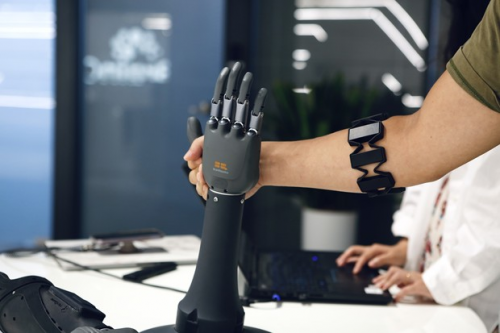
BrainCo, the Hangzhou-based brain-computer interface (BCI) unicorn, has quietly filed for a Hong Kong IPO following a approximately RMB 2 billion ($280 million) financing round—the sector's second-largest raise globally after Neuralink. The confidential filing, managed by China International Capital Corp. and UBS Group AG, positions the company to potentially raise several hundred million dollars while testing investor appetite for non-invasive neural technology at scale. Unlike Elon Musk's Neuralink, which pursues surgical implants, BrainCo's FDA-cleared external sensors represent a fundamentally different bet: that brain-machine interfaces can reach commercial viability without penetrating the skull.
Capital Endorsement Signals Commercial Inflection Point
The recent funding round, co-led by IDG Capital and Walden International—the latter founded by Intel CEO Lip-Bu Tan—marks a structural shift in BCI investment patterns. Strategic participation from Lens Technology, a major manufacturing supplier, suggests preparation for production scaling rather than laboratory refinement. BrainCo has secured both U.S. FDA and European CE certifications for its "Super Sensor" technology, which detects neural signals externally for applications spanning paralysis rehabilitation to Alzheimer's and autism treatment.
Founded in 2015 by Han Bicheng, BrainCo differentiates through its non-invasive approach, establishing signal pathways between the brain and external devices without surgical intervention. Han has publicly committed to restoring mobility for one million physically disabled individuals within the next decade—an ambitious target that requires not just technical validation but also supply chain maturation and reimbursement frameworks. The company's research expenditure ranks among the highest in the sector, positioning it as China's primary counterweight to U.S. competitors in what increasingly resembles a geopolitical technology race.
Neuralink's Production Timeline Reshapes Market Dynamics
Market momentum accelerated sharply after Musk announced Neuralink would commence mass production in 2026 and expressed confidence in restoring full-body function for paralyzed patients. The declaration triggered consecutive rallies in Chinese BCI-adjacent stocks including Yibeikang and Xiangyu Medical, validating the technology's transition from experimental to commercial stages. BrainCo benefits indirectly from this validation despite pursuing divergent technical paths—Neuralink's invasive chips target higher signal fidelity, while BrainCo prioritizes accessibility and lower medical risk through external sensors.
According to CCID Consulting Co., China's BCI industry is projected to sustain 20% annual growth, driven by aging demographics and government support for assistive technologies. BrainCo represents one of the few players achieving volume production, a critical benchmark as the sector moves from prototype demonstrations to hospital procurement and insurance coverage. The company's IPO prospectus will likely detail manufacturing capacity, unit economics, and clinical deployment metrics—data points investors need to assess whether non-invasive BCIs can achieve profit margins comparable to traditional medical devices.
Hangzhou's "Six Dragons" Enter Synchronized Capitalization Phase
BrainCo's Hong Kong filing accelerates the listing momentum among Hangzhou's celebrated tech cohort. Kujiale (Manycore Tech) has already submitted formal IPO documents to the Hong Kong Stock Exchange, reporting RMB 399 million in H1 2025 revenue with 82.1% gross margins and a pivot toward becoming a "spatial intelligence infrastructure provider." Unitree Robotics completed listing counseling and publicly confirmed IPO preparations, while DeepRobotics filed counseling materials with China Securities Regulatory Commission in December, targeting A-share market entry by Q2 2026.
This clustering reflects strategic timing rather than coincidence. The cohort—which also includes DeepSeek and Game Science, neither of which has disclosed IPO plans—represents Hangzhou's emergence as a hardware-AI innovation hub distinct from Beijing's focus on large language models or Shenzhen's manufacturing ecosystems. For BrainCo specifically, accessing Hong Kong's capital markets provides U.S. dollar liquidity without the regulatory complexities of American exchanges, while maintaining proximity to Greater China manufacturing bases and clinical trial sites.
The IPO will test whether public market investors share venture capital's conviction that brain-computer interfaces constitute a category-defining opportunity rather than a niche assistive technology. BrainCo's valuation multiple—once disclosed—will set pricing expectations for subsequent BCI listings and signal whether the sector commands biotech-style premiums or trades closer to medical device peers. The company faces commercialization questions around reimbursement rates, clinical adoption curves, and competitive moat durability as sensor technology commoditizes.
By ChinaBiz Insider Analysis Desk