
Bubble Tea Giant Mixue's Revenue Jumps 39% with Overseas Store Count hits 4700
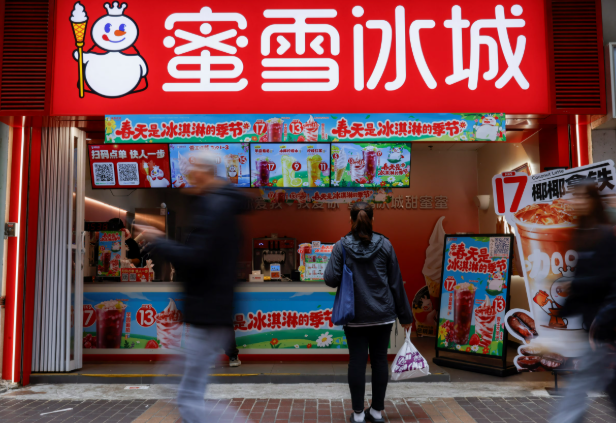
- Stellar Top-Line Growth: Mixue reported H1 2025 revenue of RMB 14.88 billion (~US$2.05 billion), a 39.3% YoY increase, while net profit surged 44.1% to RMB 2.72 billion, both beating expectations.
- Aggressive Store Expansion Continues: The global store network surpassed 53,000 locations, a 22.7% YoY increase. The company's revenue is overwhelmingly (97.4%) derived from selling goods and equipment to its vast network of franchisees.
- Costs Under Scrutiny: While growth is impressive, operating expenses are rising sharply. Selling and distribution costs climbed 40.2%, but administrative expenses exploded by a staggering 56.6%, significantly outpacing revenue growth and raising G&A efficiency questions.
- Overseas Headwinds: The company acknowledged "optimization measures" in key overseas markets like Indonesia and Vietnam, resulting in a net reduction of stores in those regions. This signals potential saturation or operational challenges in its early international pushes.
- Fortress Balance Sheet: Cash reserves swelled by 58.5% from the end of 2024 to RMB 17.61 billion, bolstered by strong operating cash flow and proceeds from its Hong Kong IPO, providing a substantial war chest for future expansion.
Mixue Ice Cream & Tea , the Chinese beverage giant known for its low-price strategy, has delivered a powerful set of interim results for 2025, underscoring the sheer force of its franchise-driven expansion model. The company's ability to blanket the market with new stores continues to fuel impressive top-line and bottom-line growth. However, a closer look at the numbers reveals burgeoning cost pressures and potential growing pains in its international strategy that investors cannot ignore.
Relentless Expansion Fuels The Top Line
The core of Mixue's growth story remains its breakneck pace of store openings. In the first six months of 2025, the company added a net 6,534 stores, bringing its global total to over 53,000.
This expansion directly translates into revenue. The business model is not primarily about royalties; it's a B2B supply chain machine disguised as a consumer brand. Sales of goods (drink ingredients, cups, etc.) and equipment to its franchisees accounted for RMB 14.50 billion, or 97.4% of total revenue. This segment grew 39.6%, almost perfectly in line with overall revenue growth, demonstrating a direct correlation between store count and sales.
Geographically, Mixue continues to dominate its home turf, with 48,281 stores in mainland China. Its strategy of penetrating lower-tier cities remains highly effective, with 57.6% of its domestic stores located in third-tier and below cities, a market segment its higher-priced competitors often struggle to capture.
The Double-Edged Sword of Costs
While revenue soars, the cost side of the ledger warrants a more critical look. Gross margin for its core goods and equipment segment saw a slight compression, dipping from 30.5% to 30.3%, attributed to rising raw material costs. This was offset by an improvement in the high-margin franchise services business (from 81.7% to 82.7%), keeping the overall gross margin relatively stable.
The real concern lies in operating expenses. Selling and distribution costs rose 40.2%, a manageable increase largely in step with business expansion. However, administrative expenses skyrocketed by 56.6%. This dramatic surge, far outpacing revenue growth, is a significant red flag. While rapid expansion necessitates investment in corporate overhead, a growth rate of this magnitude points to potential inefficiencies or a concerning lack of cost discipline that could erode profitability if left unchecked.
Overseas Ambitions Meet Reality
Mixue has been vocal about its global ambitions, with approximately 4,700 stores now operating outside mainland China. However, the H1 report suggests the path is not without its obstacles.
The company reported that it implemented "optimization measures" for its existing stores in Indonesia and Vietnam, leading to a net reduction in store count in these two key markets. While management frames this as a qualitative improvement, for investors, it reads as a potential signal that the initial land-grab strategy has hit a ceiling or encountered significant operational hurdles. The rapid, low-cost expansion model that works in China may not be as seamlessly transferable as hoped. Despite these challenges, the company is still pushing forward, successfully entering new markets like Kazakhstan during the period.
The Moat: Supply Chain and Cash Hoard
Despite the concerns, Mixue's fundamental competitive advantages remain formidable. The company's end-to-end supply chain, featuring five major production bases for core ingredients and a network of 29 logistics warehouses, is its true moat. This vertical integration allows for unparalleled cost control and product consistency across its vast network, forming a high barrier to entry for competitors.
Furthermore, the company's financial position is exceptionally strong. Bolstered by its recent IPO in Hong Kong and robust cash flow from operations, its cache of cash and cash equivalents grew to RMB 17.61 billion. This massive war chest gives Mixue immense strategic flexibility to out-invest rivals, weather economic downturns, or potentially pursue strategic acquisitions, ensuring it remains a dominant force in the global beverage market.