
BYD and Leapmotor Face Volatility as China’s Auto Market Braces for 2026 Shakeout
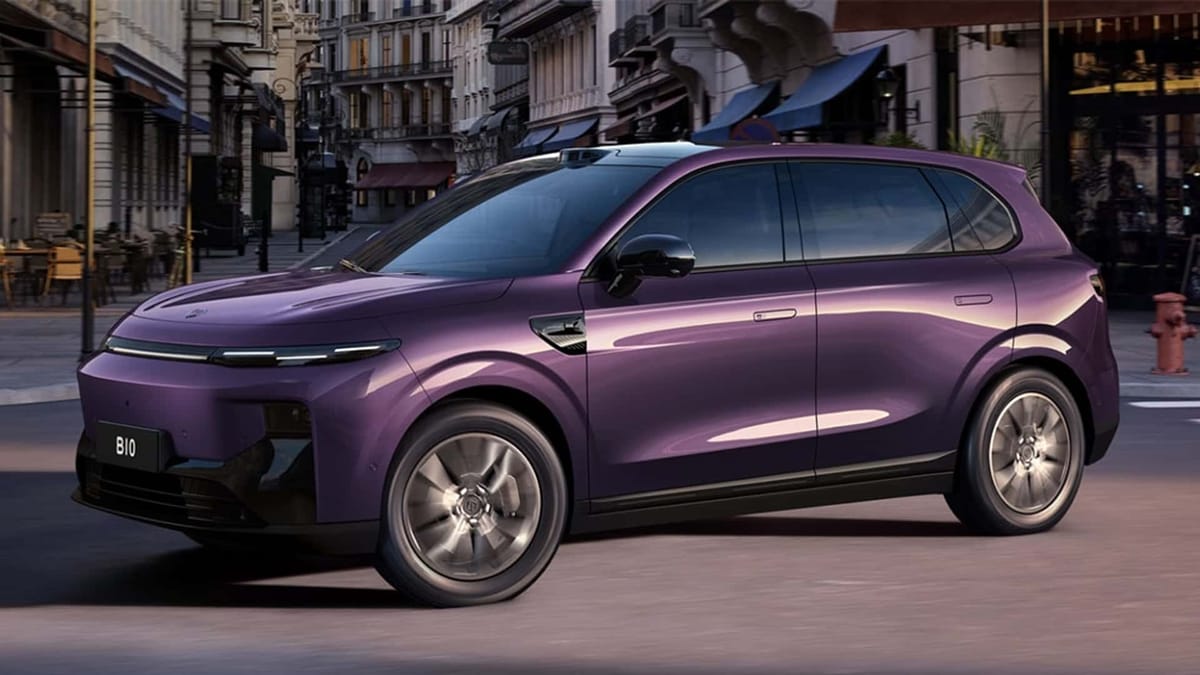
China’s automakers are concluding 2025 with deepening anxiety as the industry moves from aggressive price wars to a more grueling phase of consolidation. With government subsidies set to retreat in 2026, the sector is bracing for a "final showdown" that prioritizes profitability, cash flow, and survival over sheer scale.
The competitive landscape has undergone a dramatic upheaval this year, leaving market leaders vulnerable. BYD, once the undisputed dominant force, is seeing its lead erode amid falling sales in the second half, while in the electric vehicle (EV) startup arena, Zhejiang Leapmotor has surged past Li Auto to claim the top spot.
This volatility signals a fundamental shift in market logic. After a first half defined by fierce "one-price" discounting, automakers collectively pivoted in the second half to an "anti-involution" stance, focusing on protecting margins and stabilizing supplier relationships rather than engaging in destructive price competition.
The stakes will rise further on January 1, 2026, when purchase tax exemptions for new energy vehicles (NEVs) are halved. Executives warn this policy shift marks the end of "policy blood transfusions" and the beginning of a market-driven elimination round where the gap between top-tier players and struggling rivals will widen significantly.
Shifting Hierarchies
The dominance of BYD is no longer guaranteed. In the first half of 2025, the company barely maintained its position as China’s top automaker, with automotive revenue exceeding that of long-time incumbent SAIC Motor by just RMB 8.17 billion yuan (US$1.13 billion). BYD’s momentum stalled in the second half, with domestic sales recording year-on-year declines ranging from 14% to 26% between July and November.
BYD Chairman Wang Chuanfu recently attributed the slowdown to a narrowing technological lead compared to previous years and increasing product homogeneity across the industry. Concurrently, competitors like SAIC and Geely are aggressively closing the gap.
Among EV startups, the leaderboard has also been rewritten. Leapmotor has led deliveries for nine consecutive months, displacing Li Auto. Li Auto’s transition to a pure electric strategy has faced headwinds, with declining monthly deliveries. In response, Li Auto Chairman Li Xiang announced a "dual-supplier" battery strategy to boost production capacity for its i6 model, aiming to stabilize output by early 2026.
The Profit Imperative
The industry’s focus is rapidly shifting from market share to financial health ahead of the tax policy change. For the past decade, full purchase tax exemptions fueled the sector's growth, but the reduction to a half-tax scheme in 2026 is expected to test consumer demand. Lu Fang, Chairman of Voyah, described the upcoming period as a "final duel" between internal combustion logic and the new energy era.
This pressure has forced a retreat from the "price wars" that characterized early 2025. By the fourth quarter, companies began emphasizing "value wars" and sustainable operations. Voyah, which filed for a Hong Kong listing in October, is among the few NEV makers reporting quarterly profits, underscoring the new mandate that growth must not come at the expense of solvency.
Supply chain stability has also become a priority. Following reports that some automakers extended payment terms to suppliers beyond 200 days—compared to Tesla’s approximate 90 days—major players including FAW, Dongfeng, and GAC Group publicly committed to capping payment terms at 60 days to ensure industry health.
Ecosystems and the Long Game
Automakers are increasingly looking beyond hardware to differentiate. GAC is pivoting toward "ecosystem competition," deepening ties with Huawei Technologies and partners like JD.com and CATL. GAC General Manager He Xianqing noted that deep co-creation in software and services is now essential to keep pace with rapid technological iteration.
Looking ahead, industry leaders predict a protracted consolidation phase. He Xiaopeng, CEO of Xpeng, forecasted that 2026 would be "cruel and bloody," distinguishing between a "hardware era" where many could survive, and the current "software plus hardware" era where network effects will decimate second-tier players.
Nio CEO William Li holds a similar view, estimating it will take another five years to see the market's basic outline and ten years to reach a steady state. With NEV penetration rates exceeding 50% in late 2025, the market is entering a "knockout stage" where strategic patience and capital reserves will determine who remains standing.