
BYD Backs A Mining Automation Startup in Hong Kong IPO Push
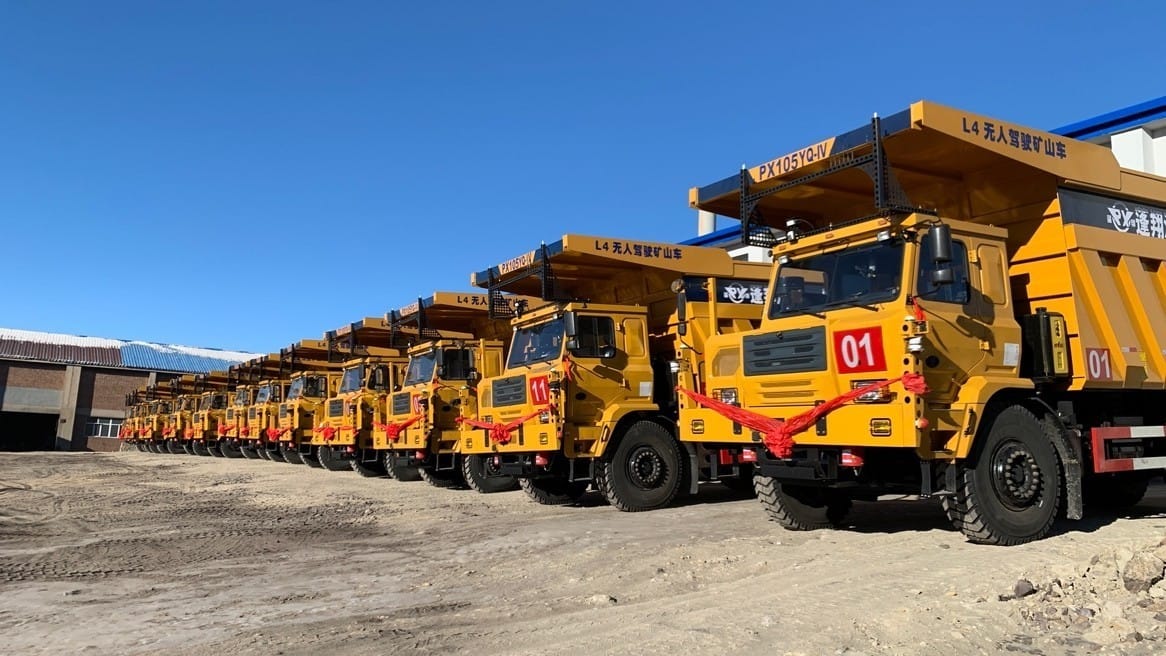
Shanghai Bole Intelligent Technology, a Chinese autonomous mining truck developer, has filed for an initial public offering in Hong Kong, capping a record fundraising year that saw the niche sector attract over RMB 2.9 billion (US$400 million) in capital. The move comes after BYD Co. made a rare strategic investment of RMB 100 million (US$13.8 million) in the company, signaling growing interest from established automakers in the industrial automation space.
The filing marks a pivotal moment for the autonomous mining vehicle sector, which has transformed from an obscure industrial application into one of the fastest-growing segments of China's autonomous driving industry. Bole's revenue surged to RMB 315 million ($43.5 million) in the first nine months of 2025, up from RMB 171 million for full-year 2024 and RMB 69.6 million in 2023.
Founded by Hu Xinyi, an engineer born in the mid-1980s, Bole represents a new generation of industrial technology companies bridging traditional heavy machinery with artificial intelligence. The company's trajectory reflects broader shifts in China's mining industry, where labor shortages and safety concerns are driving rapid adoption of unmanned vehicles despite the harsh operating environments.
The IPO filing follows Bole's completion of over RMB 1 billion ($138 million) in cumulative financing, marking the largest single-cluster fundraising case in the mining autonomous driving sector this year. However, the company remains unprofitable, with losses widening to RMB 58.7 million in the first nine months of 2025, while cash reserves stood at just RMB 70.8 million as of September 2025.
Capital Flood Into Mining Automation
The autonomous mining truck sector has emerged as an unexpected beneficiary of China's autonomous driving boom, attracting over RMB 2.9 billion across more than 10 financing rounds in 2025 alone. The surge represents a dramatic acceleration from previous years, driven by the sector's transition from pilot projects to commercial-scale deployments.
Unlike urban autonomous driving, which remains mired in regulatory uncertainty and technical challenges, mining applications have demonstrated clear economic returns. Mining operators face acute pain points: difficulty recruiting drivers for remote locations, high labor costs, and catastrophic financial losses from safety incidents that can force production halts costing millions of yuan per day.
Bole's revenue growth illustrates the sector's rapid commercialization. The company's RMB 315 million revenue in the first nine months of 2025 represented an 819.9% increase from the RMB 69.6 million recorded in full-year 2023. Gross margins improved from 11.3% in 2023 to 15.1% in the first nine months of 2025, though profitability remains elusive.
The investment wave has swept up multiple players including Yikong Intelligent Driving, Great Wall Heavy Industry, and Tage Intelligent Machinery, with individual rounds consistently reaching nine-figure yuan amounts. This concentration of capital reflects investor confidence in verified operational data rather than speculative technology bets, marking a maturation of the sector.
BYD's strategic investment carries particular significance. Unlike financial investors, the electric vehicle giant's RMB 100 million stake appears in Bole's pre-IPO shareholder register, indicating potential supply chain integration and technology collaboration. The move suggests established automakers view mining automation as a viable adjacent market for their electric powertrains and battery technologies.
From Foreign Executive to Mining Entrepreneur
Hu Xinyi's path to mining automation began with a departure from corporate comfort. Born in 1985 in Zhejiang province, Hu graduated from Shanghai Jiao Tong University before pursuing further studies abroad and earning an MBA from China Europe International Business School. He built a successful career at global industrial giants Bosch and Danaher, rising to China regional management positions.
In 2015, Hu made an unconventional decision to leave his high-paying executive role and co-found Bole with Yang Yang, a dormitory mate from his Shanghai Jiao Tong days. The initial team comprised just five people, all engineers, with Hu's personal savings providing startup capital. The company had no products, no customers, and no market validation.
The breakthrough came from extensive field research. Hu and his team traveled to mining sites across Xinjiang's Gobi Desert, Inner Mongolia's open-pit mines, and southern mountain operations. These site visits revealed the core customer need: mining operators struggled with recruitment, faced escalating labor costs, and feared safety incidents that could trigger production stoppages costing hundreds of thousands of yuan daily.
A critical pivot occurred in 2023. Previously, Bole functioned as a system supplier, providing autonomous driving software for traditional mining trucks. This model created accountability gaps—when vehicles malfunctioned, truck manufacturers and software providers blamed each other while mine operators suffered downtime.
Hu recognized that mining customers needed integrated solutions rather than component suppliers. Bole launched its proprietary "Bole Electric Bull" brand through deep collaboration with Tongli Heavy Equipment Co. (同力股份), a leading domestic mining truck manufacturer. Under this arrangement, Bole provides autonomous driving systems and electric powertrain technology while Tongli manufactures the vehicle chassis, transforming Bole from a software vendor into a complete vehicle supplier.
The company further lowered adoption barriers by introducing "vehicle-battery separation" financing schemes, allowing customers to lease batteries rather than purchasing them outright. This brought the upfront cost of electric autonomous mining trucks close to traditional diesel-powered vehicles while delivering operational savings through automation and electrification.
Profitability Challenges Loom Large
Despite impressive revenue growth, Bole faces significant financial pressures that will intensify scrutiny during its IPO process. The company's losses have widened from RMB 32.5 million in 2023 to RMB 61.0 million in 2024, with RMB 58.7 million lost in just the first nine months of 2025.
Cash flow presents an immediate concern. With only RMB 70.8 million in cash and equivalents as of September 2025, the company's runway appears limited given its current burn rate. Mining truck manufacturing, deployment, and operations require substantial upfront capital, making Bole a capital-intensive business model despite its software origins.
Customer concentration poses another risk. In the first nine months of 2025, Bole's top five customers accounted for 97.7% of revenue, with the largest single customer contributing 65.0% and the top two customers combined representing 78.4%. While such concentration is common in project-based heavy equipment businesses, it creates significant revenue volatility if major contracts are delayed or canceled.
Supply chain dependencies have intensified. Purchases from Bole's top five suppliers represented 84.3% of total procurement in the first nine months of 2025, with the largest supplier alone accounting for 64.7%—nearly double the 36.0% concentration in 2023. This increasing reliance on key suppliers raises concerns about supply disruptions, pricing power, and delivery stability.
Competitive pressures are mounting as capital floods the sector. Beyond domestic rivals like Yikong Intelligent Driving and Tage Intelligent Machinery, international mining conglomerates are developing in-house autonomous solutions. Bole's gross margin of 15.1% leaves limited room for price competition, and any margin compression could extend the path to profitability.
The company's rapid scaling also brings execution risks. Deploying autonomous vehicles in diverse mining environments requires customization and ongoing technical support. As Bole expands its customer base beyond its concentrated core, maintaining service quality while managing costs will test operational capabilities.
For Hu and his team, the Hong Kong listing represents validation of their bet on mining automation. But the IPO also marks entry into a more demanding phase where quarterly results and profitability timelines will face constant market scrutiny. The RMB 2.9 billion capital wave has elevated the sector's profile, yet sustainable business models remain unproven at scale.
BYD's strategic backing provides both capital and potential supply chain advantages, but Bole must still navigate the gap between growth and profitability while defending against well-funded competitors. The mining automation revolution sparked by this 85-born entrepreneur has only just begun its most challenging chapter.