
BYD Brings Flash Charging to the Mass Market, Raising the Stakes in China's EV Price War
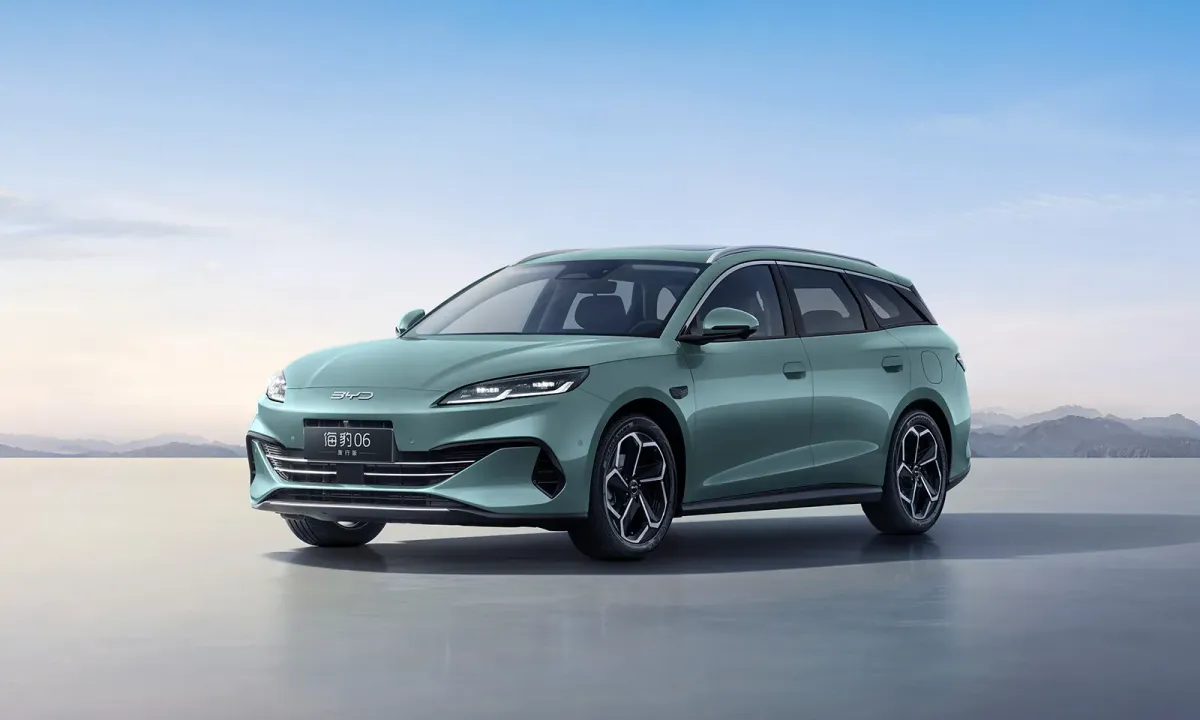
BYD launched the 2027 Seal 06 on the evening of August 11, pushing its flash-charging technology into China's most competitive vehicle segment and signaling that the industry's next battleground will be fought on charging speed as much as sticker price.
The Seal 06 is offered in 12 variants across two powertrains — a DM-i plug-in hybrid starting at RMB 99,900 yuan (approximately US$13,800) and a pure-electric version starting at RMB 109,900 yuan — bringing the total price range to RMB 99,900–155,900 yuan. All variants come standard with BYD's Blade Battery and flash-charging capability. The EV version, built on BYD's second-generation Blade Battery and flash-charging platform, can charge from 10% to 70% in as little as five minutes and offers a maximum range of 630 kilometers.
The move marks the first time BYD has brought flash charging into the RMB 100,000–150,000 price band at scale — a segment long dominated by range extensions and incremental price cuts rather than technology differentiation.
A Market Shifting Upward
The timing reflects a structural shift underway in China's pure-electric vehicle market. Data from the China Passenger Car Association (CPCA) show that wholesale sales of B-segment electric vehicles reached 299,000 units in July 2026, up 35% year-on-year, accounting for 31% of total pure-EV wholesale volume. Meanwhile, sales of A00-segment micro EVs fell 50% over the same period, and A-segment vehicles declined 2.1%.
The data point to a market that is no longer driven by low-cost entry-level cars. Demand is consolidating around larger, more capable vehicles suited to primary family use — precisely the RMB 100,000–150,000 bracket where BYD is now deploying its most advanced charging technology.
Competitors including Xpeng, Leapmotor, and Geely have already introduced extended range and intelligent driving features in this price band. By adding flash charging to the Seal 06, BYD is addressing what the company identifies as one of the most persistent barriers to EV adoption among family buyers: charging time on long-distance and inter-city trips. Incremental increases in battery capacity carry diminishing returns for consumers, while faster charging offers a more direct solution.
Higher-specification Seal 06 trims also include lidar-assisted driving and BYD's cloud-based suspension system DiSus-C — features previously reserved for mid-to-premium models — further compressing the technology gap between price segments.
Competitive Pressure and Internal Challenges
BYD's own domestic sales figures underscore why the company needs the Seal 06 to perform. CPCA data show BYD's domestic retail sales of passenger vehicles reached approximately 223,000 units in July 2026, down 18.6% year-on-year. While the decline was slightly less severe than the broader market, it reflects mounting pressure from weakening demand and a growing field of competitors. Equipping the Seal 06 with flash charging, BYD's management argues, creates more durable product differentiation than a straightforward price reduction.
The dual-powertrain strategy also hedges risk. The DM-i hybrid, starting at RMB 99,900 yuan, continues to serve buyers without reliable home charging access or with frequent long-distance needs. The EV version, priced only RMB 10,000 higher, targets a segment showing stronger growth momentum. By keeping both options on the table, BYD avoids concentrating its exposure on a single technology path.
Supply Chain Is the Real Test
BYD acknowledged to media that second-generation Blade Battery production is still in a ramp-up phase. Bringing flash charging to a mass-market price point means competing for a buyer pool far larger than the mid-to-premium segment — one where sustained delivery volume, not launch-event specifications, will determine commercial success. If battery output cannot keep pace with demand, the technology advantage demonstrated at launch will be difficult to translate into consistent sales.
Charging infrastructure will be equally decisive. As of the end of June 2026, BYD had built 7,018 flash-charging stations across 325 cities nationwide. The company has also launched what it calls the "Dream Station" program, under which four vehicle owners can jointly apply for a new flash-charging station to be built within one week, subject to site conditions.
Raising the Floor for the Segment
If the Seal 06 achieves sustained volume, the competitive implications extend beyond BYD itself. Fast charging risks becoming a baseline expectation in the RMB 100,000–150,000 segment — much as extended range already has — rather than a differentiating feature. That would raise the technology cost floor for all participants: automakers would need to absorb the expense of high-voltage platforms, battery thermal management systems, charging hardware, and advanced driver-assistance components while holding the line on retail prices.
For brands with weaker supply chain integration, the choice is stark: compress margins to match BYD's configuration, or accept a visible gap in the comparison table. The price war in China's EV market has not ended — it has simply shifted its arena from the window sticker to the technology stack.
Related Coverage: