
BYD Captures Five Spots as Xiaomi SU7 Slides to Seventh in China's December NEV Sedan Rankings
China's new energy sedan market closed 2025 with a revealing split: dominant players like BYD and Tesla expanded their leads while mid-tier contenders buckled under upgrade cycles and intensifying price competition. BYD secured five positions in December's top-ten sedan rankings, with its Qin PLUS delivering 46,837 units—a 32.4% month-on-month surge. Meanwhile, Xiaomi's SU7 dropped to seventh place with 11,123 deliveries, down 56.9% year-on-year, as buyers delayed purchases ahead of the refreshed 2026 model unveiled in early January.
The bifurcated performance pattern—strength at the extremes, weakness in the middle—signals more than seasonal volatility. December traditionally sees automakers push volumes before year-end, yet vehicles ranked third through seventh experienced declines rather than typical surges, many affected by anticipated mid-cycle refreshes that stalled consumer demand.
BYD's Multi-Tier Assault Reshapes Pricing Benchmarks
BYD's market dominance stems from surgical positioning across price segments. The Qin PLUS alone accounted for 387,300 units in 2025, though down 21.4% from 2024's 480,000 as competitors like Geely Galaxy, Leapmotor, and Changan Qiyuan challenged its entry-level territory. BYD responded by launching a 210km pure-electric range version of the Qin PLUS DM-i at RMB 89,800 ($12,400) on January 8, establishing what executives frame as the "90,000-yuan era" for large-battery plug-in hybrids.
The brand's list sweep included the Seal 05 DM-i (16,484 units, third place), Seal 06 (16,471 units across DM-i and EV variants), Qin L (15,750 units), and the discontinued Destroyer 05 (10,742 units from dealer inventory clearance). Even the aging Han sedan cracked the top ten with 8,906 deliveries after introducing 210km extended-range versions starting at RMB 169,800—just RMB 1,000 above the shorter-range model but with a significantly lower ceiling price.
This pricing architecture directly pressures rivals. Geely's Galaxy Xingyao 6, targeting the Seal 05's segment, grew from 1,532 units in October to 8,708 in December but remains outside the top-ten threshold. BYD's January offensive, timed to China's halved purchase tax exemption taking effect, forces competitors to match specifications at lower margins or cede volume.
Xiaomi and XPeng Navigate Refresh Cycle Turbulence
Xiaomi's SU7 recorded its lowest monthly sales since production ramping in mid-2024, with the 11,123-unit December figure reflecting deliberate buyer restraint. The company opened pre-orders for the 2026 SU7 at RMB 229,900–309,900 on January 7, featuring comprehensive upgrades: base range increased from 700km to 720km (top variant reaching 902km), four-in-one domain controllers replacing previous architecture, dual-chamber closed air suspension on higher trims, and Thor-U autonomous driving chips paired with Snapdragon 8 Gen 3 infotainment processors.
The RMB 14,000 price increase over the outgoing base model tests whether Xiaomi can extract premiums for technical depth in a market trained to expect "more for less." Founder Lei Jun's direct streaming announcement generated anticipation but also crystallized the risks of publicizing upgrade timelines—November and December sales both contracted as prospective buyers waited.
XPeng's MONA M03 faced parallel dynamics. December's 12,378 deliveries marked a 16.6% monthly decline, with market chatter around potential additions of the Turing chip or 800V platform. Regulatory filings showed minimal dimensional changes (5mm length increase), leaving uncertainty whether XPeng would follow its January 8 playbook for the P7+, G6, G7, and G9—where advanced driver-assistance tiers were priced at RMB 12,000 and RMB 20,000 respectively—or maintain M03's aggressive starting price.
Legacy Inventory and Market Share Rebalancing
The Destroyer 05's eighth-place finish despite February 2025 discontinuation illustrates dealer inventory dynamics in China's hyper-competitive landscape. Month-on-month sales doubled to 10,742 units as retailers cleared stock with discounts reaching RMB 69,800 in extreme cases. This volume, while transient, displaced vehicles with active production runs from rankings.
Changan's Qiyuan A06 demonstrated alternate paths to scale, breaking 10,000 units in its first full sales month after November launch. Priced at RMB 109,900–149,900 with both pure-electric (630km range) and extended-range (210km electric-only) options, plus lidar and Horizon Journey J6M chips enabling urban assisted driving on top configurations, the A06 exemplifies the feature density now baseline for B-segment sedans.
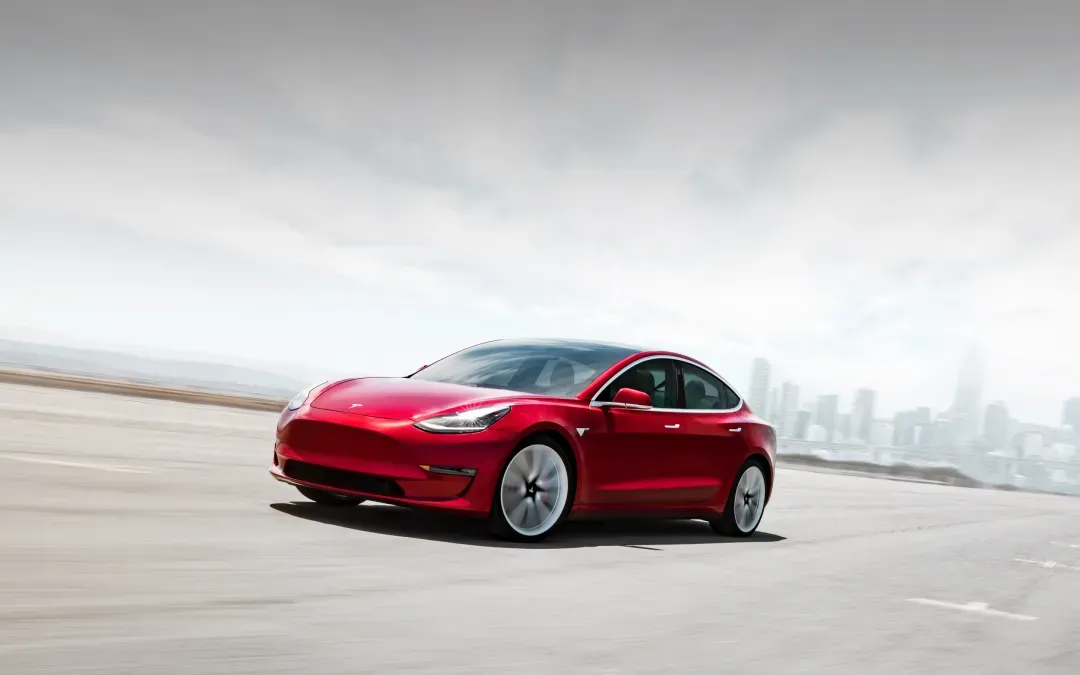
Tesla's Model 3 sustained second place with 27,969 units, up 7.5% month-on-month via five-year zero-interest financing, yet the company's global deliveries fell 8.6% in 2025 to 1.636 million. Speculation around cheaper Model 3 and Model Y variants—briefly appearing on Tesla's website before removal—suggests pricing adjustments may arrive ahead of production decisions, a reversal of the brand's historical sequencing.
2026 Trajectories Hinge on Tax Policy and Platform Maturation
China's halving of new energy vehicle purchase tax exemptions from January 2026 compressed December decision-making, though effects varied by segment. Premium sedans like the Han saw modest 13.6% monthly gains despite 66.3% annual declines, while volume leaders proved resilient. BYD's planned D-segment flagships—an SUV under the Tang nameplate and a sedan above the Han L—aim for the RMB 400,000-plus bracket, though the Han L itself managed under 3,000 December deliveries at RMB 209,800–279,800.
The market's middle-ranking volatility—with Geely Galaxy Xingyao 8, Leapmotor B01, and Chery Fengyun A9L cycling in and out of the top ten—reflects product lifecycles misaligned with subsidy cliffs and plateauing differentiation in the RMB 100,000–150,000 band. Automakers face compressing margins as battery costs floor at current chemistry limits while consumers habituate to 200km+ plug-in hybrid electric range and lidar as table stakes.
Whether Xiaomi's technical refresh generates sustained premiums, how Tesla prices its rumored budget models, and if BYD can profitably operate sub-RMB 90,000 large-battery hybrids will define competitive boundaries through 2026. December's rankings captured a market in tactical pause—leaders consolidating through price aggression, challengers recalibrating product cadences, and buyers learning to time purchases around refresh cycles increasingly telegraphed through regulatory filings and executive social media.
By ChinaBiz Insider Analysis Desk