
BYD Escalates EV Price War With Sub-$15,000 Tech-Heavy Models
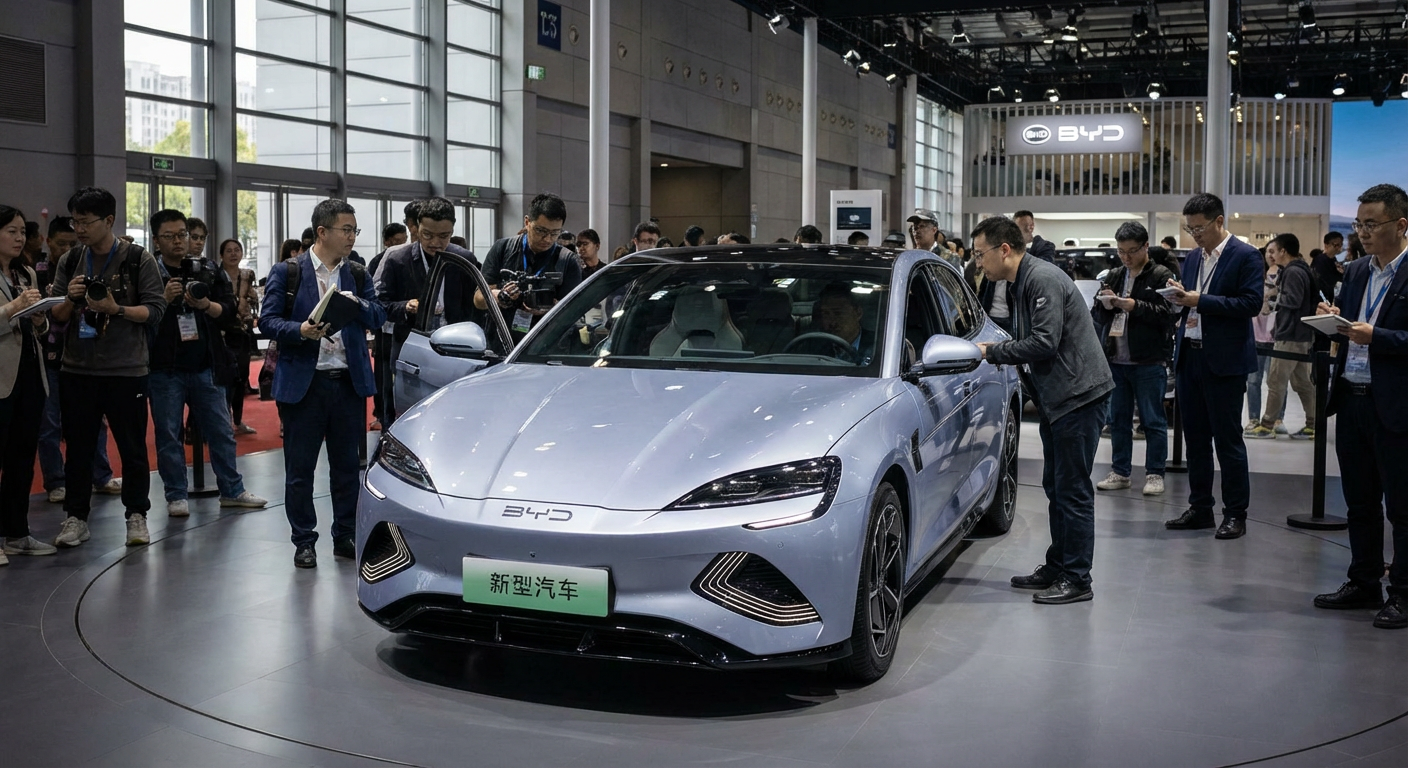
BYD is intensifying its margin-crushing strategy in China's automotive market, outfitting a new lineup of sub-RMB 100,000 (US$14,492) vehicles with premium driver-assistance systems and extended-range batteries to suffocate competitor market share ahead of the 2026 Beijing Auto Show.
The Shenzhen-based automaker launched updated versions of its Sea Lion and Song series, effectively lowering the entry barrier for advanced hybrid technology while maintaining aggressive pricing. While global automakers retreat from aggressive electric vehicle pricing to protect profitability, BYD’s latest product offensive signals a structural supply-chain advantage that threatens to push smaller domestic and international rivals toward consolidation.
Early market feedback indicates the introduction of high-end features—such as LiDAR and active suspension systems—into mass-market segments is forcing competitors to either sacrifice margins or cede market share in the critical RMB 100,000 to RMB 150,000 price band.
Expanding Hardware Integration Squeezes Rival Margins
BYD's strategy relies on deploying its fifth-generation Dual Mode (DM) hybrid technology and second-generation Blade Battery architectures across budget models. The newly released Sea Lion 05 DM-i starts at RMB 97,900—RMB 5,000 lower than its predecessor—yet doubles its pure electric range. The vehicle claims a maximum combined range of 2,105 kilometers and a depleted-battery fuel consumption of 3.1 liters per 100 kilometers.
The battery-electric variant, the Sea Lion 05 EV, is priced between RMB 119,900 and RMB 145,900. Utilizing the e-Platform 3.0 Evo, the model features fast-charging capabilities that replenish the battery to 70% in five minutes, addressing primary consumer anxieties regarding charging infrastructure.
Democratizing Advanced Driver Assistance Reshapes Autonomous Market
The most disruptive data point in BYD's latest rollout is the pricing of its advanced driver assistance systems (ADAS). The new Song Pro DM-i Feichi Edition , priced from RMB 99,900, offers an optional LiDAR hardware package linked to the DiPilot 300 system for RMB 9,900.
Historically restricted to vehicles priced above RMB 250,000 (US$36,231), the inclusion of LiDAR and high-speed navigation pilot features in the sub-$15,000 segment aggressively shifts the industry baseline. This pricing mechanism pressures pure-play autonomous technology suppliers and rival EV startups that rely on ADAS as a premium differentiator.
Targeting Premium Segments Threatens Legacy Automakers
While dominating the entry-level market, BYD is simultaneously pushing its premium boundaries. The upcoming Sea Lion 08 flagship SUV, slated for a Beijing Auto Show debut, targets the RMB 200,000 to RMB 300,000 segment. It integrates the DiSus-A air suspension system and rear-wheel steering, aiming for a pure electric range exceeding 1,000 kilometers.
Additionally, the third-generation Yuan PLUS is positioned in the RMB 130,000 to RMB 170,000 range, featuring an extended 2,770mm wheelbase and megawatt-level fast charging.
By leveraging its vertical integration—from battery cell manufacturing to proprietary software platforms—BYD is establishing a persistent deflationary environment in the Chinese auto sector. This structural cost advantage allows the company to execute simultaneous product upgrades and price reductions, cementing its role as the primary pricing setter in the world's largest auto market.
Related Coverage:
BYD’s Profit Slide Tests China EV Leader’s Scale-First Playbook After RMB 804 Billion Revenue Year
BYD Profit Squeeze Forces 'Toyota-Style' Global Pivot as China Margins Erode