
BYD’s Profit Slide Tests China EV Leader’s Scale-First Playbook After RMB 804 Billion Revenue Year
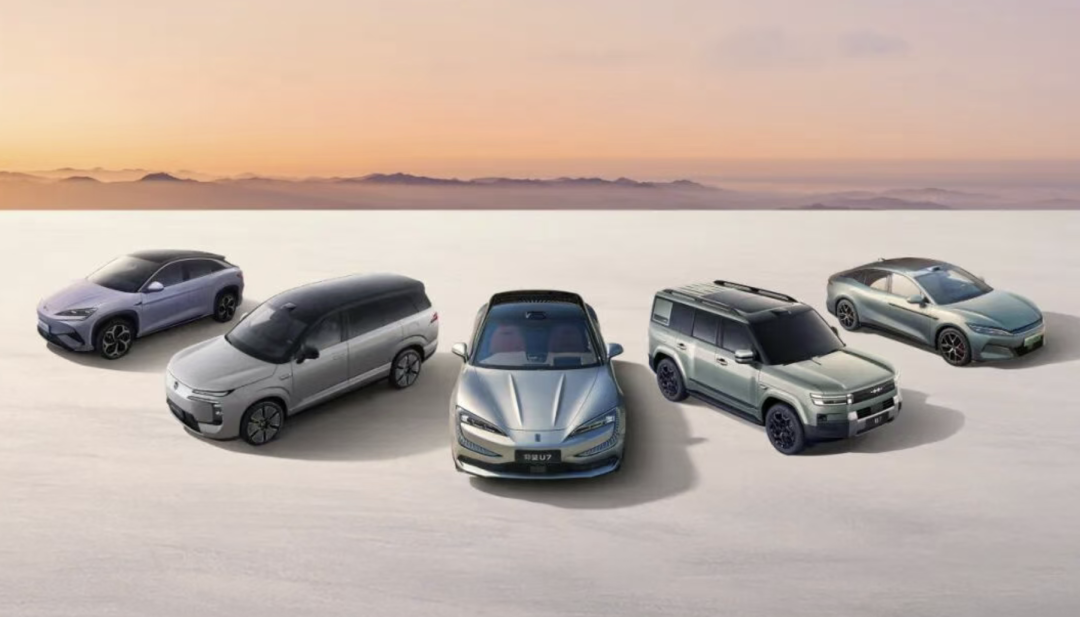
BYD capped 2025 with record sales and revenue but a sharp profit drop, underscoring how China’s EV price war is forcing the market leader to trade margin for global scale and technology control as investors focus on whether its cost curve can outrun intensifying competition in 2026.
The Shenzhen-based automaker reported revenue of RMB 803.97 billion (US$111.66 billion) on vehicle sales of 4.6024 million units, keeping it atop global new-energy vehicle volumes for a fourth straight year and pushing the group into the world’s top five by auto sales. Market attention, however, landed on a 18.97% decline in net profit and a visible step-down in gross margins.
BYD’s 2025 results sharpen a key question for the sector in 2026: whether the company’s scale—built on aggressive pricing, vertical integration and heavy R&D—can preserve market share while restoring profitability as overseas expansion and premium brands dilute reliance on China’s maturing demand.
Cutting Prices Compresses Margins While Defending Share
BYD’s overall gross margin fell to 17.74% in 2025 from 19.44% a year earlier, while its auto business gross margin slipped to 20.49% from 22.31%, reflecting broader discounting across China’s EV market.
The margin pressure matters because BYD is no longer competing mainly on product breadth at home; it is now setting price bands that ripple through suppliers and peers. With 3.55 million units sold domestically in 2025—about three-quarters of its total—any sustained pricing stance by BYD effectively becomes an anchor for industry profitability, shaping how rivals allocate capital between promotions, new models and software.
Spending on R&D Signals a Bid to Lock In Cost and Tech Advantage
Even as profit fell, BYD increased research and development spending to RMB 63.4 billion (US$8.81 billion), up 17% and equivalent to about 7.9% of revenue. The outlay exceeded its 2025 net profit, a choice that highlights management’s preference to protect long-cycle competitiveness over near-term earnings stability.
BYD said it ended 2025 with cumulative R&D spending above RMB 240 billion (US$33.33 billion), more than 120,000 R&D engineers, over 71,000 patent applications and more than 42,000 granted patents. For investors, the immediate read-through is that BYD intends to keep pushing hardware-software integration—battery, powertrain, controls and ADAS—rather than rely on third-party stacks that can weaken differentiation in a price-led market.
Export Momentum Rebalances Growth Toward Overseas Markets
Exports reached 1.05 million vehicles in 2025, more than doubling from the prior year with growth of over 130%, giving BYD a second growth engine as China’s demand normalizes. The shift also raises execution stakes: exporting at scale forces tighter quality, compliance and logistics discipline, and it can change product mix and currency exposure.
BYD’s expanding footprint across Southeast Asia, Europe, South America and the Middle East reduces dependence on any single market. For the supply chain, the export surge implies sustained demand for batteries and key components tied to BYD’s platform roadmap, while also pressuring global incumbents to defend entry-level and midrange segments where BYD’s cost structure is most disruptive.
Premium Brands Broaden Mix as Technology Rolls Downmarket
BYD’s premium portfolio—Denza, Fangchengbao and Yangwang—sold a combined 397,000 units in 2025, up 109%, lifting the premium share within the group’s total volume. That mix shift is strategically important because it offers a pathway to rebuild margins without abandoning mass-market scale.
The company is also using technology diffusion as a pricing lever. It cited progress in fast-charging architecture, advanced driver-assistance systems with a growing installed base, and upgrades to its Blade Battery lineup. The commercial logic is straightforward: if BYD can standardize higher-value features across high volume, it can defend pricing and reduce per-unit technology costs—critical for margin recovery in 2026 even if headline price competition persists.
Related Coverage:
BYD Remains No.1 as China EV Rebound Masks Export- and Tech-Led Divergence in 2026
BYD Set for 'Disruptive' 2026 Technology Launch Amid Sales Challenges