
BYD Flash-Charging Network Tops 7,000 Stations, Eyes 20,000 by Year-End
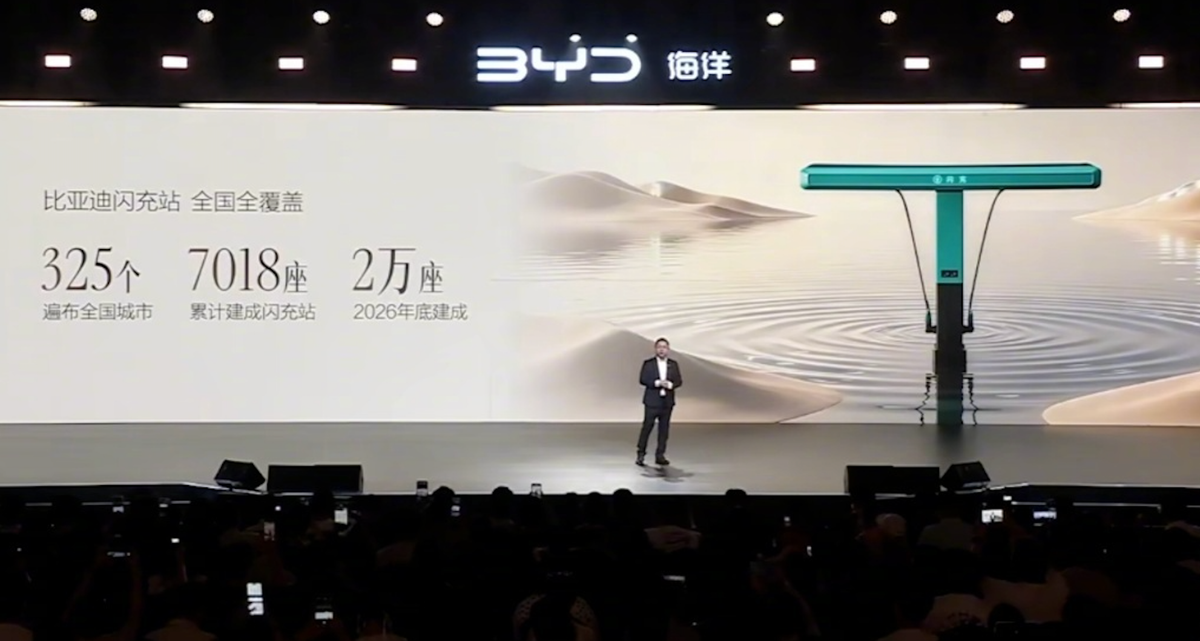
BYD has disclosed that its proprietary flash-charging network has surpassed 7,000 stations across 325 cities in China, as the electric vehicle giant races to hit a target of 20,000 stations by the end of 2026.
The figures were revealed at the launch event for the Seal 08 model and mark a notable acceleration in the company's charging infrastructure rollout. As of May 6, BYD had reported 5,924 flash-charging stations covering 311 cities — meaning the network added more than 1,000 stations and expanded to 14 additional cities in under two months.
The push traces back to March 5, 2026, when BYD held a dedicated launch event dubbed "Flash Charging China, Changing the World" at the Shenzhen Universiade Sports Center. At that event, the company unveiled its second-generation Blade Battery and accompanying flash-charging technology, claiming a world record for production electric vehicles: a charge from 10% to 70% in five minutes, and from 10% to 97% in nine minutes. The company also highlighted cold-weather performance, noting that charging from 20% to 97% at minus 30 degrees Celsius takes only three minutes longer than at ambient temperature.
Alongside the technology unveil, BYD formally announced its "Flash Charging China" strategy, setting the 20,000-station target for year-end 2026. The company positioned the technology as a direct response to two persistent pain points in the EV industry: slow charging speeds and degraded performance in low temperatures.
The rapid network expansion reflects a broader strategic shift among Chinese automakers toward building proprietary charging ecosystems rather than relying on third-party public infrastructure. Industry analysts note that vertically integrated charging networks allow manufacturers to align hardware compatibility, operations management, and user services more tightly — potentially delivering a more consistent and efficient charging experience compared with open public networks.
For investors, the build-out represents a significant capital commitment, with BYD needing to roughly triple its current station count in the remaining months of 2026 to meet its stated goal. The pace of expansion will be closely watched as a signal of the company's ability to execute on infrastructure at scale while simultaneously competing on vehicle sales.
Related Coverage:
BYD Q1 Earnings Analysis: Export Surge & Charging Network Expansion