
China’s Auto Market Enters Brutal Consolidation as H1 Sales Fall 4%, Margins Hit Decade Low
Domestic passenger-car retail collapsed 19.5% in the first five months of 2026, exposing a structural inflection point in the world's largest auto market — one that exports, price wars and sales-target optimism can no longer paper over.
The headline data is stark. Industry estimates place total first-half 2026 vehicle sales at approximately 15.05 million units, down roughly 4% year-on-year — the first meaningful contraction after years of incremental growth that had absorbed successive rounds of cost inflation and price competition. The divergence between the headline figure and the underlying passenger-car retail number (-19.5% through May) reveals how heavily the aggregate has leaned on export volumes to cushion the blow. Strip out overseas shipments, and the domestic demand picture is materially worse.
The immediate market read is that China's auto industry has crossed a saturation threshold rather than merely hitting a cyclical trough. National vehicle ownership has surpassed 366 million units, reaching 260 vehicles per 1,000 people — effectively one car for every two adults of driving age. That structural ceiling, compounded by subsidy roll-offs and an uptick in fuel prices earlier in the year, has compressed the addressable incremental buyer pool in ways that promotional campaigns cannot easily reverse.
Saturation Reframes the Export Pivot as Necessity, Not Strategy
For legacy original equipment manufacturers (OEMs), overseas sales have shifted from a growth lever to a survival mechanism. The numbers make this plain.
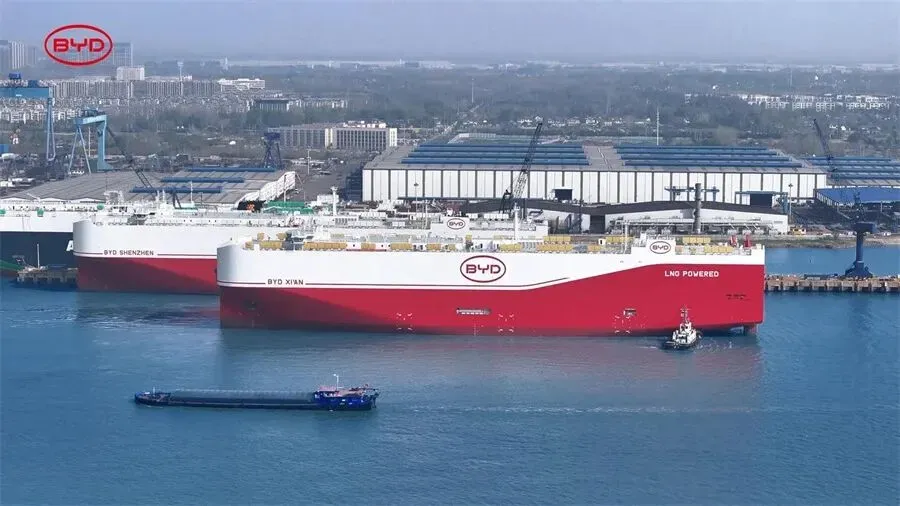
Chery delivered 1.3575 million vehicles in H1 2026, with exports accounting for nearly 940,000 units — meaning international markets now absorb a greater share of Chery's output than the domestic market does. BYD sold 1.8 million units in the first half, of which 789,000 were overseas, even as its domestic H1 volumes declined 16% year-on-year. Geely recorded total sales exceeding 1.4 million units, with 474,000 sold abroad.
SAIC remains the only group to breach 2 million units in H1, though that figure consolidates SAIC-GM-Wuling, SAIC Volkswagen and other joint-venture volumes. Great Wall Motor and Geely both posted steady year-on-year gains, while Changan Automobile slipped 11.8%, weighed down by softness in its internal-combustion-engine (ICE) lineup.
The export-led model carries its own risks. Policy headwinds — tariffs, local-content requirements and geopolitical friction — have already complicated access to key European and Southeast Asian markets. As William Li, chief executive of NIO, warned last month, domestic passenger-car sales could fall a further 15%–20% over the full year 2026, characterizing the period ahead as "the most brutal final stage of the race — a marathon through mud, with no miracles and no quick wins."
New-Energy Entrants Disrupt the Luxury Segment While Bleeding Cash
The more structurally significant story of H1 2026 is not the volume decline at the top of the market but the violent redistribution of premium-segment share driven by domestic new-energy vehicle (NEV) brands.
Huawei's Harmony Intelligent Mobility Alliance, NIO, Zeekr, Li Auto and Xiaomi Automotive sold approximately 240,000, 190,000, 180,000, 190,000 and 170,000 units respectively in the first half. Collectively, their average transaction prices and combined share now position them as credible challengers to BMW, Mercedes-Benz and Audi — the so-called BBA tier — in the Chinese premium segment.
The collateral damage falls on second-tier foreign luxury brands. Volvo Cars and Cadillac have been reduced to roughly 5,000 units per month each in China. Land Rover, Infiniti and Jaguar are each selling fewer than 1,000 units monthly — volumes that make a sustainable dealer network nearly impossible to maintain. The exits of Acura, Jeep and Škoda from the Chinese market in recent years have already demonstrated that brand heritage alone no longer buys tolerance from Chinese consumers who increasingly prioritize software integration, intelligent driving features and total cost of ownership.
Yet the NEV challengers' own financial architecture remains fragile. Whole-vehicle-sector profit margins fell to just 3.2% in Q1 2026 — a ten-year low. Li Auto and Leapmotor, both of which had previously achieved profitability, have reverted to net losses. Avatr Technology Chairman Wang Hui framed the tension bluntly: "What kind of prosperity is it when the sales numbers look great but the bank account is empty?"
Extended-Range Slowdown Forces a Technology Rethink
A quieter but consequential shift is occurring within the NEV segment itself: extended-range electric vehicles (EREVs), long marketed as a transitional solution for range-anxious buyers, are losing momentum. The deceleration is most visible at Li Auto, whose top-selling model has rotated to the pure-electric i6, displacing the extended-range vehicles that built the brand. NIO has now overtaken Li Auto in year-on-year growth rate, reflecting the market's accelerating migration toward pure-BEV architectures.
XPeng, which bet heavily on an EREV product expansion in 2026, has found the incremental lift smaller than anticipated as the sub-segment cools. Its volume anchor remains the pure-electric entry-level MONA M03 (MONA M03). XPeng's H1 target achievement rate is among the lowest in the industry, underscoring the cost of a misaligned product cycle in a fast-moving market.
Entry-Level NEVs Gain Ground, But Profitability Remains Elusive
The most durable growth pocket in H1 2026 has been the sub-RMB 100,000 segment. Leapmotor sold more than 350,000 units in the first half, closing the gap on Great Wall Motor's 580,000-plus units and positioning itself as a potential mass-market national brand. BAIC ARCFOX delivered more than 25,000 units in June alone — a 219.3% year-on-year increase — and accumulated over 80,000 units in H1, up 65.88% year-on-year, the strongest growth rate among tracked brands.
The entry-level opportunity, however, demands even tighter cost discipline than the premium tier. Leapmotor, despite an industry-leading vertical integration strategy spanning motors, battery packs and chips, has not yet achieved consistent profitability. The arithmetic is unforgiving: thin average selling prices combined with heavy R&D and marketing spend leave almost no margin for error.
Target Shortfalls Signal Industry-Wide Overconfidence Heading Into H2
Only Zeekr has achieved more than 50% of its full-year sales target at the halfway mark. The majority of mainstream brands are tracking between 30% and 40% of annual guidance — a collective miscalibration that reflects how severely the industry underestimated the pace of domestic demand deterioration at the start of 2026.
SAIC, Geely and Chery retain the most realistic paths to year-end target achievement, given their geographic diversification and the potential tailwind from China's traditional "Golden September, Silver October" selling season. For most others, the gap is too wide to close without either a demand catalyst — such as a renewed government subsidy program — or a formal downward revision to guidance.
The broader backdrop offers limited comfort. China's NEV penetration rate has surged from 4.2% seven years ago to 62.9% today, a trajectory that compressed a decade of technology transition into a single electoral cycle. That hypergrowth phase is now giving way to a consolidation cycle in which scale without profitability is not a viable business model. The industry's next competitive dimension — average selling price, operating leverage and technological differentiation — will determine which brands survive the shakeout.
BYD's recovery to 400,000 monthly units in June suggests the market's best-capitalized players can still generate momentum. But as the H1 data make clear, volume leadership and financial health are no longer the same thing in China's auto industry.
Related Coverage:
China's Automakers Pivot to Global Markets as Domestic EV Consolidation Accelerates