
BYD Rewrites the UK Playbook: Premium Positioning, Flash Charging, and 80,000-Unit Ambition
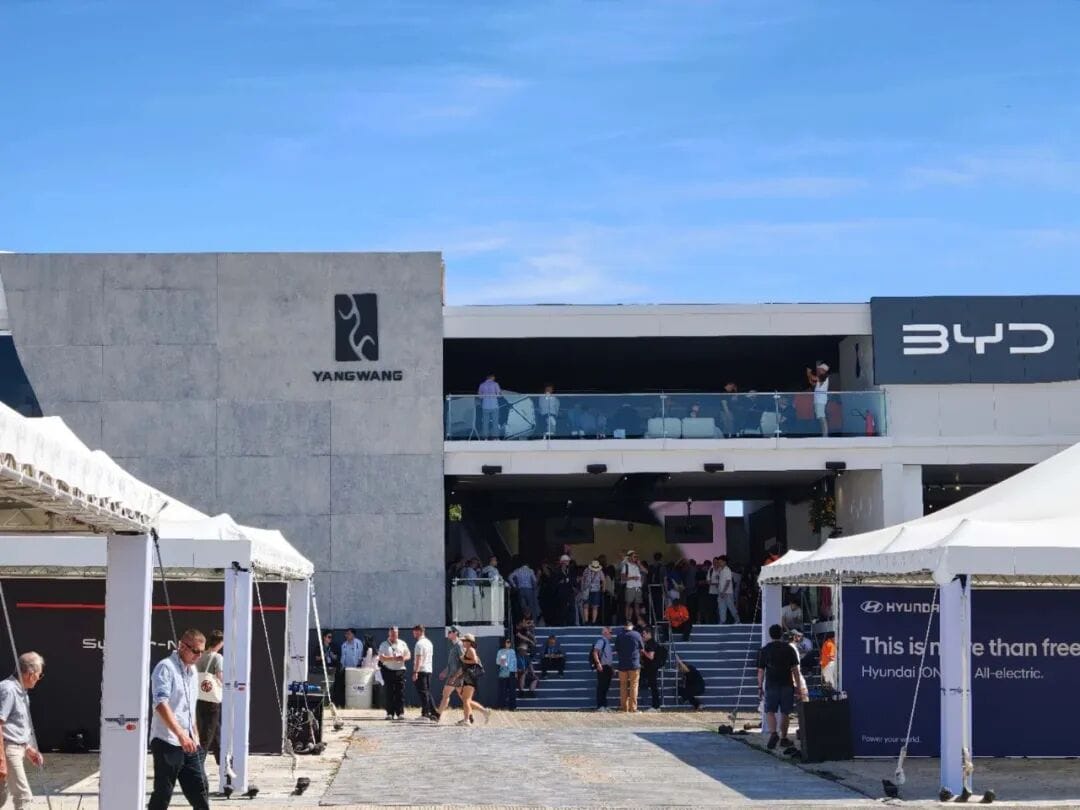
BYD has cracked one of the world's most brand-conscious automotive markets not by undercutting rivals on price, but by engineering a perception shift that has left Tesla, BMW, and Volkswagen trailing in the UK's EV sales rankings.
Three years after entering the UK passenger car market with near-zero brand recognition, BYD sold 51,422 vehicles in 2025, claiming the rank of the country's sixth-largest automotive brand. In the first half of 2026 alone, the Shenzhen-based manufacturer moved 37,795 units — equivalent to 74% of its entire prior-year volume — putting an annual target of 80,000 units firmly within reach. The acceleration is not incidental: it reflects a deliberate, multi-year infrastructure play that rivals would find difficult to replicate quickly.
The data points emerged from a media briefing held after the Goodwood Festival of Speed, where BYD Brand and PR Director Li Yunfei and BYD UK Managing Director Glen Dong laid out the mechanics of the company's British strategy in rare detail.
Brand Perception Defies the "Cheap Chinese Car" Narrative
Perhaps the most commercially significant finding from BYD's internal tracking: UK brand awareness has reached 72%, and the dominant consumer associations are "high-tech" and "premium" — not "affordable." That positioning stands in sharp contrast to BYD's domestic image in China, where the brand carries the legacy of budget models like the F3.
The divergence is structural, not accidental. UK consumers encountered BYD for the first time in 2023, when the company launched the Seal and Atto 3 — mature, mid-to-premium products with no entry-level anchor to drag perception downward. With no historical baggage, BYD entered the market as a technology brand rather than a value proposition.
Dong cited a CarWow survey conducted three years ago showing that 20% of UK buyers were willing to consider a Chinese vehicle, 20% explicitly refused, and the top three objections were weak brand equity, after-sales uncertainty, and quality doubts. That skepticism has since "substantially reversed," according to Dong — a claim corroborated by the sales trajectory.
Five-Step Showroom Experience Converts Curiosity Into Commitment
Inside BYD's UK retail network, the company has codified a "Five-Step Experience Protocol" designed to anchor the brand in technology before any price discussion begins. The sequence: NFC key unlock, voice-activated rotating screen demonstration, in-car karaoke interaction, Vehicle-to-Load (V2L) power export — demonstrated by brewing coffee on-site — and only then a structured conversation with the prospective buyer.
The karaoke step, which might seem incongruous in a market stereotyped for reserve, has generated unexpectedly strong engagement, according to Dong. The underlying logic is deliberate: establish a "this is a different kind of brand" impression before the customer has formed a purchase intent, making subsequent price-value comparisons more favorable.
The showroom strategy is reinforced by an aggressive trial-drive campaign targeting one million test drives over three years, with weekend events at dealerships incorporating food, music, and entertainment. The rationale is arithmetic: UK vehicle purchases carry a financial penetration rate of 92%, meaning the vast majority of buyers operate on three-to-four-year financing contracts. Renewal decisions are driven almost entirely by satisfaction with the existing vehicle, making the first physical experience disproportionately valuable.
Sports Marketing Spending Translates Into Search Volume Spikes
BYD's above-the-line strategy has been concentrated in high-attention European properties. The company sponsored UEFA Euro 2024 and signed a partnership with Manchester City Football Club, placing its logo prominently at the Etihad Stadium. Dong disclosed that Google searches for "Who is BYD" spiked sharply during the European Championship — a measurable conversion from sponsorship spend to active consumer inquiry.
At the luxury end, BYD is pursuing what Li described as a three-stage pathway: "be seen, be experienced, be accepted." Presence at Goodwood and the Cannes Film Festival serves the first stage. For Denza and Yangwang, the company's premium sub-brands, the approach shifts to private-circle cultivation — engaging Harrods VIP clients, fashion brand executives, and aristocratic networks to seed the brand within what Dong called "old money" circles.
One data point from the Goodwood Denza Z launch underscores the early traction: attendees reportedly cancelled existing orders for McLaren and Ferrari vehicles to purchase the Denza Z track edition.
Flash-Charging Infrastructure Build-Out Signals Energy Ambition Beyond Vehicles
BYD's most strategically significant UK commitment may not involve vehicles at all. The company is moving to replicate the Tesla Supercharger playbook — solving range anxiety as a precondition for mass EV adoption — but with a differentiated technical architecture.
The UK charging environment presents a structural barrier: motorway charging costs between £0.79 and £0.89 per kWh, equivalent to approximately RMB 8 (US$1.11) per kWh, with insufficient infrastructure density and slow charging speeds as contributing factors to the country's EV penetration rate remaining below 30%.
BYD's response integrates energy storage directly into its flash-charging hardware, enabling off-peak electricity storage and peak-hour discharge to reduce effective charging costs for users. The near-term target: 300 flash-charging stations in the UK within 12 months, as part of a 3,000-station European rollout.
Globally, Li outlined a construction pipeline of 20,000 flash-charging stations in China in 2026, plus 6,000 overseas stations between March 2026 and March 2027 — comprising 3,000 in Europe, 2,000 in the Americas, and 1,000 across Asia-Pacific. Flagship stations will incorporate solar generation and battery storage, creating integrated solar-storage-charging hubs.
The infrastructure commitment repositions BYD from vehicle manufacturer to energy infrastructure operator — a strategic identity with meaningfully different valuation implications.
Localization Feedback Loop Separates BYD From Peers Selling "China Specs" Abroad
Product adaptation has been driven by systematic feedback from the UK team to BYD's Shenzhen headquarters. European buyers prioritize trunk space over rear-seat room — luggage for golf, skiing, and extended holidays takes precedence over passenger comfort. Handling characteristics matter more than in China, with some buyers seeking vehicles capable of occasional track use. Notably, smart connectivity features see lower utilization rates in the UK, where buyers aged 45 and above represent a disproportionately large share of new-car purchases and exhibit lower appetite for complex digital interfaces.
These adjustments reflect a localization discipline that distinguishes BYD's approach from competitors that have attempted to sell China-specification products into European markets without modification.
Global Overseas Target of 1.5 Million Units Frames UK as Template, Not Outlier
Li's global numbers provide context for the UK performance. BYD sold 1.04 million vehicles overseas in 2025 and has set a 2026 target of 1.5 million units; 790,000 units were delivered in the first half of 2026. The company's medium-term strategic objective is a 50/50 split between domestic and international revenues, with the overseas share to increase progressively thereafter.
The UK trajectory — from 8,000 units in the market's first year to a projected 80,000-plus in year four — provides BYD with a replicable model for markets where premium positioning, infrastructure investment, and patient brand-building can overcome the "cheap Chinese car" default assumption.
Dong's closing framing at the briefing was notable for its deliberate restraint: "Over the next three to five years, we prioritize customer satisfaction over a single sales target." In a market where 92% of buyers will face a renewal decision within four years, that statement is less a PR talking point than a compounding growth strategy.
Related Coverage:
BYD Hits 100,000 UK EV Deliveries, Grabs 7.2% Market Share in Four Months