
BYD Surges in Europe as Tesla Slumps in Shift for EV Market
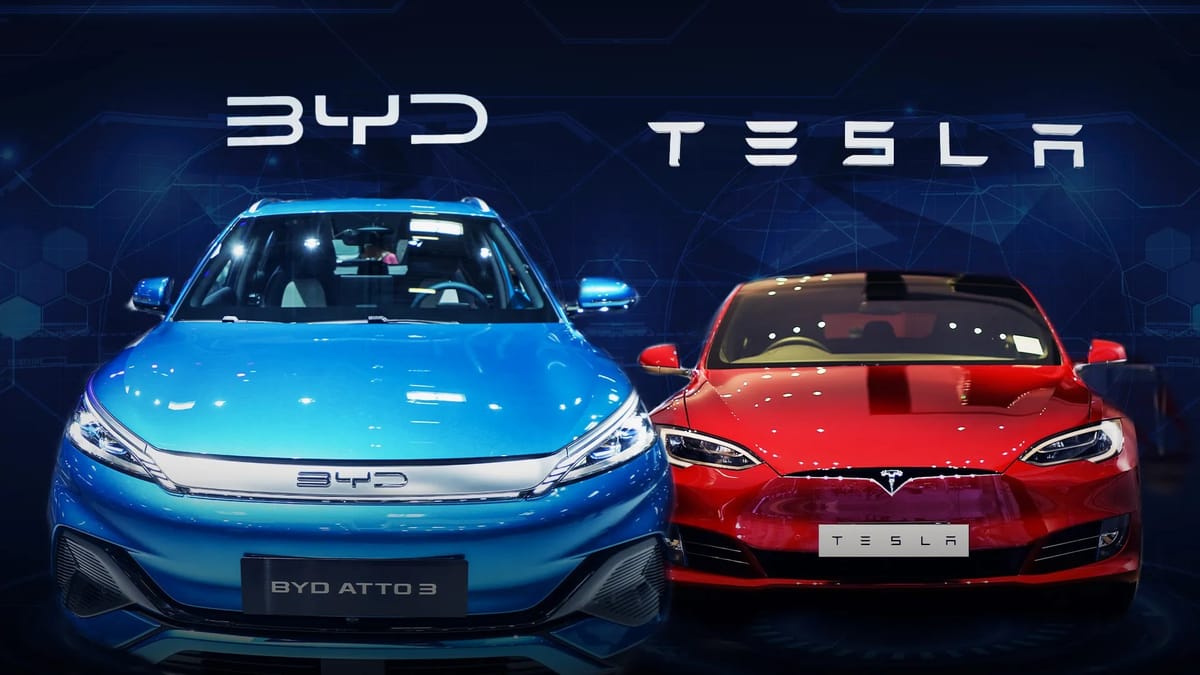
BYD recorded a distinctive surge in European car registrations in October while Tesla faced a sharp decline, highlighting the intensifying pressure regarding electric vehicle market share on the continent. The Chinese automaker more than tripled its sales compared to the previous year, accelerating its expansion abroad to offset intensifying competition in its home market.
Data from the European Automobile Manufacturers’ Association (ACEA) revealed that new registrations for BYD rose to 17,470 units across the region, a dramatic increase from 5,695 a year earlier. In contrast, Tesla saw its registrations in the European Union plummet by 48% in October, extending a streak of disappointing monthly results for the US automaker. This divergence underscores the rapidly changing competitive landscape as Chinese manufacturers aggressively target European buyers with diverse, lower-cost models.
The broader European market showed signs of recovery, with total new car registrations growing 4.9% to 1.09 million units, marking a third consecutive month of expansion. Despite the influx of new competitors, traditional incumbents held their ground, with brands like Volkswagen and Renault posting gains. However, the shift in momentum within the electric vehicle (EV) segment signals a potential disruption to the dominance long enjoyed by early movers in the sector.
While BYD’s growth is exponential, its absolute volume remains a fraction of Europe’s legacy giants. Volkswagen AG delivered over 308,000 vehicles and Stellantis NV sold roughly 157,000 units in the same period, suggesting that while the Chinese challenger is growing fast, it has significant ground to cover to match the scale of established European players.
BYD Gains Momentum
BYD’s aggressive push into Europe is yielding tangible results across key markets. In the European Union alone, the company’s registrations jumped to 13,350 from 4,525 a year prior. The gains were particularly notable in Spain, where BYD topped the pure electric vehicle brand ranking for the first time with 1,978 units sold. The company’s budget-friendly Seagull model—marketed locally as the Dolphin Surf—became the month’s best-selling EV in Spain with 847 registrations just five months after its launch.
The UK market also provided significant lift, with BYD sales skyrocketing 348.6%. The introduction of models such as the Seal U (Sea Lion 07) helped broaden consumer awareness. Collectively, Chinese brands, including Chery Automobile and Zeekr Intelligent Technology, accounted for 11,000 sales and a 7.6% market share in the UK, leveraging diverse product matrices and competitive pricing to challenge incumbents.
Tesla’s Market Share Erosion
Tesla’s performance in October reflected deepening challenges for the company in a region where it previously held a commanding lead. The 48% drop in EU registrations was compounded by severe declines in Northern Europe, a traditional stronghold for EV adoption. Registrations crashed 89% in Sweden, 86% in Denmark, and 50% in non-EU Norway. France was a rare bright spot, posting a modest 2.4% gain.
Analysts attribute Tesla’s fatigue to an aging vehicle lineup that struggles to compete with fresher offerings from rivals, as well as a charging infrastructure rollout that has lagged behind competitors in certain areas. Additionally, the company has faced headwinds related to CEO Elon Musk’s political involvement in the US, which some reports suggest may have impacted brand perception among European consumers.
European Market Resilience
Despite the volatility in the EV sector, the overall European car market demonstrated resilience. In the first 10 months of 2025, the market share for battery-electric vehicles in the EU climbed to 16.4%, up from 13.2% the previous year. Germany, Europe’s largest auto market, saw pure electric vehicle sales surge 39% year-to-date, driving regional growth. Hybrid and plug-in hybrid vehicles also remained popular, with registrations rising 16% and 32% respectively.
Legacy automakers capitalized on this broader recovery. Renault SA saw sales climb 11%, while Volkswagen and BMW AG posted high single-digit growth, supported by a mix of combustion and electrified models. The data suggests a bifurcated market where traditional players are stabilizing through gradual transition, while the pure-play EV battleground sees a rapid rotation of leadership from western pioneers to emerging Asian challengers.