
BYD Targets Japan's K-Car Market Amid Slow EV Sales
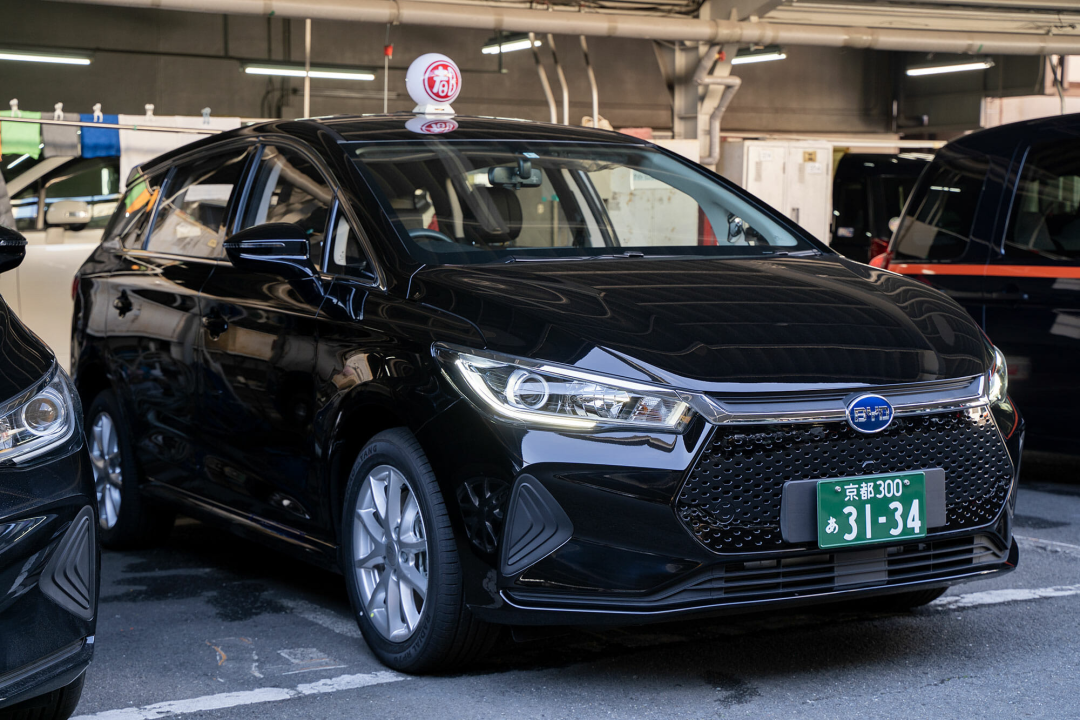
BYD Co. Ltd. is developing electric K-cars for Japan's compact vehicle market, targeting a 40% market share in a segment that represents the largest portion of Japanese auto sales, according to local media reports.
The Chinese automaker launched month-long price cuts in Japan last month, reducing prices by 2.42 million to 5.67 million yen ($16,600 to $38,900), extending its global pricing strategy to the Japanese market. Despite significant attention from industry watchers, BYD sold only 2,223 passenger vehicles in Japan in 2024, equivalent to roughly half a day's sales in China.
BYD's pivot to K-car development follows two years of limited success in Japan's passenger vehicle market, where the company has struggled against consumer preferences for domestic brands and hybrid vehicles. The move represents a strategic shift toward Japan's most popular vehicle category, which accounts for approximately 40% of domestic auto sales.
The development underscores the challenges foreign automakers face in Japan's insular market, where even Tesla Inc. has struggled to gain significant traction despite a decade-long presence.
K-Car Market Dominance
K-cars, or "kei jidosha" (light automobiles), represent Japan's unique approach to urban mobility. These compact vehicles, smaller than China's Wuling Hongguang Mini EV, dominated Japanese sales rankings in 2024, with Honda Motor Co.'s N-BOX model leading overall passenger vehicle sales at 206,000 units.
The segment benefits from substantial government incentives, including simplified registration procedures, lower taxes, and exemptions from parking space requirements that apply to regular passenger vehicles. Tax savings alone can amount to hundreds of thousands of yen compared to conventional cars.
BYD Chairman Wang Chuanfu reportedly decided to enter K-car development after observing their prevalence during a visit to Japan's mobility expo in October 2023, according to Nikkei reports.
Limited EV Adoption in Japan
Japan's electric vehicle market remains nascent compared to China and Europe, with total EV sales of 88,535 units in 2023. BYD captured just 1,446 of those sales, trailing far behind its dominant position in China's EV market.
The country's charging infrastructure lags significantly, with approximately 68,000 charging stations serving 125 million people, compared to China's ratio of roughly 110 people per charging station. Japan's long-standing focus on hydrogen fuel cell technology and hybrid vehicles has slowed pure EV adoption.
Toyota Motor Corp.'s Corolla remained Japan's best-selling model for the 55th consecutive year, while the top 20 bestselling vehicles consisted entirely of domestic brands, highlighting the market's resistance to foreign manufacturers.
Strategic Market Entry
BYD has positioned itself as a premium brand in Japan, pricing vehicles 1.5 to 2 times higher than in China. The company's SEAL model is priced at 5.28 million yen (approximately $36,200) after recent discounts, still higher than Tesla's Model 3 at 5.13 million yen.
The automaker has expanded its dealer network toward a target of 100 locations and enlisted Japanese actress Masami Nagasawa as brand ambassador. However, government subsidy cuts reduced BYD's per-vehicle incentive from 850,000 yen to 350,000 yen in 2024, following policy adjustments partly attributed to concerns about Chinese EV competitiveness.
BYD Japan President Liu Xueliang acknowledged in January 2025 that "EV adoption in Japan still needs time," leading to the company's introduction of plug-in hybrid models and the reported K-car development project.